Pressure Project 2: One for All, All for one
Posted: March 9, 2026 Filed under: Pressure Project 2 | Tags: Pressure Project, Pressure Project 2, touchdesigner Leave a comment »I named my cell One for All, All for One because it is built around the idea that an individual, and communities as a whole are constantly shaping each other. The cell itself is a constan conversation between the oneself and the communal archive. It takes a live video feed and layers it over a slideshow of images showing communities and people from different parts of the world.
Then interactive sound enters the picture. A glitch effect driven by audio input levels determines how much the live video overlay fractures. The louder the audio, the more the live layer breaks apart and reveals the slideshow underneath. Alongside this, I built in an internal LFO paired with an Edge TOP to create a rhythmic pulse, something I called a “heartbeat”. Even without external input, the system works fine and feels alive.

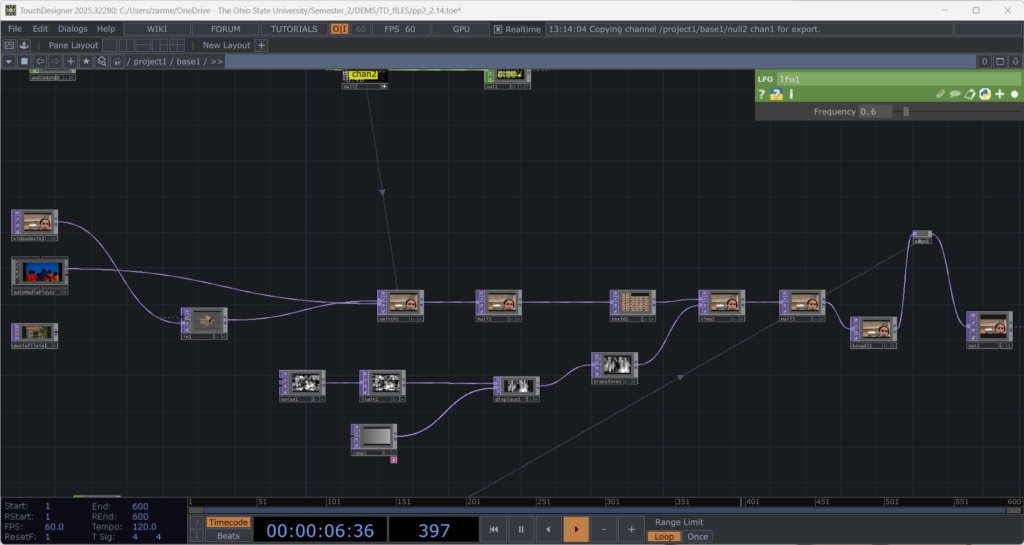
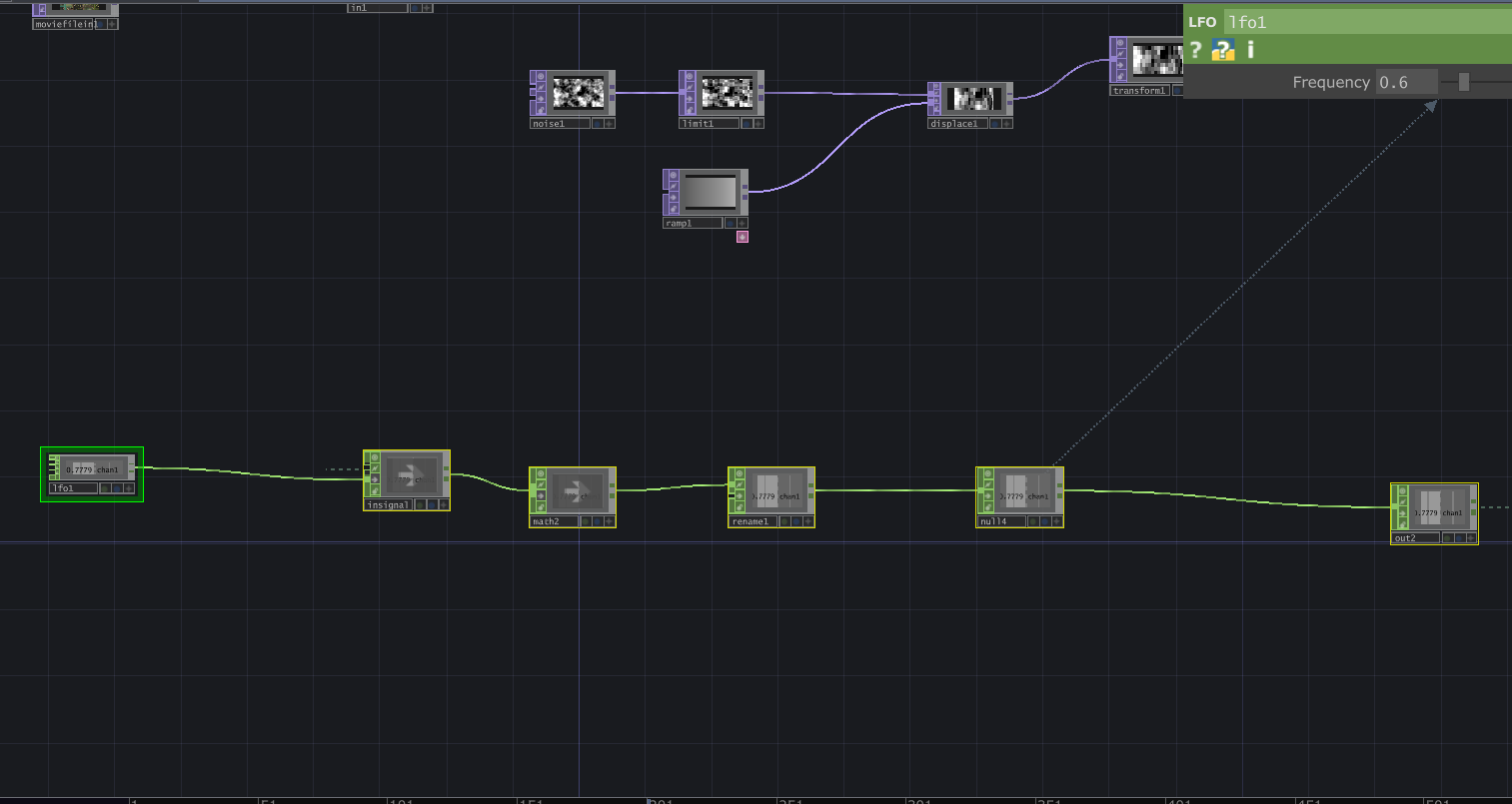
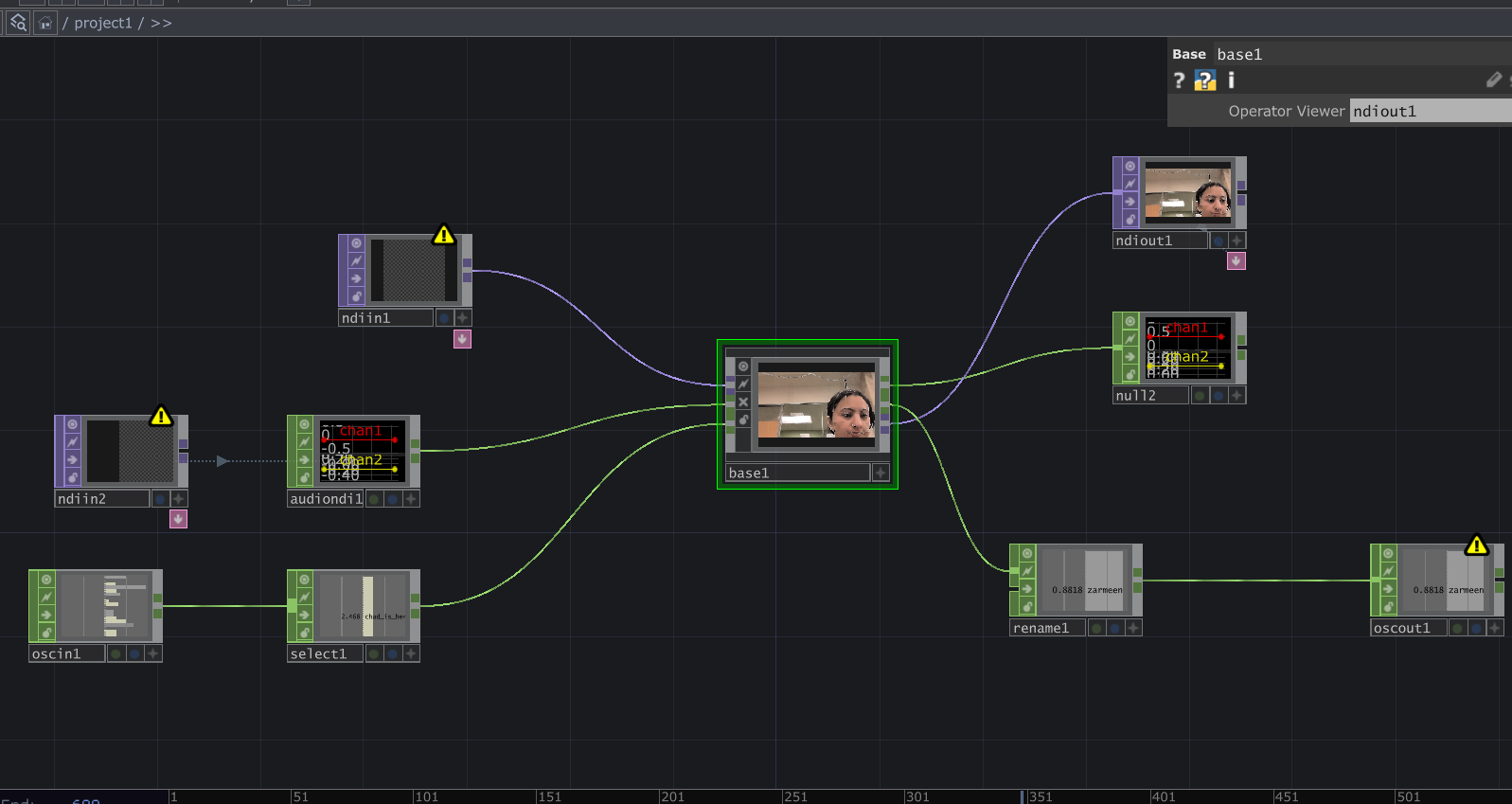
The structure is modular and layered, and honestly not that complicated. There is a live video input, and a media player (which controls the slideshow) which plug into a switch. The output of the switch goes into a glitch system, and a pulse system. Each could be replaced without breaking the overall logic. The audio input, live video input, and the signal (LFO) are designed so that they could be overridden by an external network signal as well. The cell has its own system, but it is designed to connect, following the true concept of one for all, all for one.
Reflection:
When all the cells assembled, things became unstable. Signals were constantly dropping and connections were dying. For a while, I thought something was wrong with my cell because nothing would show up (it was a problem with the input signals I was getting). When I finally got it to work, very interesting emergent behaviors appeared. The glitches danced to different rhythms. Video overlays ended up in very interesting stacked outputs. It was interesting because I did design my system while being aware that it had to be plugged into a bigger system. However, I did not envision the results I got during testing. What I controlled alone became either amplified or distorted by others. The network did not just combine outputs. It reshaped them. I think where my careful planning fell off was the heartbeat. I had not accounted for the fact that other cells can have signals of different types. Instead of a steady pulse, I got an irregular signal input, which changed the whole heartbeat effect. At first it felt like something went wrong. My cell was no longer just reacting to my inputs. It was reacting to everyone. That is exactly what One for All, All for One means. Each cell affects the others. Each signal influences the collective behavior. My cell had a life of its own. In the network, it learned to respond, adapt, and sometimes surrender to the collective.
Project File: pp2_Zarmeen.zip
Otherworldly Experience
Posted: February 8, 2024 Filed under: Uncategorized | Tags: Pressure Project, Pressure Project 2 Leave a comment »This room is one of the first rooms I experienced. It is immediately after the room that Rick rolls guests and allows them to mess with other guests throughout the facility. It is a dimly lit room with three ominous human sized capsules. They all surround a giant sphere suspended in the air with what looks like wires from each of the capsules leading into it.
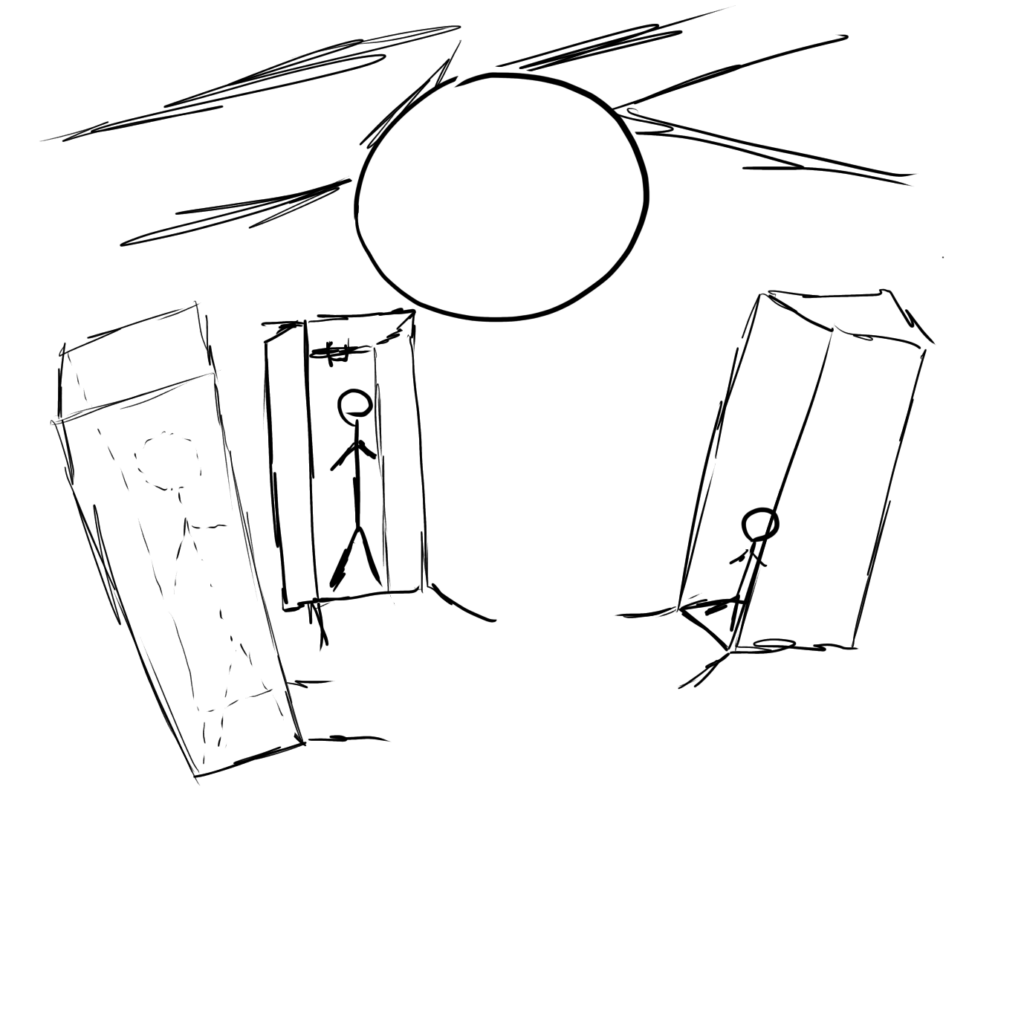
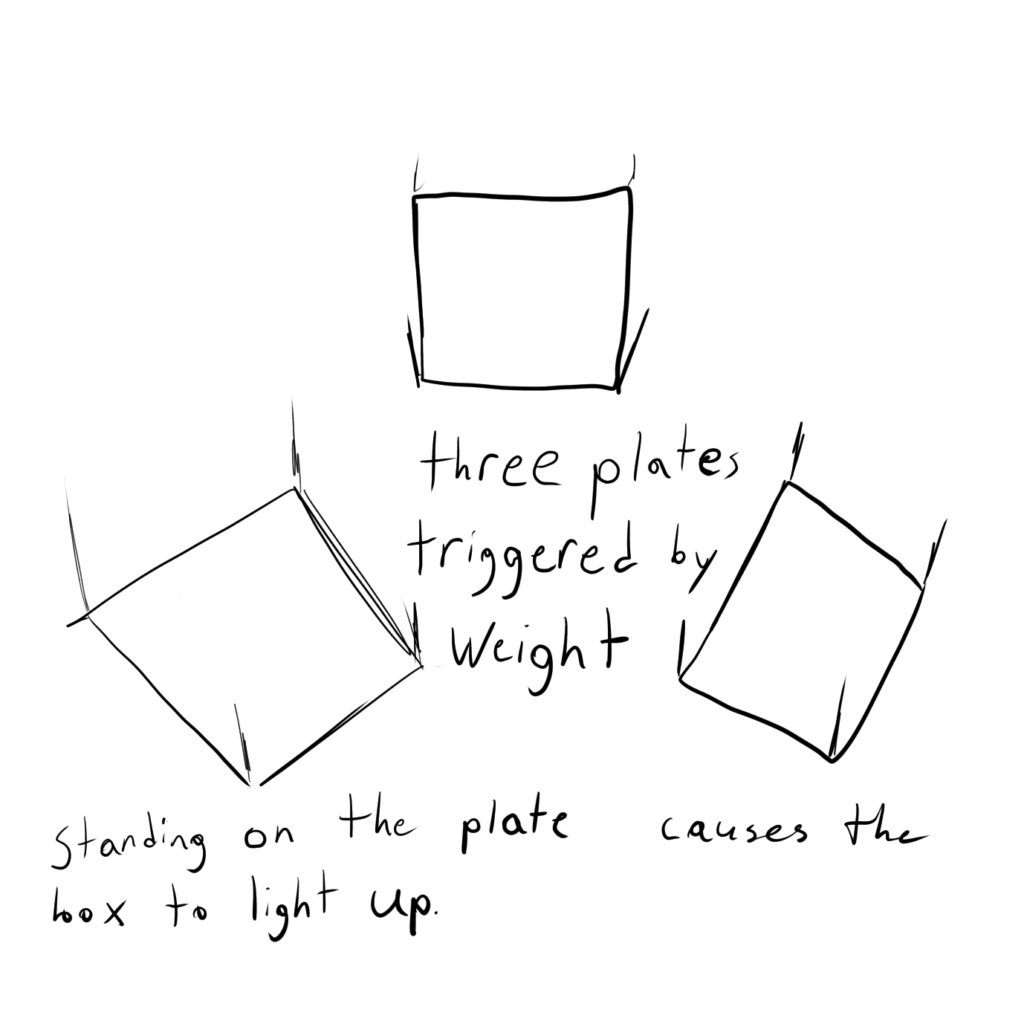
The capsules are really eye catching so many guests that entered the room immediately walked into them to check it out. Then they hear a noise in the pod and can see the side light up. This prompted nearly all of them to go looking for other people nearby to fill the other two pods to see what may happen. Once three people are standing in the pods They begin to flash black and white as well as the lights leading to the orb. At the same time a noise that sounds like static electricity is whirling around the room. Finally, the room goes dark and all is quiet then the guests standing in the pods are sprayed with gusts of air. Caught off guard, the guests let out a scream or flee from the container.
There is not much I would want to redesign with how the system is able to capture people’s attention and clearly convey what needs to be done to activate. So, what I would add would be some sort of fog like effect that is also ejected with the puff of air as well as maybe tone down the air pressure, but keep it spraying for longer. This would hopefully make it a bit less of a jump scare and make it seem cooler when the guest leaves the pod.
PP2: Audio storytelling/Wall Fall
Posted: October 24, 2022 Filed under: Pressure Project 2, Tamryn McDermott | Tags: audio, Pressure Project 2, storytelling Leave a comment »I chose to focus only on the audio for this pressure project. In hindsight, after viewing/listening to the other projects, I wonder if having an image of the Berlin wall surrounding us in the motion lab on the white scrims would have been helpful to site the work so there wasn’t a period of guessing for listeners.
My initial goal was to immerse the listener in the experience of the sound of construction and destruction of the Berlin wall. Having grown up in Germany during this point in history, I have a personal experience with this site and my traveling to and from the site by train was a part of it. That part of the story was lost in my layering process. I think that if I were to do this project again, I would pull back and focus in more on some of the powerful moments. Letting them sit with the listener more and not overwhelm them with so much information that is hard to unpack, especially if one is trying to figure out what the story is about.
I appreciated the feedback and want to think more about how we can tell personal stories that also convey meaning for others, for them to find their own way into the story and a connection to it as well.
In my other work outside of this class, I am struggling to translate from text into audio in a non-linear fashion and provide space for a participant in the work to find both their own entry point and way of navigating the space. Also as a way of connecting with the researcher. Thinking about presenting research as a relational experience. How do I challenge the linear and impersonal format of a dissertation, book, or academic text in a way that provides a valuable alternative experience of the story? I have been using a map as one form to explore, but that is also limiting and has boundaries and borders. I am also thinking about the relationship between printed, read text and verbal, spoken word. Preparing this pressure project helped me think about presenting my own process/experience in a way that is not too overwhelming and has some clarity for those participating in engaging with it. This is an ongoing struggle in my process.