Pressure Project 1: The Musical Spiral
Posted: February 13, 2026 Filed under: Uncategorized Leave a comment »Description
The musical spiral is a self-generating patch that randomly generates shapes at different sizes and positions, and spins them in a random direction for a random-length cycle. When these shapes cross a line, they (are supposed) to trigger a random musical note.
Documentation
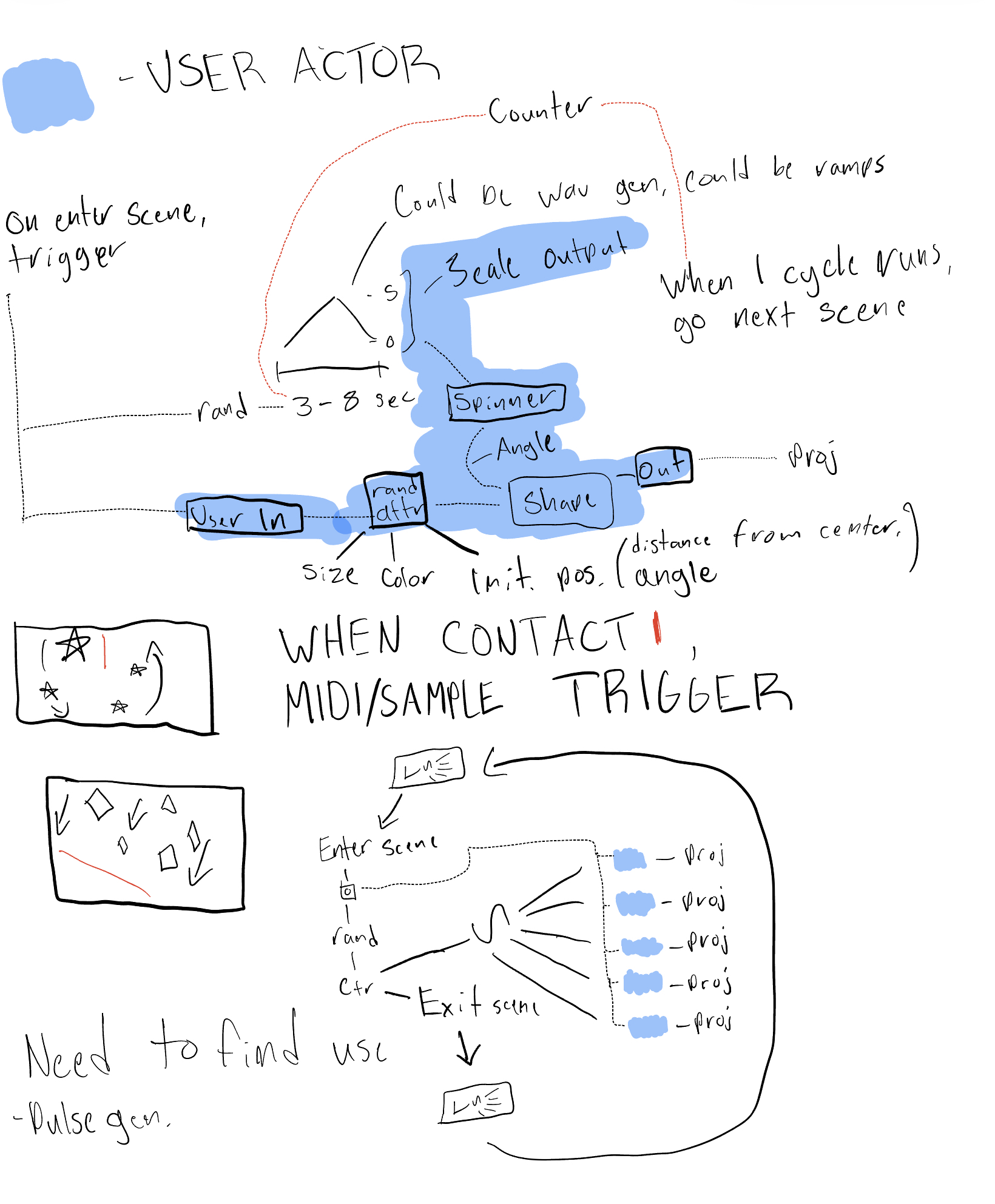
Before starting to code my patch, I did a quick sketch for my idea of what I generally wanted the patch to do to help me save time later. While I had to change and add a bit outside of this, this essentially became the outline of what my code would look like.
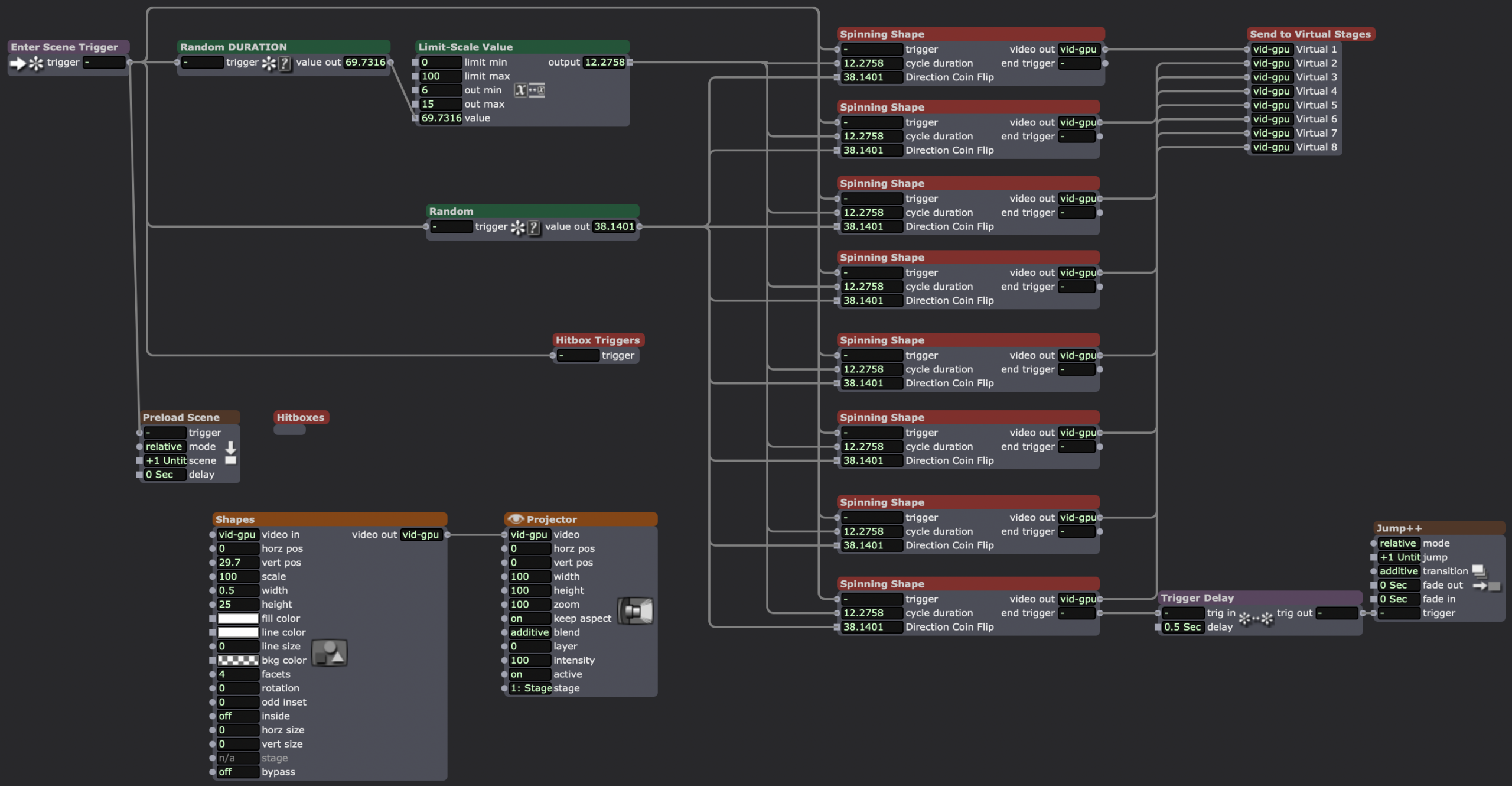
The overview of my patch, upon entering the scene, the random numbers for duration of the cycle and the direction of the spin are generated, since they’ll be applied to all of the shapes. When the cycle ends, the spinning shape user actor sends a trigger to the Jump++ actor, going to a duplicate scene, which jumps back to the first scene.
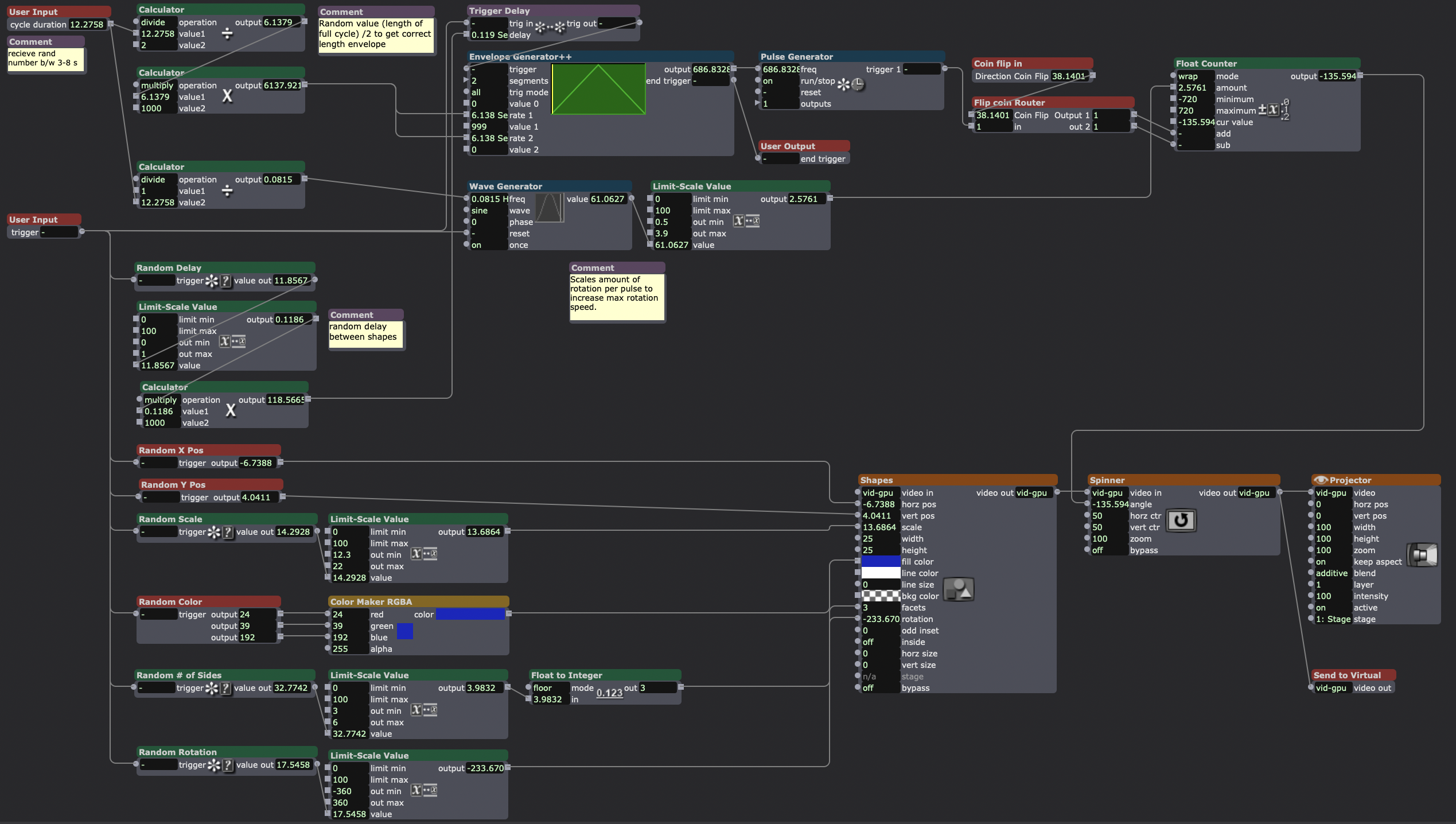
Inside my “spinning shape” actor, the final result of my original user actor sketch. The bottom 2/3rds of the screen contains the actors randomizing the attributes of the shapes actor. The top 3rd deals with spinning the shape clockwise or counter-clockwise (decided by the “flip coin router” user actor) for a cycle of random length with a random delay from shape-to-shape.
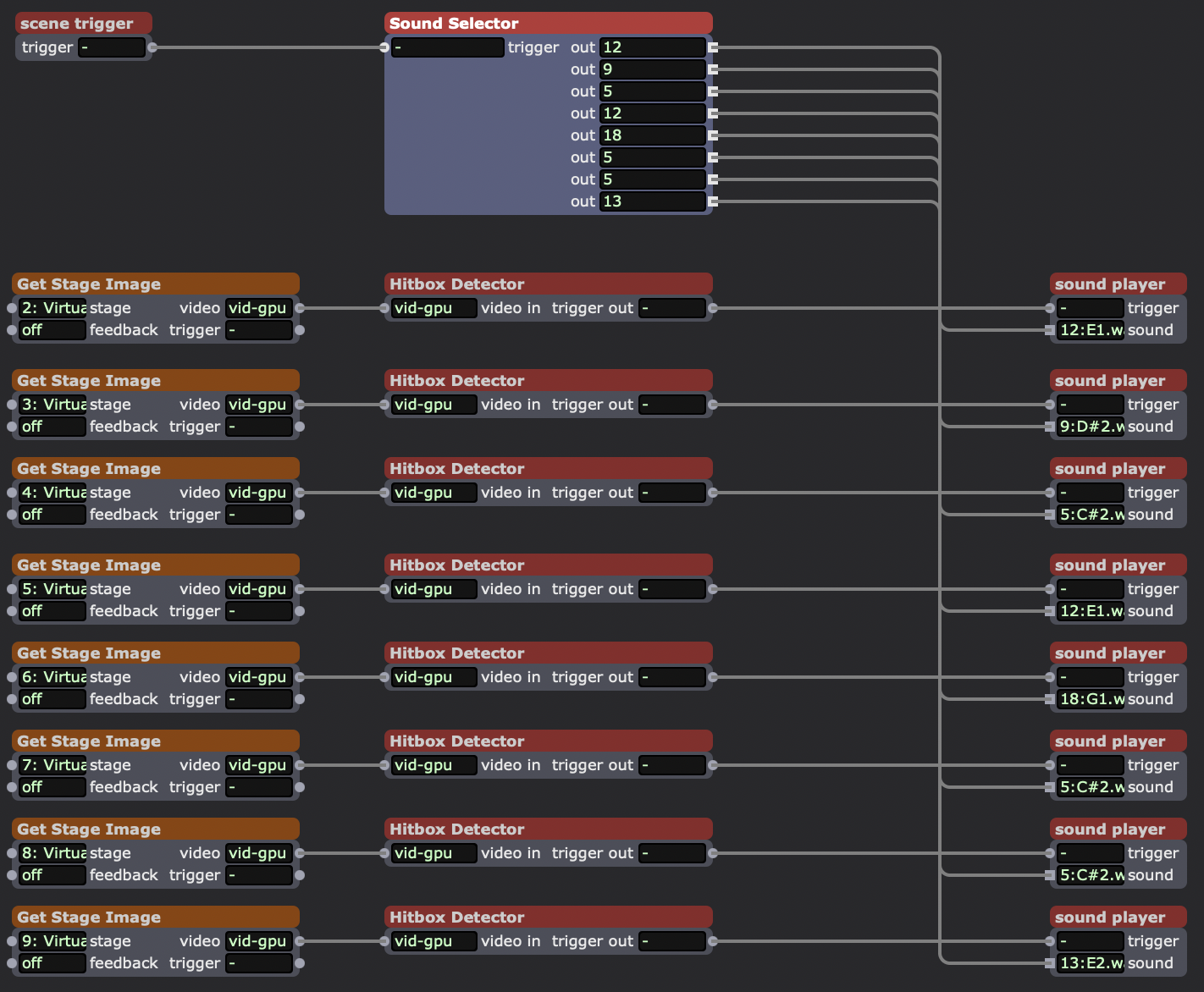
Inside my “hitbox trigger” user actor. This actor takes each shape (which has been sent to its own virtual stage) and looks for when it makes contact with a small white rectangle I sent to every virtual stage in the “hitboxes” user actor. When it makes contact, it was supposed to trigger a random sound in the “sound player” actor.
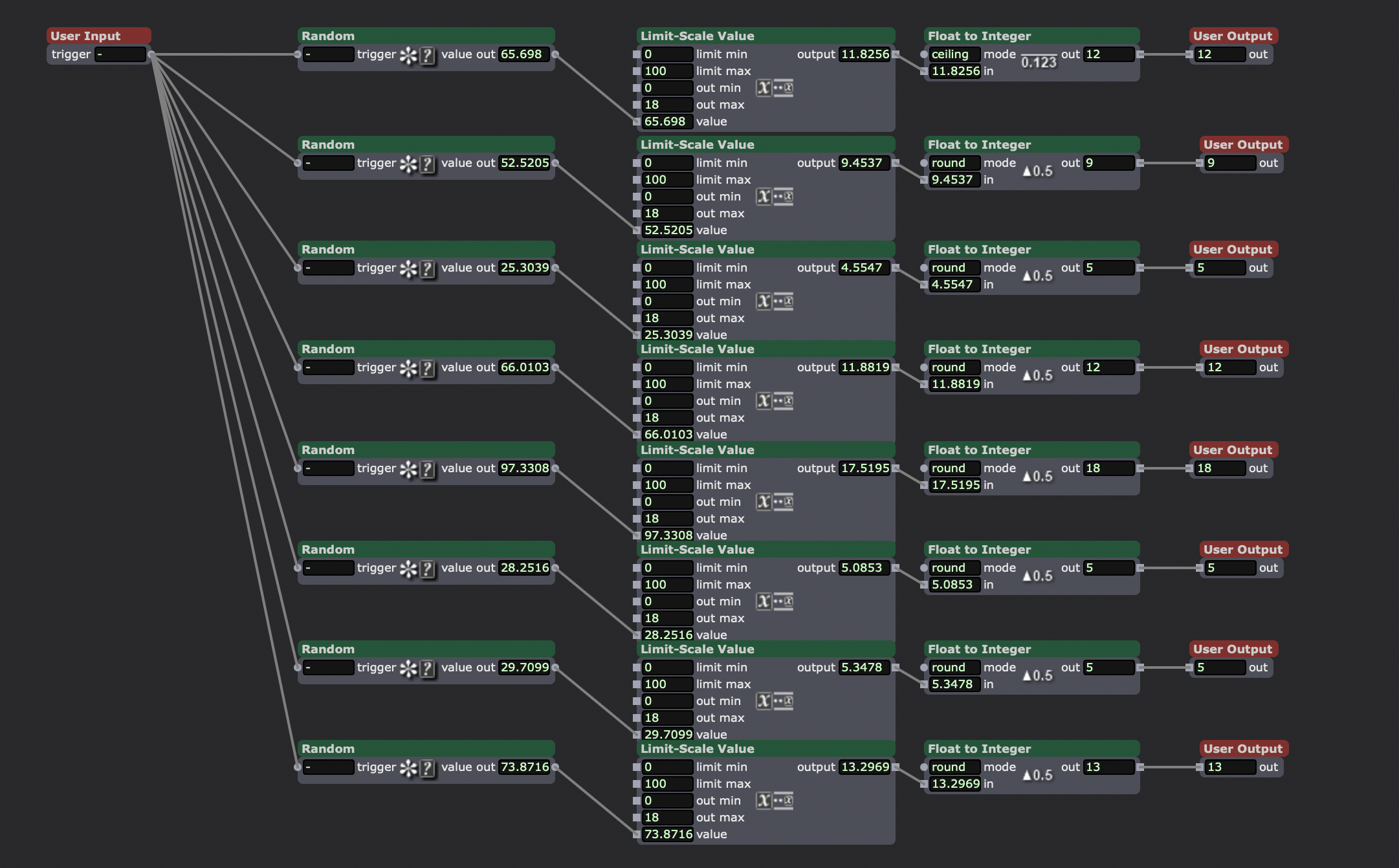
Random selection of 18 short samples of single notes. Chromatic from C3-F4.
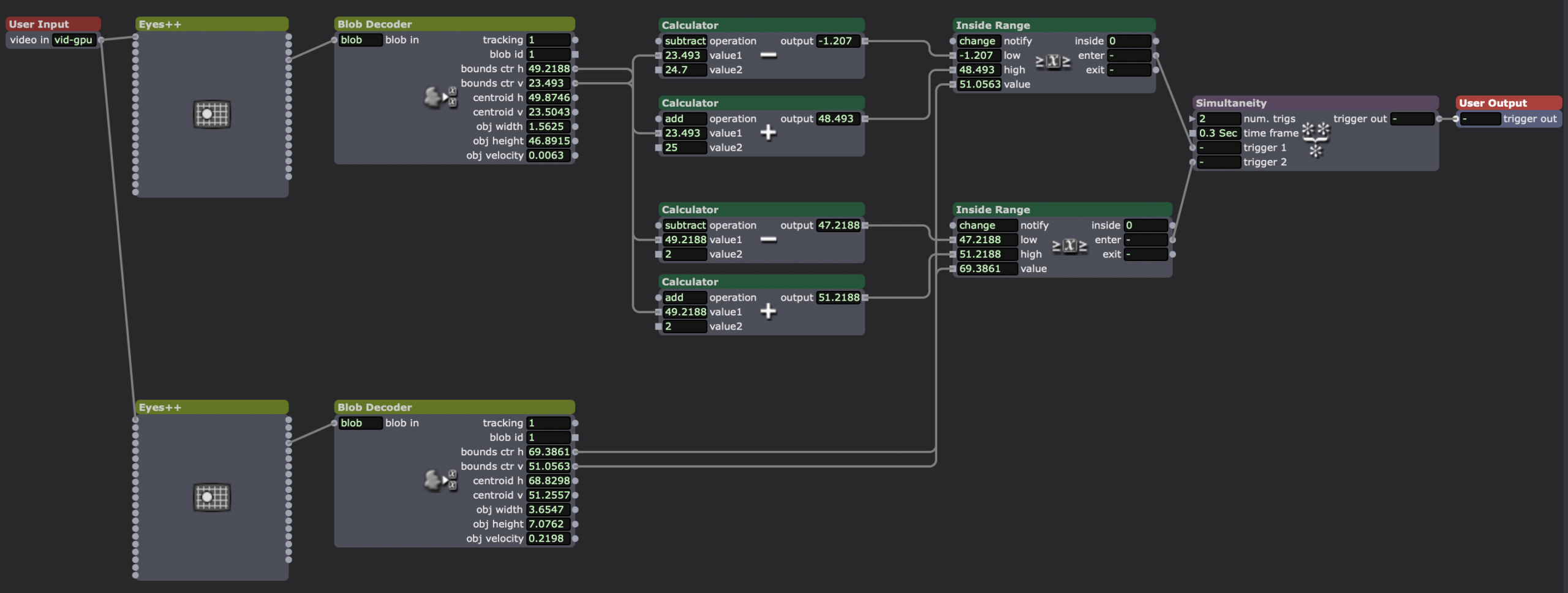
How I checked if one of the spinning shapes was inside the same area as the hitbox, sending a trigger when they “made contact.”
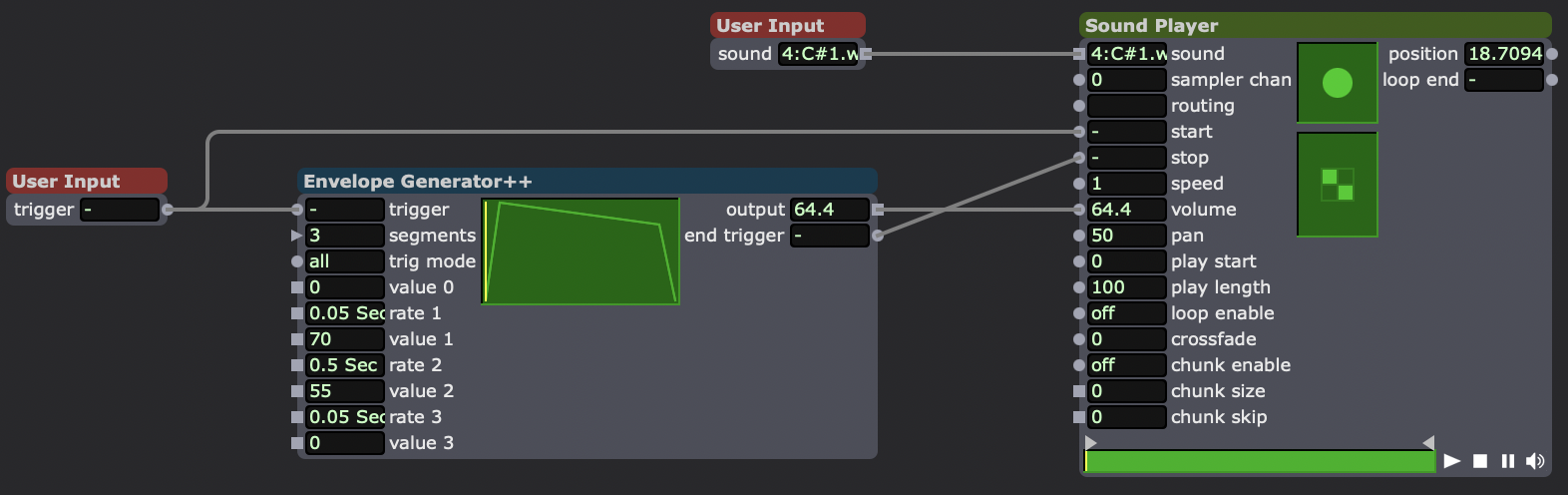
Sound playback user actor.
A sample of how the final version of the patch behaved. The white line (actually smaller than the hitbox) was left on screen to provide a reference for when the sound was supposed to trigger (despite it not working that way due to the high load of the patch).
Reflection
One of the best ways I managed the 5-hour time constraint was to make the sketch of my idea as seen earlier in this post. By working backwards from my initial idea to solve the problem the best I could on paper, I gave myself a framework to easily build off of later when problems or changing ideas arose. It also meant that I had a general idea of all the different parts of the patch I would need to build before I actually started working on it. This also guided what I would include/exclude in the patch.
While my patch didn’t end up working the way I wanted it to (sounds were supposed to trigger immediately when the shapes crossed the line, unlike what is seen in the above video) I was very surprised how this didn’t “ruin” the experience, and how it even created a more interesting one. With the collision of the shapes and the white line being decorrelated from the sounds, the class became seemingly became more curious about what was actually going on, especially when the sounds would appear to trigger with the collision after all. I was also interested to see the ways people “bootstrapped” meaning on to this patch. For example, Chad had noticed that in one of the scenes, the shapes were arranged in a question mark sort of shape, leading him to ask about the “meaning” of the arrangement and properties of the shapes, despite them being entirely random.
During the performance of the patch, I unlocked the three achievements concerning holding the class’s attention for 30 seconds. I did not make someone laugh, or make a noise of some sort, as I think the more “abstract” nature of my patch seemed to focus the room once it started.