Pressure Project 1: The Musical Spiral
Posted: February 13, 2026 Filed under: Uncategorized Leave a comment »Description
The musical spiral is a self-generating patch that randomly generates shapes at different sizes and positions, and spins them in a random direction for a random-length cycle. When these shapes cross a line, they (are supposed) to trigger a random musical note.
Documentation
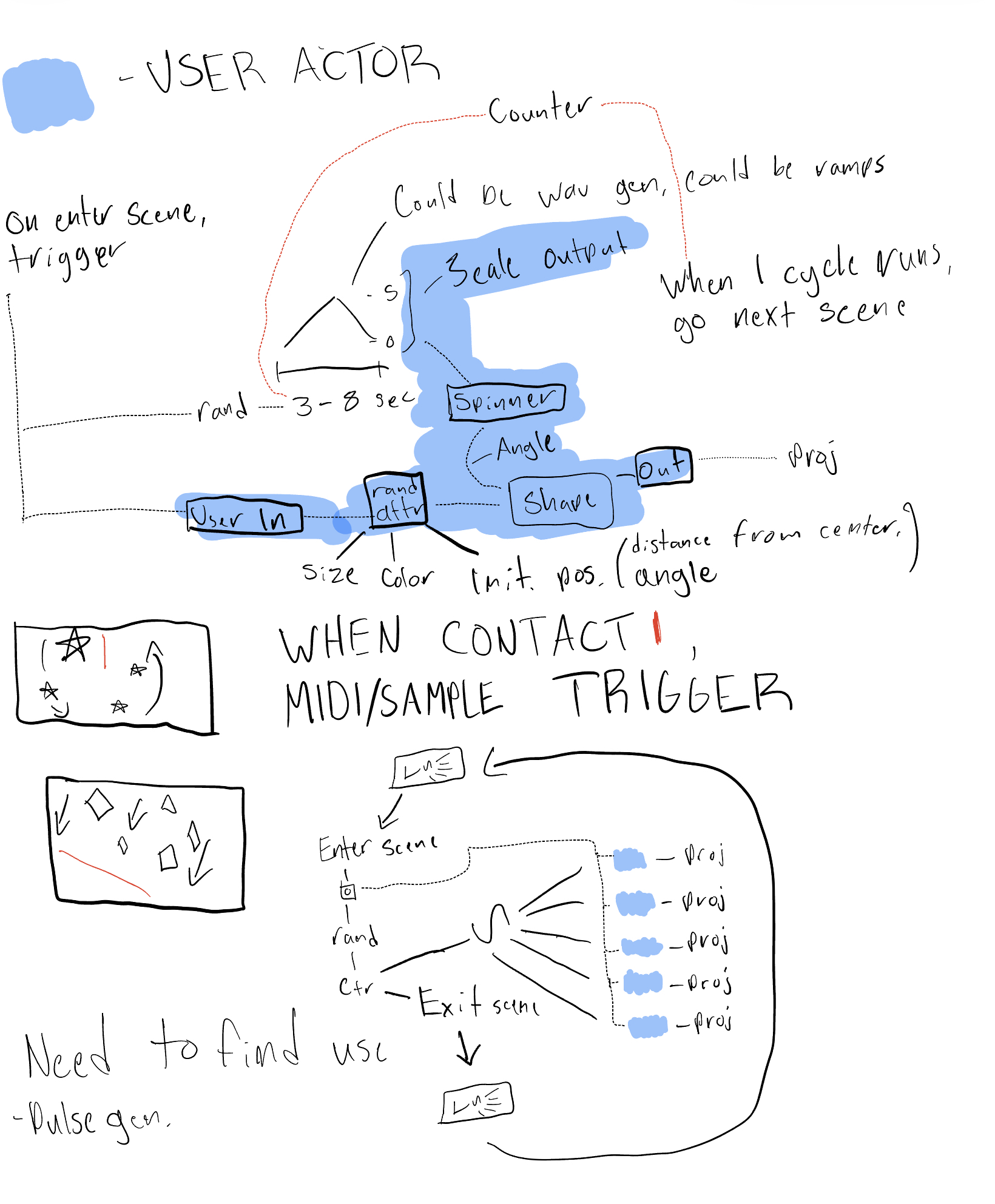
Before starting to code my patch, I did a quick sketch for my idea of what I generally wanted the patch to do to help me save time later. While I had to change and add a bit outside of this, this essentially became the outline of what my code would look like.
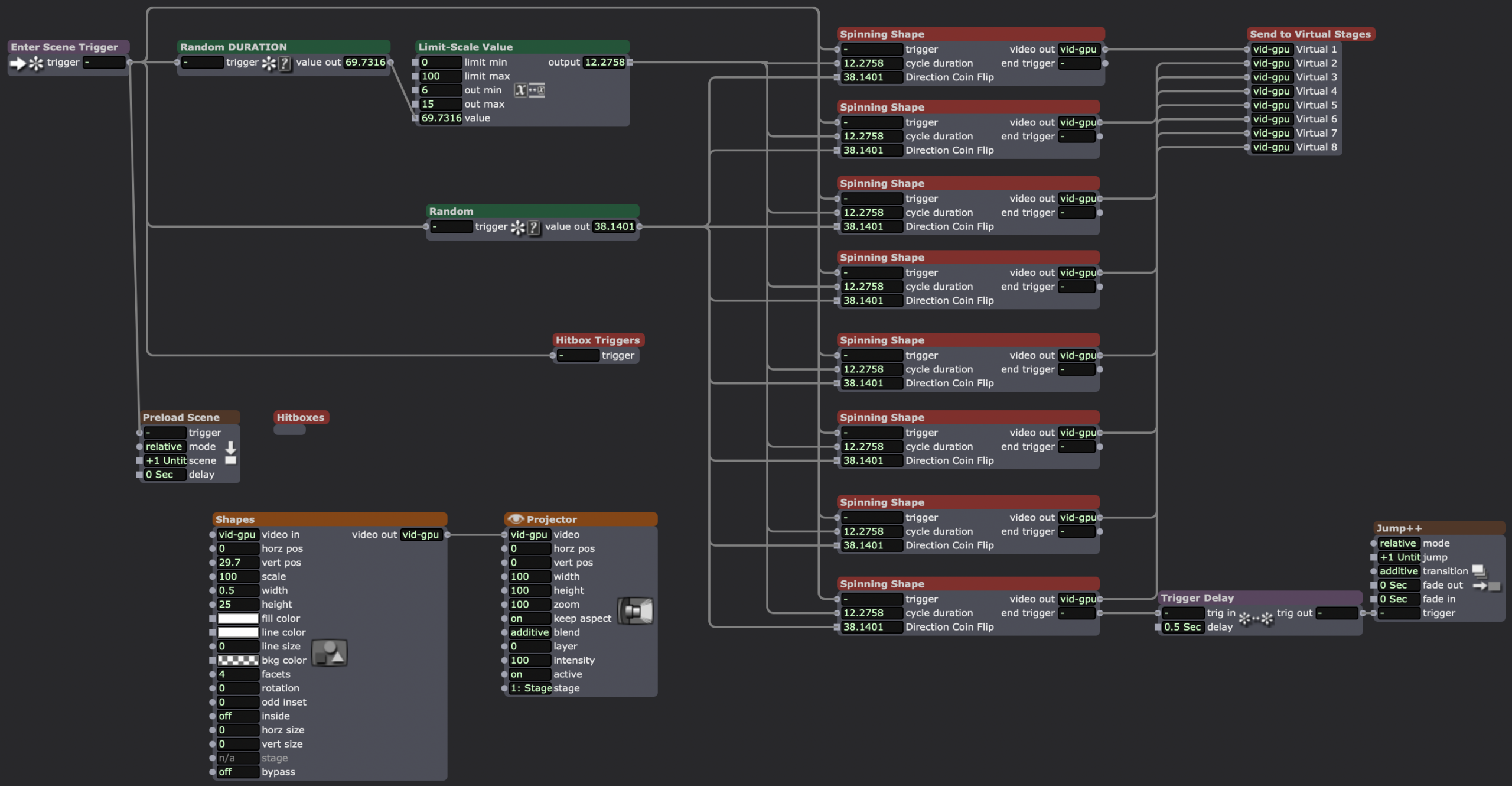
The overview of my patch, upon entering the scene, the random numbers for duration of the cycle and the direction of the spin are generated, since they’ll be applied to all of the shapes. When the cycle ends, the spinning shape user actor sends a trigger to the Jump++ actor, going to a duplicate scene, which jumps back to the first scene.
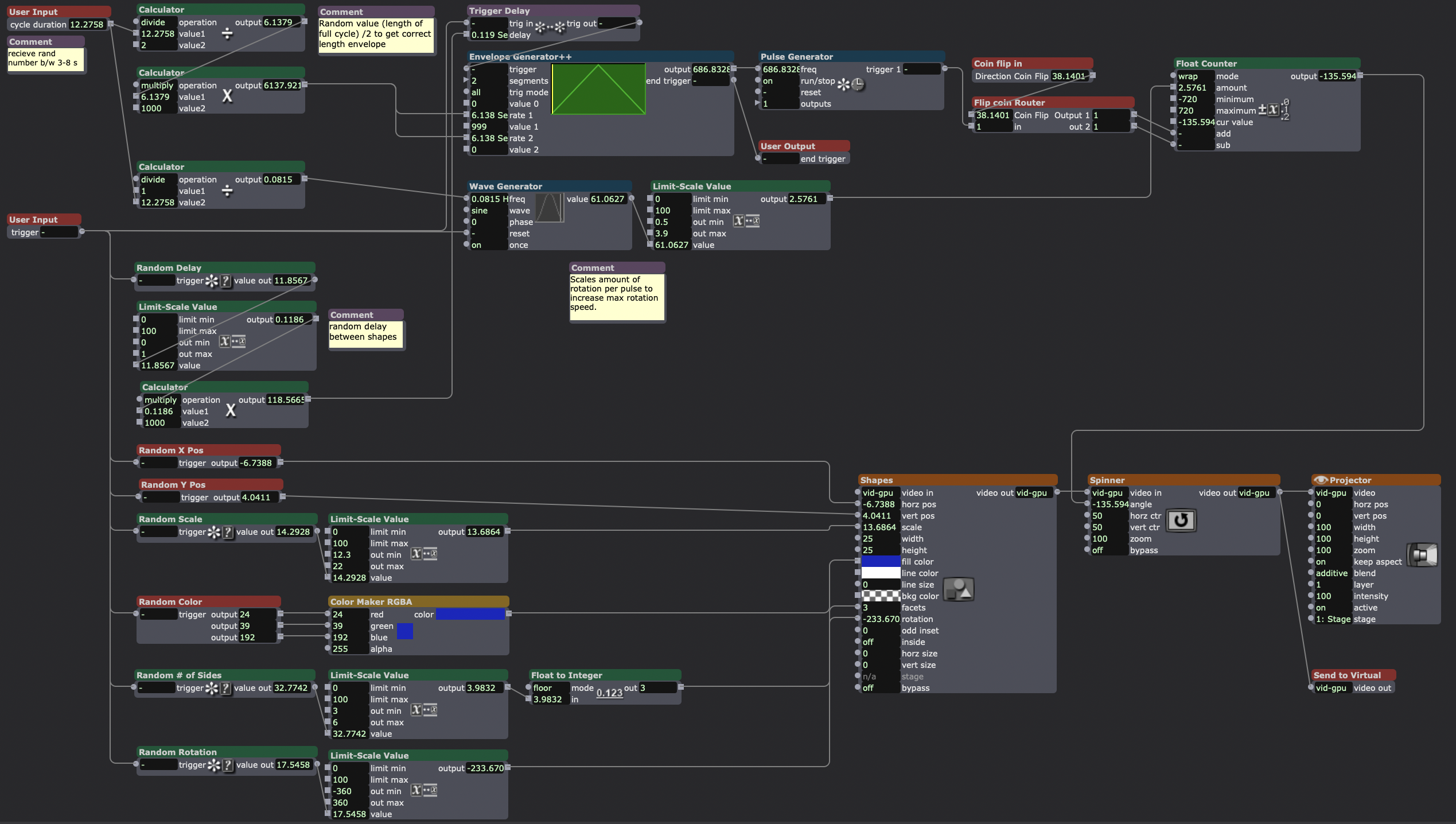
Inside my “spinning shape” actor, the final result of my original user actor sketch. The bottom 2/3rds of the screen contains the actors randomizing the attributes of the shapes actor. The top 3rd deals with spinning the shape clockwise or counter-clockwise (decided by the “flip coin router” user actor) for a cycle of random length with a random delay from shape-to-shape.
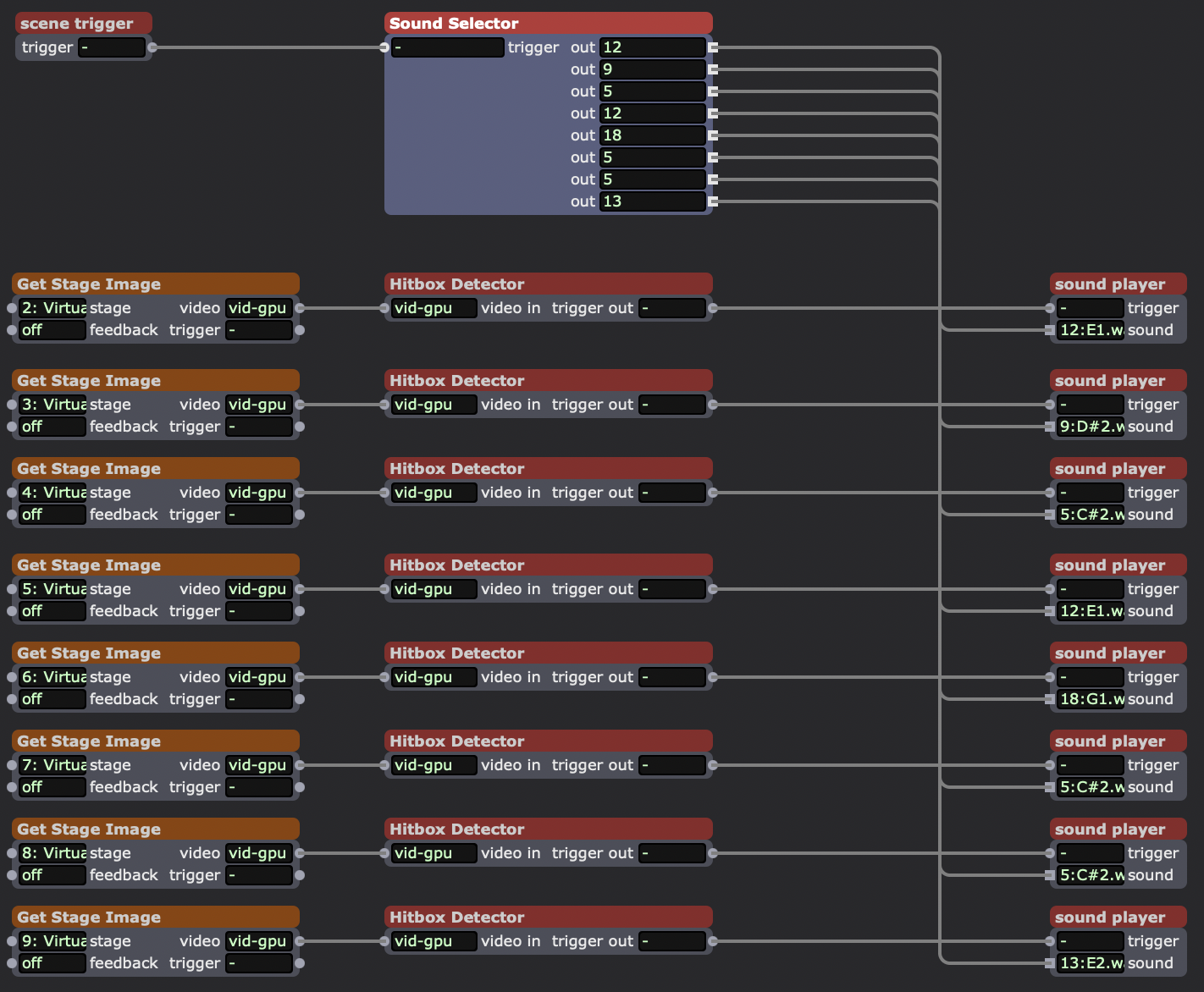
Inside my “hitbox trigger” user actor. This actor takes each shape (which has been sent to its own virtual stage) and looks for when it makes contact with a small white rectangle I sent to every virtual stage in the “hitboxes” user actor. When it makes contact, it was supposed to trigger a random sound in the “sound player” actor.
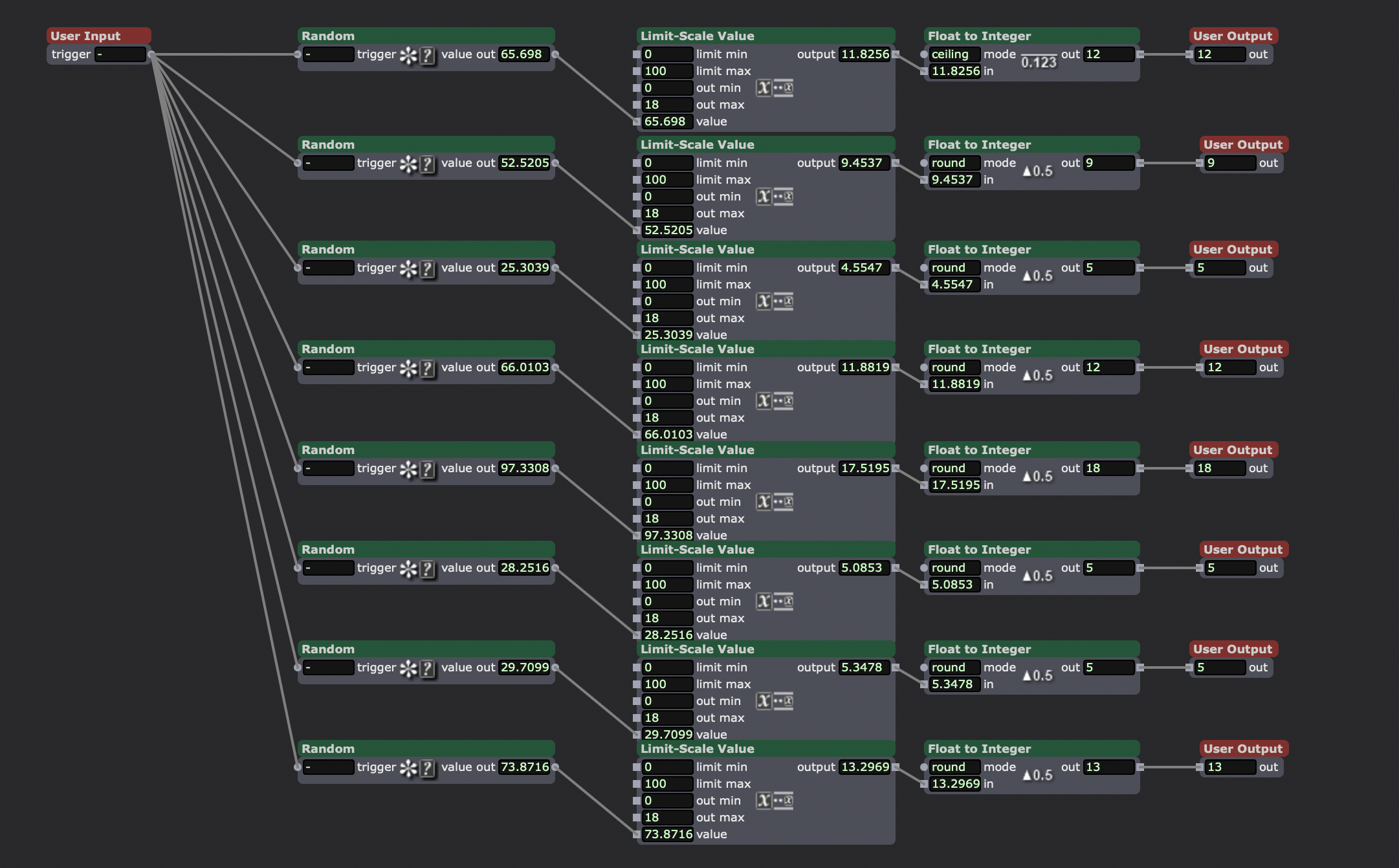
Random selection of 18 short samples of single notes. Chromatic from C3-F4.
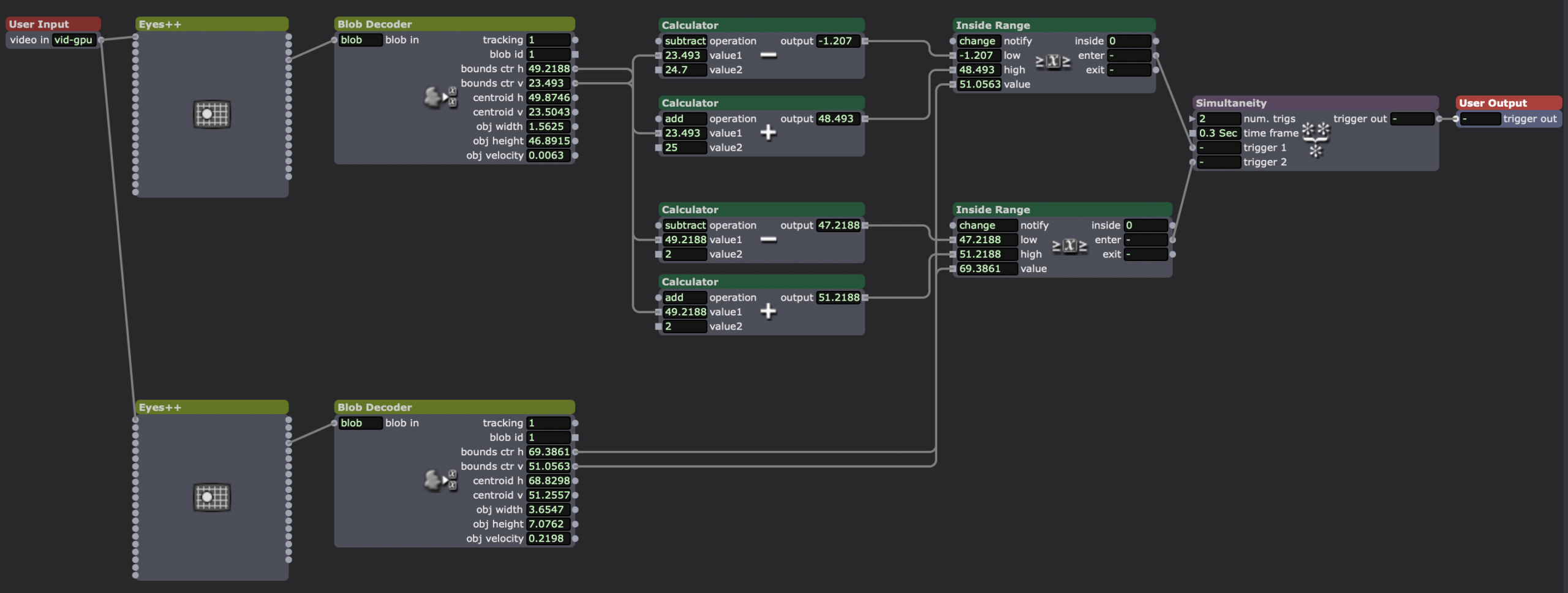
How I checked if one of the spinning shapes was inside the same area as the hitbox, sending a trigger when they “made contact.”
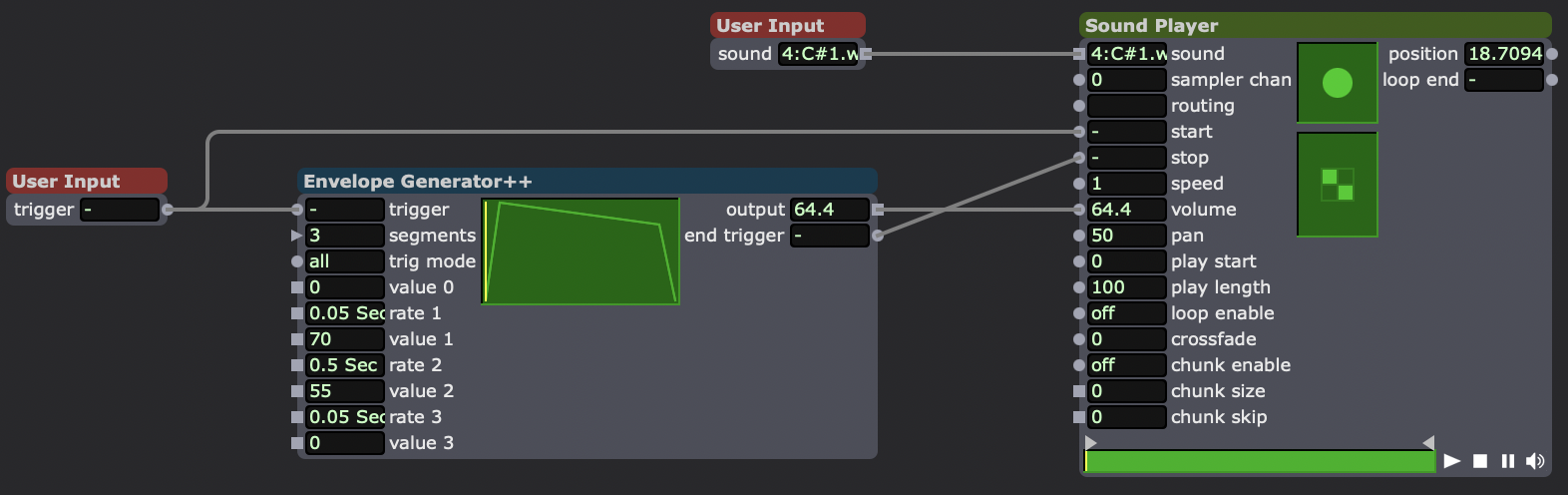
Sound playback user actor.
A sample of how the final version of the patch behaved. The white line (actually smaller than the hitbox) was left on screen to provide a reference for when the sound was supposed to trigger (despite it not working that way due to the high load of the patch).
Reflection
One of the best ways I managed the 5-hour time constraint was to make the sketch of my idea as seen earlier in this post. By working backwards from my initial idea to solve the problem the best I could on paper, I gave myself a framework to easily build off of later when problems or changing ideas arose. It also meant that I had a general idea of all the different parts of the patch I would need to build before I actually started working on it. This also guided what I would include/exclude in the patch.
While my patch didn’t end up working the way I wanted it to (sounds were supposed to trigger immediately when the shapes crossed the line, unlike what is seen in the above video) I was very surprised how this didn’t “ruin” the experience, and how it even created a more interesting one. With the collision of the shapes and the white line being decorrelated from the sounds, the class became seemingly became more curious about what was actually going on, especially when the sounds would appear to trigger with the collision after all. I was also interested to see the ways people “bootstrapped” meaning on to this patch. For example, Chad had noticed that in one of the scenes, the shapes were arranged in a question mark sort of shape, leading him to ask about the “meaning” of the arrangement and properties of the shapes, despite them being entirely random.
During the performance of the patch, I unlocked the three achievements concerning holding the class’s attention for 30 seconds. I did not make someone laugh, or make a noise of some sort, as I think the more “abstract” nature of my patch seemed to focus the room once it started.
Pressure Project#1: Pitch, Please.
Posted: February 10, 2026 Filed under: Pressure Project I | Tags: Interactive Media, Isadora, Pressure Project, Pressure Project One Leave a comment »Description: Pitch, Please is a voice-activated, self-generating patch where your voice runs the entire experience. The patch unfolds across three interactive sequences, each translating the frequency from audio input into something you can see and play with. No keyboard, no mouse, just whatever sounds you’re willing to make in public.
Reflection
I did not exactly know what I wanted for this project, but I knew I wanted something light, colorful, interactive, and fun. While I believe I got what I intended out of this project, I also did get some nice surprises!
The patch starts super simple. The first sequence is a screen that says SING! That’s it. And the moment someone makes a sound, the system responds. Font size grows and shrinks, and background colors shift depending on frequency. It worked as both onboarding and instruction, and made everyone realize their voice was doing something.
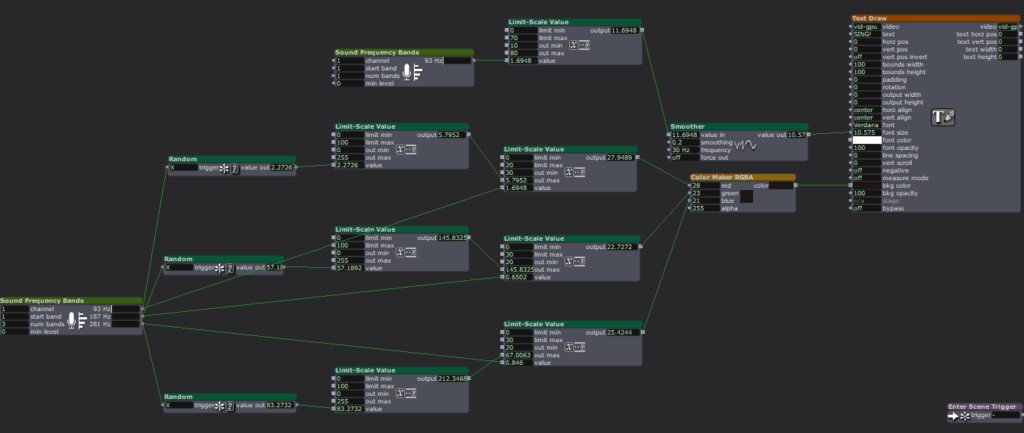
The second sequence is a Flappy Bird-esque game where a ball has to dodge hurdles. The environment was pretty simple and bare-bones, with moving hurdles and a color-changing background. You just have to sing a note, and make the ball jump. This is where things got fun. Everyone had gotten comfortable at this point. There was a lot more experimentation, and a lot more freedom.
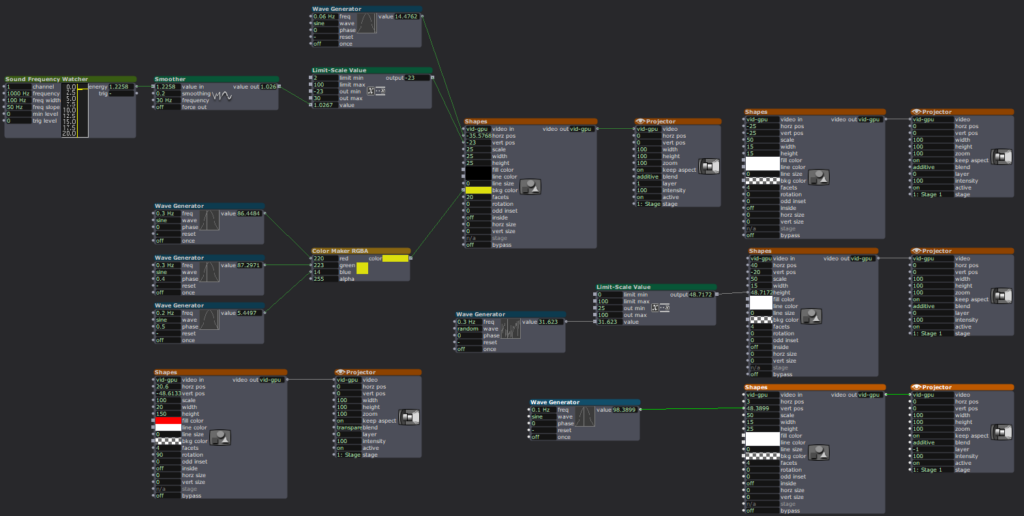
The final sequence is a soothing black screen, with a trail of rings moving across the screen like those old screensavers. Again, audio input controls the ring size and color. Honestly, this one was just made as an afterthought because three sequences sounded about right in my head. So, I was pretty surprised when majority of the class enjoyed this one the best. It’s just something about old-school screensaver aesthetic. Hard to beat.
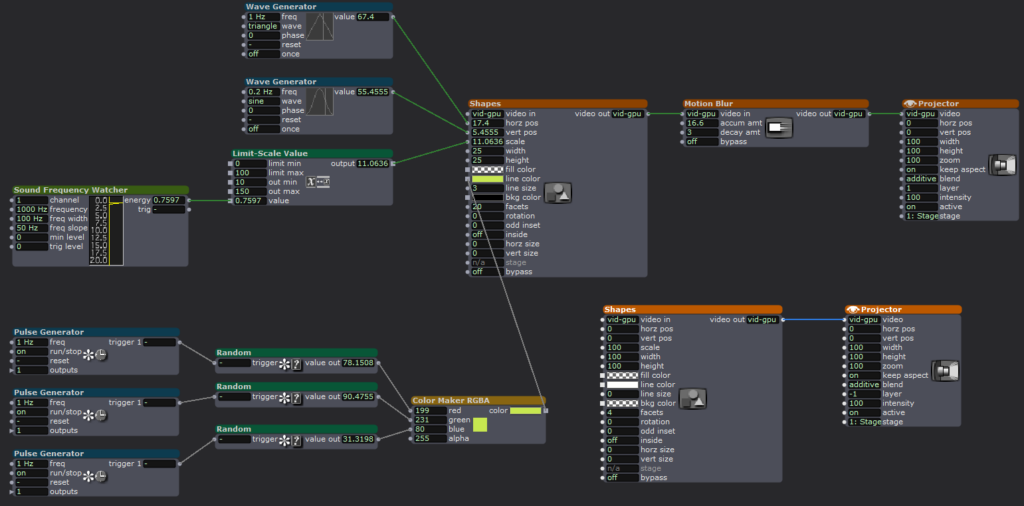
What surprised me most was how social it became. I was alone at home when I made this and I didn’t have anyone test it so, it wasn’t really made with collaboration in mind, but it happened anyway. I thought people would interact one at a time. Instead, it turned into a group activity. There was whistling, clapping and even opera singing. (Michael sang an Aria!) At one point people were even teaming up, and giving instructions to each other on what to do.
When I started this project, I had a very different idea in my mind. I couldn’t figure it out though, and just wasted a couple hours. I then moved on to this idea of a voice controlled flappy-duck game, and started thinking about the execution it in the most minimal way possible (because again, time). This one took me a while, but I reused the code for the other two sequences and managed to get decent results within the timeframe. There’s something about knowing there is a time limit. It just awakens a primal instinct in me that kind of died after the era of formal timed exams in my life ended. In short, I pretty much went into hyperdrive and delivered. I’m sure I would’ve wasted a lot more time on the same project if there was no time limit. I’m glad there was.
That said, could it be more polished? Yes. Was this the best I could do in this timeframe? I don’t know, but it is what it is. If I HAD to work on it further, I’d add a buffer at the start so the stage doesn’t just start playing all of a sudden. I would also smooth out the hypersensitivity of the first sequence which makes it look very glitchy and headache-inducing. But honestly, with the resources that I had, Pitch, Please turned out decent. I mean, I got people to play, loudly, badly, collaboratively, and with zero shame, using nothing but their voice. Which was kind of the whole point.
Pressure Project #1 – A Walk In Nature
Posted: February 9, 2026 Filed under: Uncategorized Leave a comment »Description: “A Walk In Nature” is a self-generating experience that documents two individuals’ time together deep in the woods.
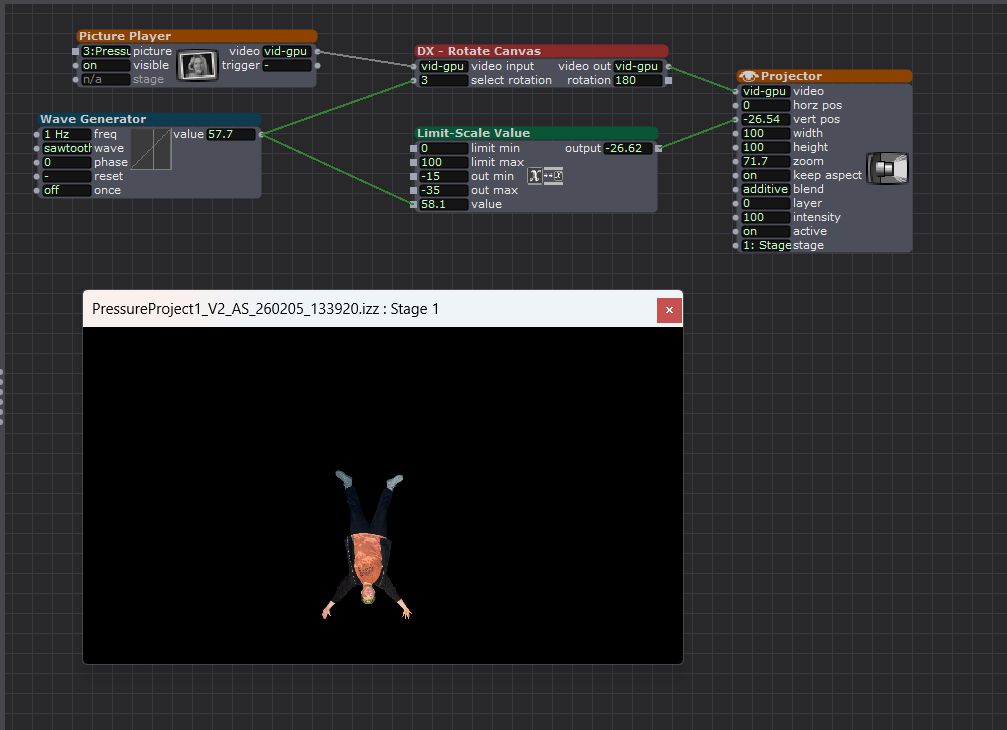
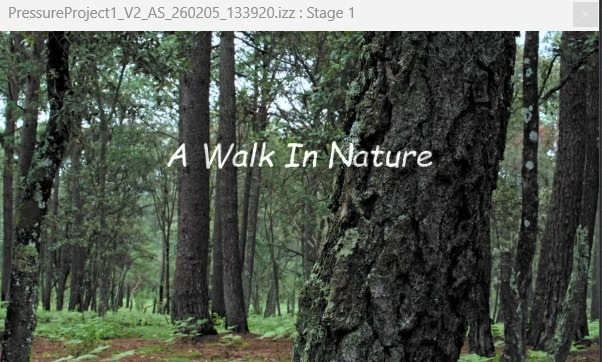
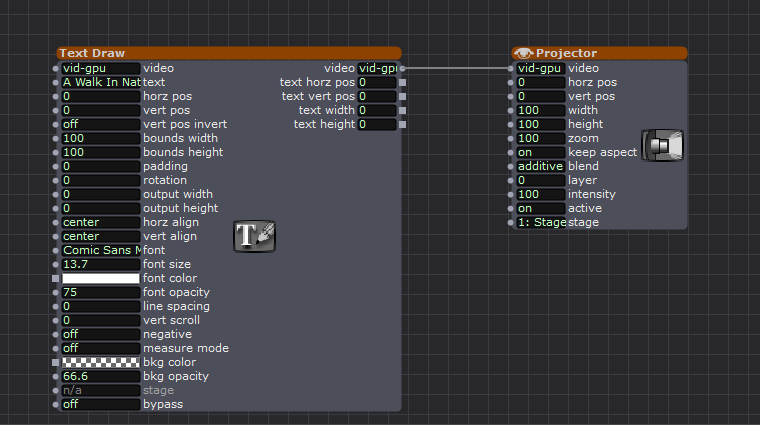
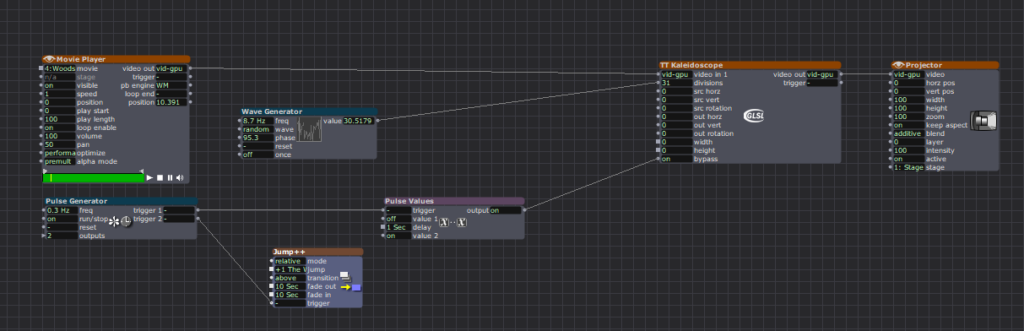
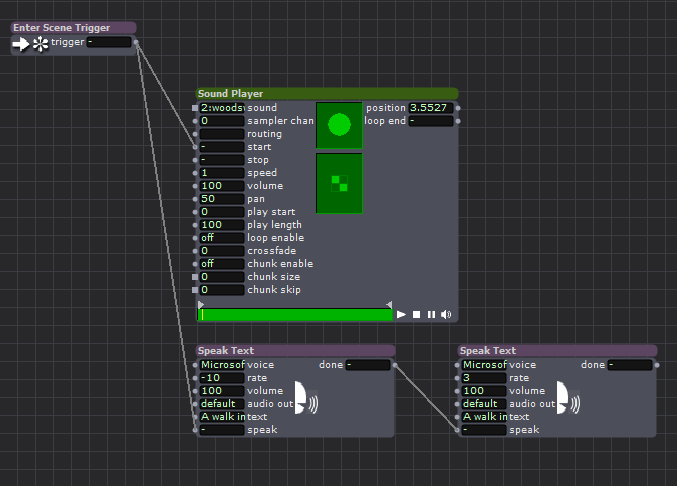
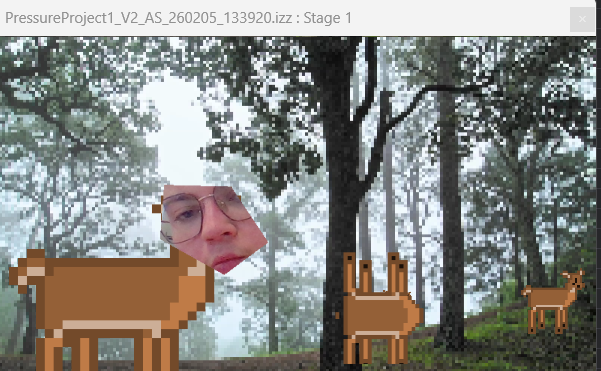
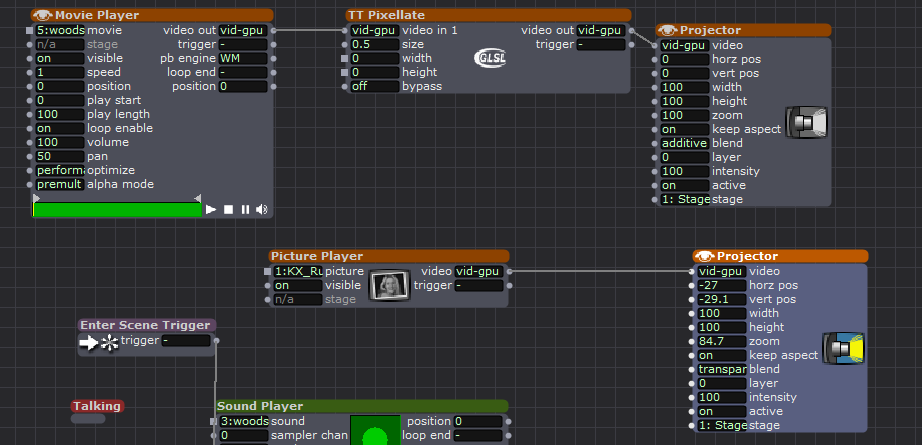
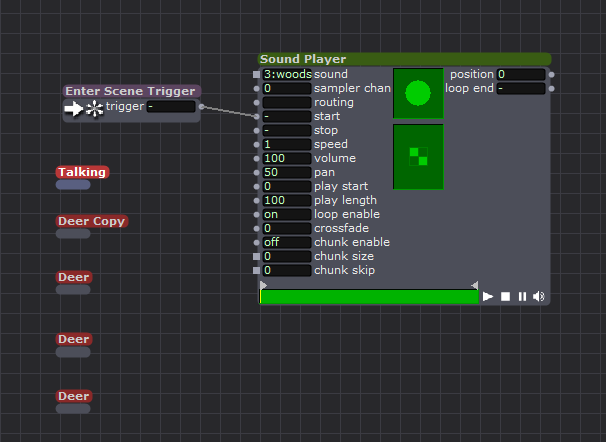
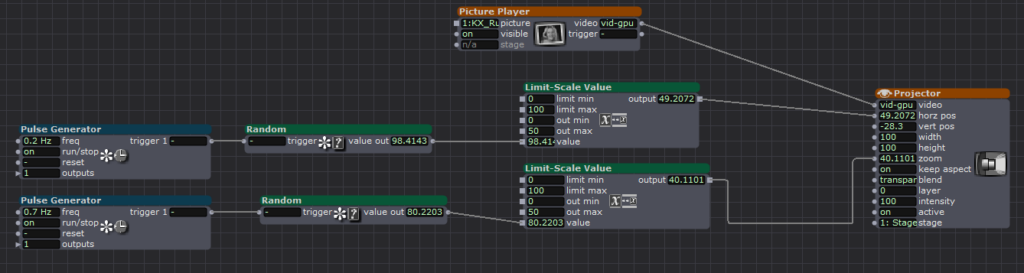
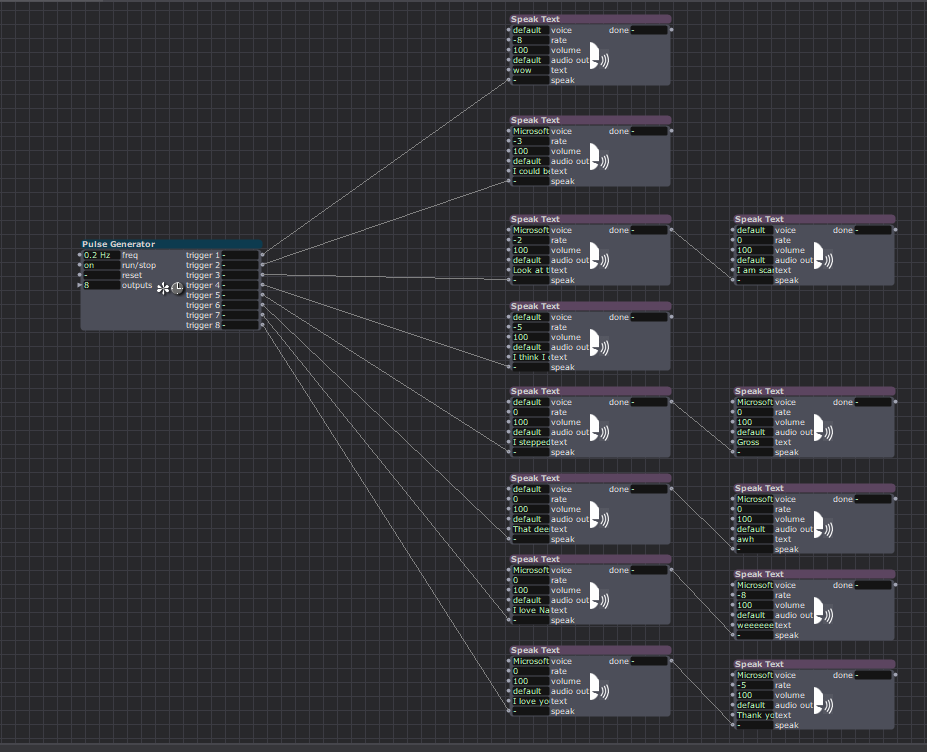
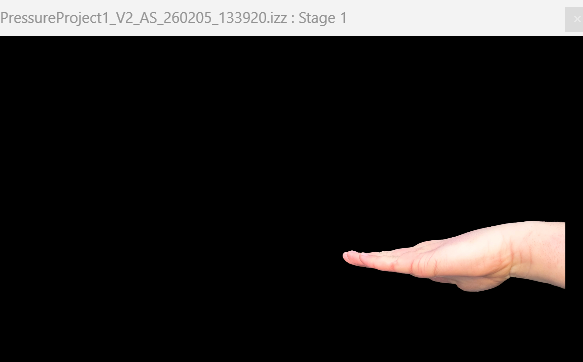
The Meat and Bones (view captions for descriptions):
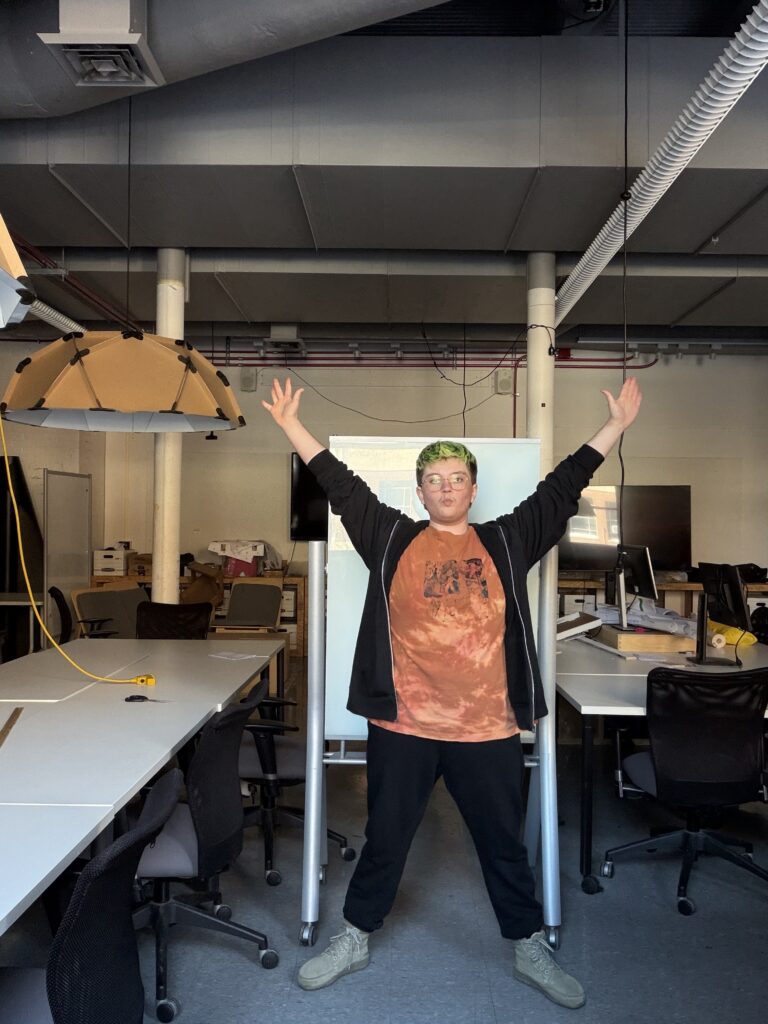
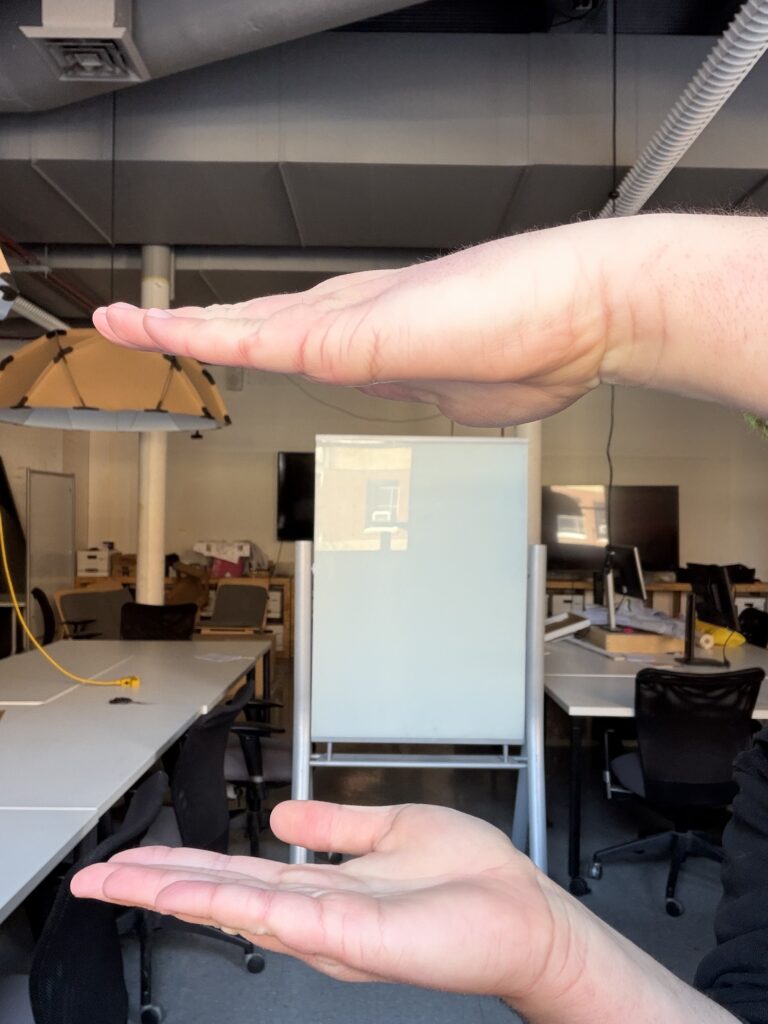
Photos I took before production (I had no real clue what I was going to do)
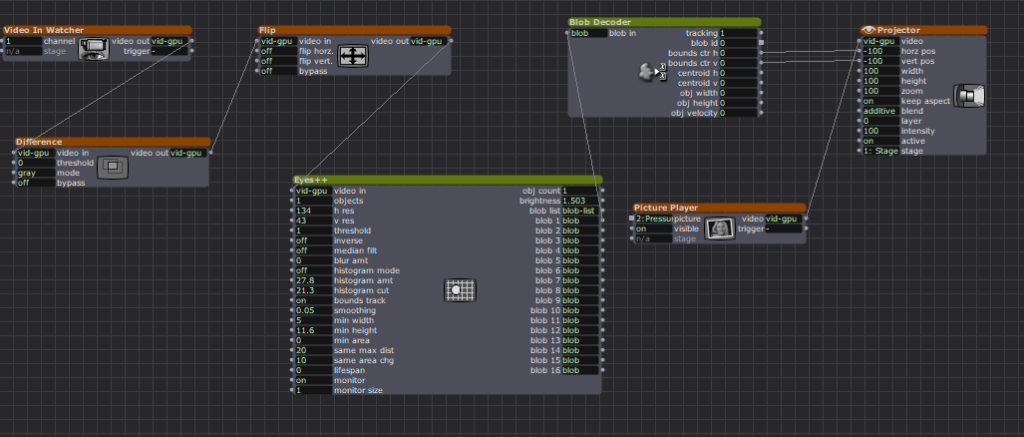
The Reactions:
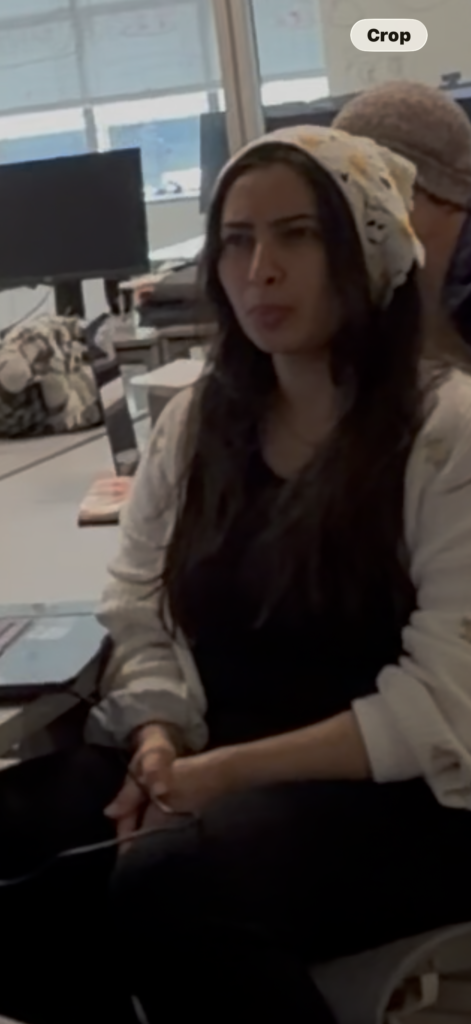
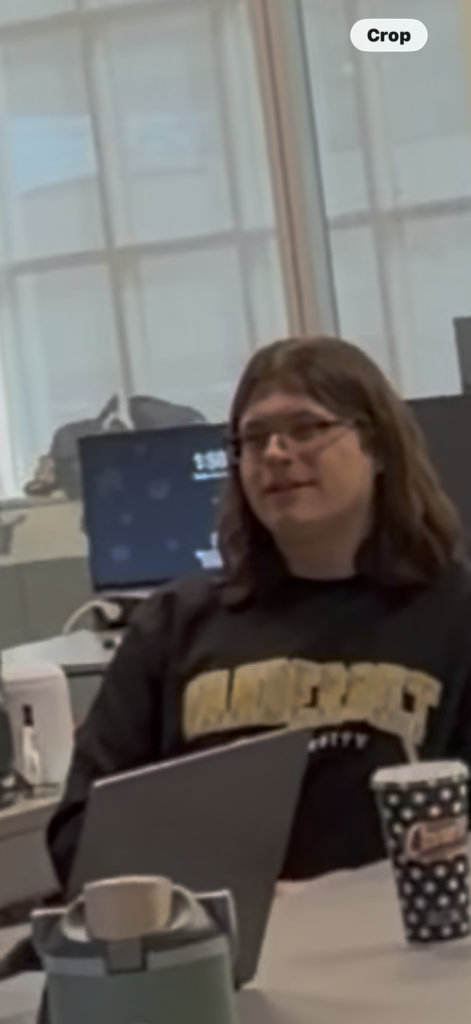
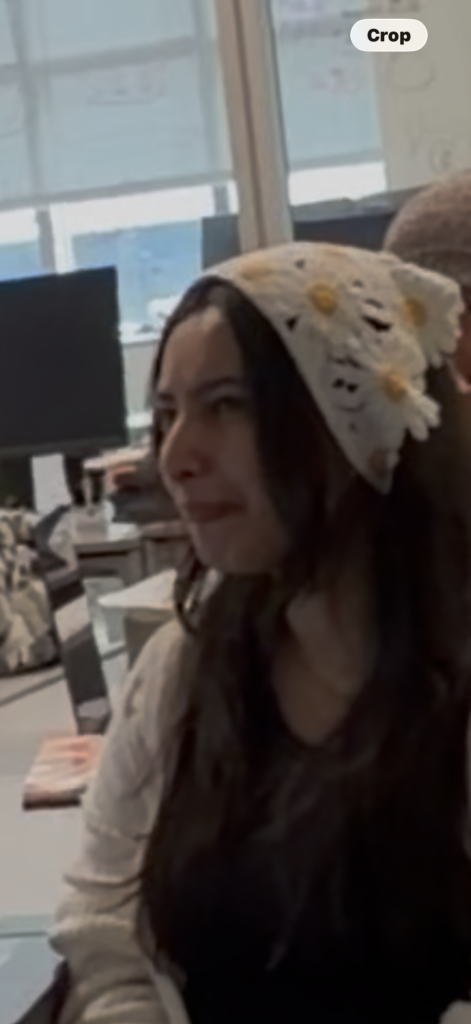
I am very thankful for Zarmeen’s presence, as I don’t know if I would’ve achieved all the bonus points without her. While I received relatively affirming verbal feedback at the end, without her talent of reacting physically, I would have felt way more awkward showing this messed-up video.
Reflections:
I was actually extremely relieved to have a time limit on the project, as I am very limited on time as a grad student with a GTA and part-time job (it’s rough out here). I loved the idea of throwing something at the wall and seeing what sticks. I chose to do the majority of the work in one setting, figuratively locking oneself in a room for five hours and leaving with a thing felt correct. I did note ideas that popped up throughout the week, but I didn’t end up doing any of them anyway.
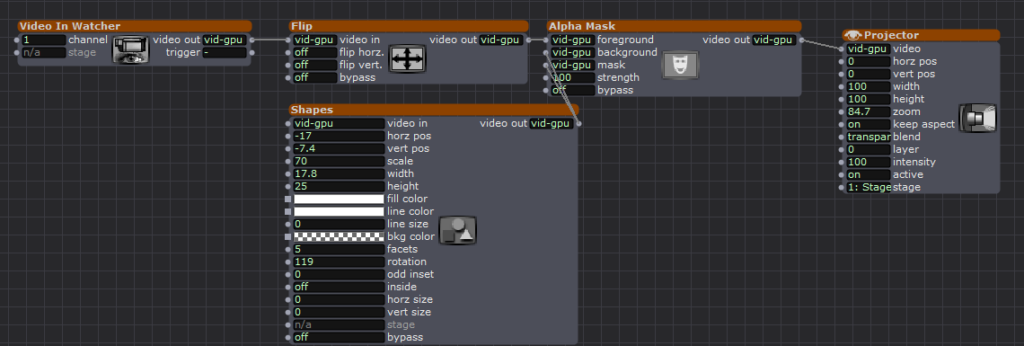
I was far too hung up on the idea of making sure people pay attention; original ideas had the machine barking orders at the viewers to “not look away”, but that felt mean. So I went with the idea of making everyone so uncomfortable that they forget to look away, like how I feel watching Fantastic Planet. Towards the last hour, I realized that aside from robots talking, I needed user interaction to make this feel whole. However, the cartwheel and petting action didn’t work out as pictured above. So what if the audience could be the deer?
The last hour was me messing with an app to use my camera as the webcam (Eduroam ruined my dreams there). So I grabbed a webcam from the computer lab the day of. (sorry Michael) I knew I was going to choose one lucky viewer to hold the camera, and choosing Alex was improvised I just thought he would be most excited to hold it. I was pleasantly surprised that there were expressions of joy while watching, as when I showed my partner, she was scared and mad at me. I am glad my stupid sense of humor worked out. 🙂
AI EXPERT AUDIT – DANDADAN
Posted: February 5, 2026 Filed under: Uncategorized Leave a comment »I chose the anime DanDaDan as my topic. I believe I am an expert in a lot of anime/manga related topics because I have been reading manga and watching anime for more than a decade now. I love DanDaDan especially because it’s one of the few series lately that’s a little different in a world of overly saturated genres like the leveling-up games. DanDaDan is a breath of fresh air and super weird and fun filled with all sorts of absurdity. So, in order to train notebook LM about this topic, I used some YouTube videos. The videos focused on the storyline, major arcs, characters, and why is it such a hit.
1. Accuracy Check
I wasn’t so surprised that it got the gist of the story correct. I did give it sources where the youtubers summarized the whole storyline and talked about its characters, arcs and resolutions. So, it wasn’t a bad generic overview, I would even say it was good for a summary. It’s only when you’ve been thoroughly into a certain subject area that you start understanding the nuances and tiny details of it. I think it didn’t say something outright absurd if we were to talk about what it got wrong. It’s just that it sometimes mispronounced some names. With the names being Japanese, I am not surprised that they might be mispronounced, but the AI used a range of mis-pronunciations for the same name.
One of the voices in the podcast was too hung up on making the story what it is not. I mean sure it was justified at some points but it insisted that the real ideas behind this absurd adventure-comedy are deeper themes like teenage loneliness, and that it’s actually a romance story while it’s not. (It’s a blend of scifiXhorror) Sure there are sub-themes like in all anime, but it’s not the main theme. The other voice sometimes did agree with this idea. The podcast was not focused enough on just keeping it fun and light- which is what DanDaDan really is.
2. Usefulness for Learning
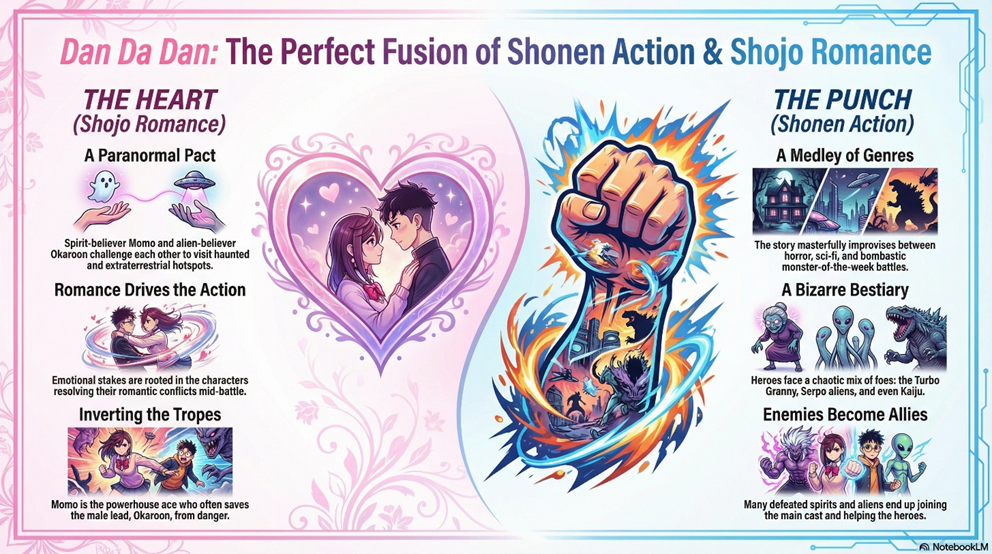
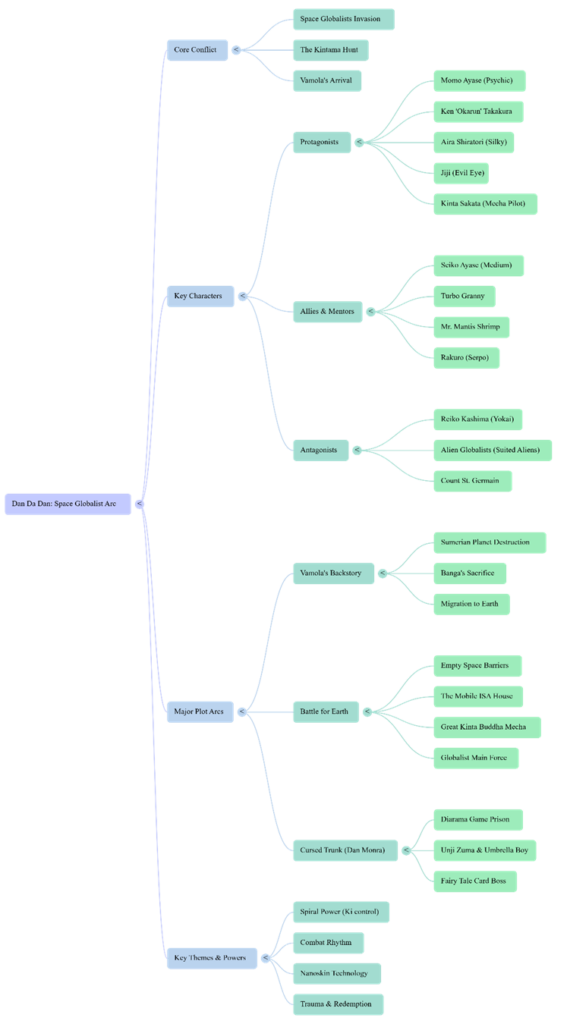
If I was listening to this topic for the first time, I feel like this podcast wouldn’t be a bad starter. Like I mentioned earlier, it gave a pretty decent summary of the whole plot. I think it definitely gets you started if you need a quick explanation of a subject area. I found the mindmap to be pretty decent too. It was a decent overview of the characters and the arcs. The infographic on the other hand… so bad. The design is super cringe and again, a lot of emphasis is on the romance and how it drives the action. Which I disagree with.
3. The Aesthetic of AI
Overall, the conversation was SO very cringe, and it was very difficult to get used to it in the beginning. I used the debate mode and they were talking so intensely about a topic that’s just nowhere as serious as the AI made it out to be. I had to just stop and remind myself it’s just a weird, fun anime they’re talking about. AI has this tendency to make everything sound intense, I guess.
4. Trust & Limitations
I would recommend AI to someone who wants a quick summary or overview of a topic. It’s what the AI is good at. What I wouldn’t recommend is to dwell on the details that the AI talks about. If anyone wants details or wants to form an opinion about a topic, they should look into it themselves.
Link to the podcast:
AI-Generated Visuals:
Sources:
https://youtu.be/8XdTF5tnMVU?list=TLGG7J2IoA7cY1QwNTAyMjAyNg
AI Expert Audit – The Elder Scrolls
Posted: February 5, 2026 Filed under: Uncategorized Leave a comment »Source Material
Since for my topic, I chose to pick a game which already has a wealth of in-universe literature written, my primary source was a pdf of every book that exists in the series, found at LibraryofCodexes.com. I also chose to upload a small document I found giving a general timeline of the series and its history, as well as a short video covering the history of the world.
I chose this topic as over the course of the last 10 years, I’ve likely played up to (or over) 1000 hours of these games over 3 different games. Even more so, I’ve listened to countless hours of videos doing deep-dives on the world’s lore as background videos while working or driving. I think the reason I find myself so drawn to it is the relationship between world-building and experience in RPGs. As I learn more about the world, the characters I play can have more thought out backgrounds and motivations, improving my experience, which makes me want to learn more about the universe. I was also interested to see how the AI would handle sources not about the game itself, but rather about a range of topics that exist *inside* the game.
The AI-Generated Materials
Podcast
Prompt: Cover a broad history, honing focus on the conflict between men and elves
Infographic
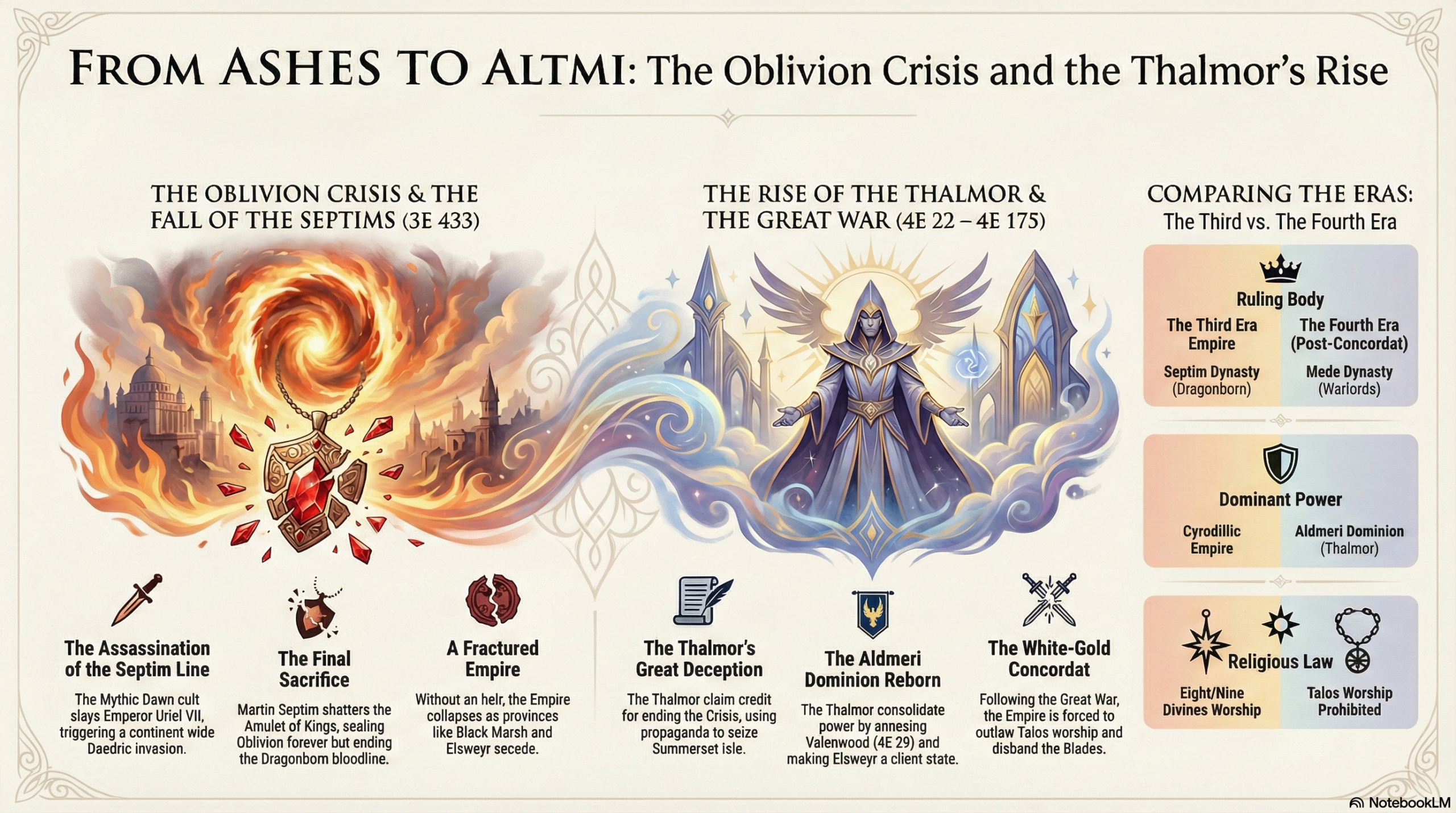
Prompt: Make an infographic about the Oblivion Crisis and how the High Elves capitalized on it.
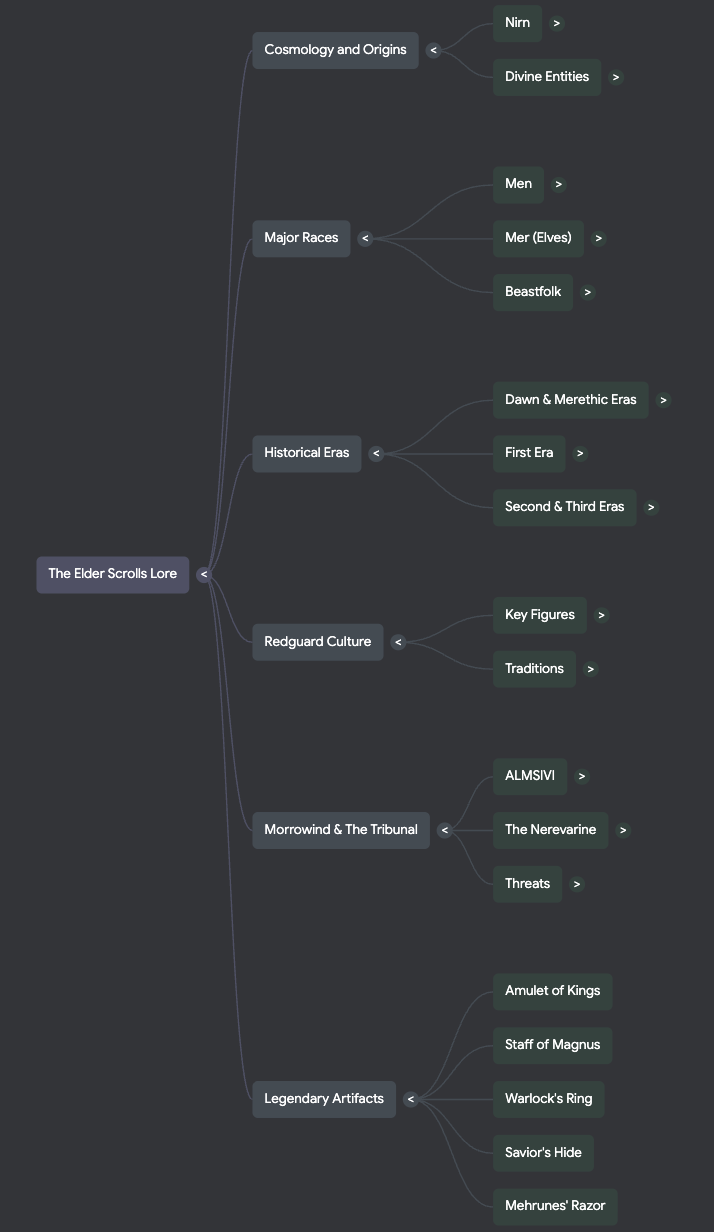
Mind Map
Audit
1. Accuracy Check
Overall, the AI got a lot right about the historical origins and monumental events in the world of the game. There are some topics that are somewhat confusing that I was surprised it got mostly right. It didn’t get much wrong, but it did make a few strange or even incorrect over-generalizations. For example, in the podcast it said that the difference between the two types of “gods” in this world is “the core takeaway for how magic works”, which it is not. Even weirder, it got the actual origin of magic in the games correct later on.
2. Usefulness for Learning
I do think that these sources would be incredibly useful for someone with no prior knowledge of this series to easily learn about the world they exist in. The podcast does a good job at simplifying the most important events for understanding what’s happening and the motivations of different factions. However there are a lot of nuanced ideas that it completely misses, which could be due to the length being set to normal. The mind map does a really good job at connecting important ideas of the universe together. However, it also places too much importance on certain topics, such as a handful of weapons, only one of which has any real importance to the larger plot. Lastly I thought that the infographic did a nice job at laying out the events that I prompted it to, but there were a few spelling errors.
3. Aesthetics of AI
One of the strangest things I encountered doing this was the ways that the AI would try to make itself sound more human during the podcast. For instance, it would stutter, become exasperated at certain abstract topics, and even make references to memes not found in the sources. The AI definitely has a certain voice to it. I don’t know how to exactly describe it, but in the podcast it seems to talk like everything it mentions is the most important thing ever, and the other AI “voice” always seems to be surprised at what the other one is saying. I actually thought that the AI did a pretty good job at emphasizing the same things a human expert would. However it somewhat glosses over the actions of the player characters during the games, which I think a person would focus a bit more on.
4. Trust and Limitations
From this, I would probably warn a person against trusting the importance the AI might place on certain topics as well as the connections it makes between topics in generated educational materials. It also seems to avoid any sort of speculative ideas whatsoever, which I found odd since there were books in the sources which do theorize on certain unknown events or topics. I’d say the AI seems the most reliable in taking the information you give it and organizing it into easily consumable chunks. However, this only seems to be at a surface level, and when it tries to draw conclusions about topics, it tends to fall flat or make incorrect assumptions. I think in this case, you’d be better off just watching a video someone has already made on the games.
AI Expert Audit: I made Notebook LM theorize about Five Nights of Freddy’s
Posted: February 4, 2026 Filed under: Uncategorized Leave a comment »The Source Material (I kind of went too far here):
we solved fnaf and we’re Not Kidding
https://www.reddit.com/r/GAMETHEORY/
How Scott Cawthon Ruind the FNAF Lore
https://freddy-fazbears-pizza.fandom.com/wiki/Five_Nights_at_Freddy%27s_Wiki
https://www.reddit.com/r/fivenightsatfreddys/
GT Live react to we solved fnaf and we’re Not Kidding
My Source Material, Why Did I Choose This?:
I actually chose materials that weren’t important to me, but they were when I was younger. I love listening to video essays and theories on various media. Whenever I was animating or doing a mundane art task in my undergrad, I would have that genre of video in the background to take a break from listening to the news (real important shit). It’s super silly stuff, but when I was a teenager, Game Theory first started getting BIG; seeing a huge channel discussing my favorite IPs, subverting and contextualizing their narratives felt very important. It really validated my feelings that video games were art.
However I am now grown, and I care far less about Five Nights of Freddy’s, now it feels like fun junk food for my brain. (Although teens and kiddos still care about the spooky animatronics, so it’s been a clutch move when bonding with the youths when I was a nanny.) I also hate AI, I hate it. I don’t hate automation; it makes life way better when done currently. I don’t think “AI” is done correctly; it’s mostly bullshit even down to the name. It’s a marketing strategy giving excuses to companies to fire workers and build giant databases that poison the land. I did not want to give Notebook LM anything “meaningful”. I didn’t want to let it in on the worlds I care about on my own volition. So, I gave it the silly spooky bear game that I know way too much about.
The AI Generated Materials
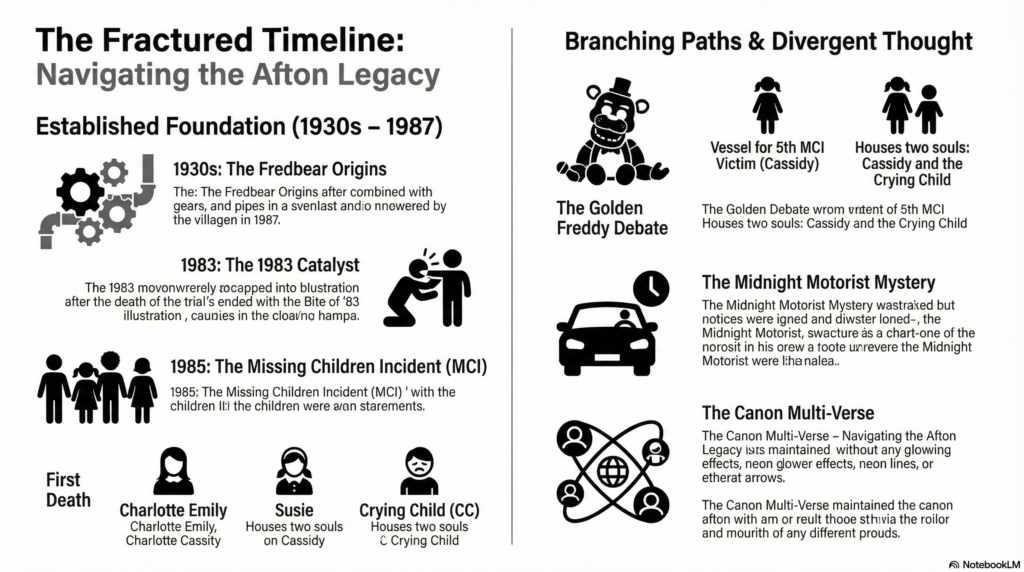
“Create an info graph of the official Five Night of Freddy’s Timeline with the information presented. Creating branches of diverging thought alongside widely agreed upon information.”
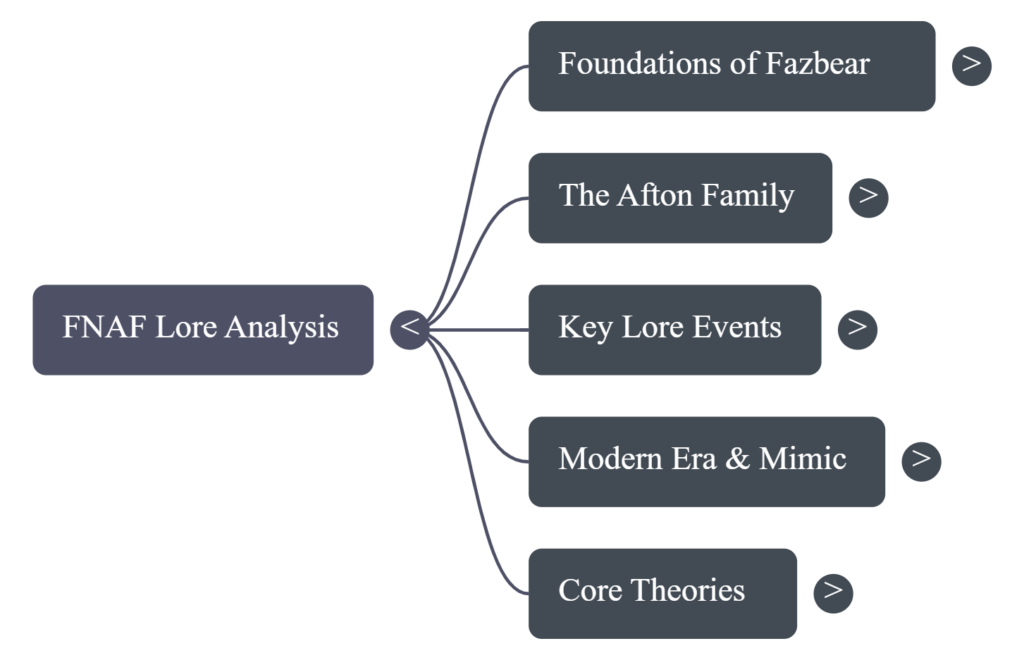
“Form a debate on what Timeline is the canon for FNAF.
Each host has to make their own original timeline.
Both hosts should sound like charismatic youtubers with dedicated channels to the video game and it’s lore.
Both Youtubers should use the words often associated with the Fandom and culture of FNAF.
Both hosts you have distinct personalities and opinions from one another.
Both hosts will have different opinions on whether the books should be used in lore making.”
1. Accuracy Check
What did the AI get right?
The basics. It was able to categorize the general hot topics (e.g., MCI or the Missing Child Incident, The Bite of 83’ and 87’, The Aftons…). It sometimes would match what theory goes with what Youtuber. It’s pretty efficient in barfing out information in bullet point fashion.
What did it get wrong, oversimplify, or miss entirely?
The transcripts from the videos aren’t great; they don’t separate who is saying what, so when trying to describe the multiple popular theories out there and how they conflict, it struggles. When I had it made an audio debate where two personalities choose a stance to argue about from the materials I provided. It was pretty much mincemeat. Yes, both were referencing actual game elements but in ways to make no sense to the actual theories provided, the “hosts” argued about points no real person would argue about. In the prompt, I instructed one personality to use the books as reference while the other did not, and it took that and made 70% of the podcast arguing about the books. The mind map struggles to clarify what theory is and what is a canon fact. The info graph was illegible.
Were there any subtle distortions or misrepresentations that a non-expert might not catch?
Going back to the mind map, and in other words it doesn’t cite its sources well. It does provide the transcript it referred to, but the transcripts aren’t very useful as described above. It flips flopped between stated what as a theory and what was canon to the game (confirmed by the creators). If someone were to read it without much knowledge, they would be bombarded with information that conflicts, isn’t organized narratively, and stated in context of its origin.
2. Usefulness for Learning
If you were encountering this material for the first time, would these AI-generated resources help you understand it?
Semi-informative but not at all engaging.
What do the podcast, mind map, and infographic each do well (or poorly) as learning tools?
Both podcast and mind map were at least comprehensible; the info graph was not.
Which format was most/least effective? Why?
The podcast is the most effective; there was some generated personality to distinguish the motivation behind certain theories, not great distinctions but more than nothing.
3. The Aesthetic of AI
It’s safe to say Youtubers and podcasters are still safe job wise. Hearing theories about haunted animatronics in the format and aesthetics of an NPR podcast was deeply embarrassing. Hearing a generated voice call me a “Fazz-head” was demoralizing to say the least.
They made pretty bad debaters too. The one who was presumably assigned the role of “I will only use the games as references” at one point waved away their opponent’s claim with the response, “yeah but that’s if you seriously take a mini game from 10 years ago”.
It took out all of the fun; there were no longer cheeky remarks of self-depreciating jokes about the silliness of the topic and efforts. Often theorists will acknowledge Scott Cawthon did not think these implications fully out, that this effort may be rooted in retcons and wishful thinking, but it’s still fun. The hosts and mind map acted like they were categorizing religious text, and it was remarkably unenjoyable to sit through.
4. Trust & Limitations
AI is good at taking (proven) information and organizing it in a way that is nice to look at. It’s great for schedules or breakdowns. It sucks at just about everything else. I only really have benefitted from AI when it comes to programming; it’s really nice to have an answer to what is wrong with your code (even if it’s not always right; it usually leads you past the point of being stumped).
When it comes to art, interpretation, and comprehension, I wouldn’t recommend AI to anyone. If you are making a quiz, make it yourself. The act of making a quiz based off study topics will increase your comprehension far more than memorizing questions barfed out to you. If you don’t have the time to produce something, then produce something you can with the time you have or collaborate with someone who can produce with you. Use AI to fix your grammar (language or code), use AI to make a schedule if you suffer from task paralysis, but aside from accommodations and quick questions, leave it alone.