Kaiju Hero K.O.! – Cycle 3
Posted: May 7, 2026 Filed under: Uncategorized Leave a comment »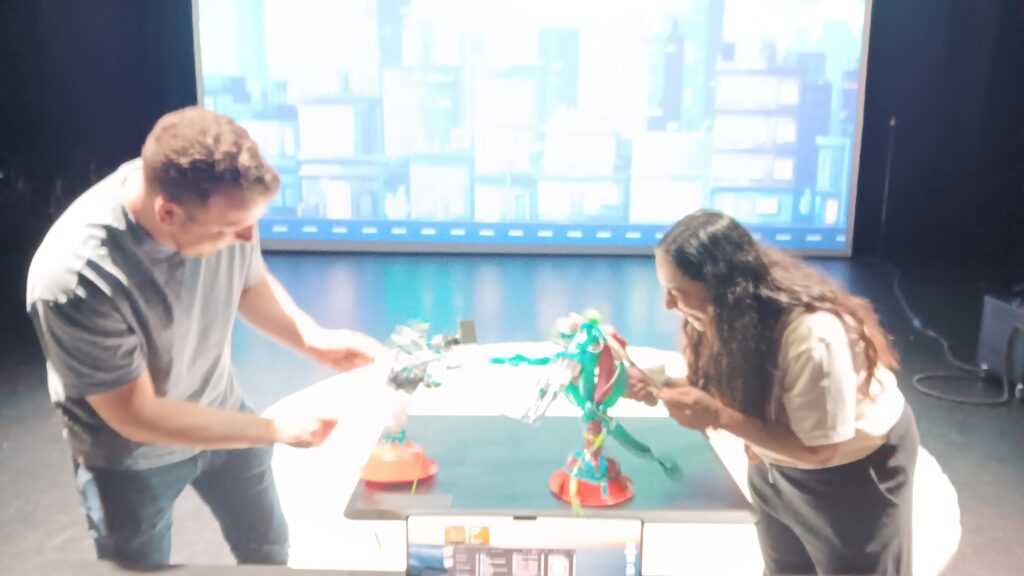
Armed with valuable feedback from my cohorts and mentors, I decided it was time to level up the gameplay experience this time around, and that would involve puppets – battle puppets, to be precise. I wanted to free the players from poking static cut-outs and provide space for mobility. I also wanted to freshen up the visuals, including adding a retro gamer cityscape for the projected stats. The bar graph I decided needed to go down, not up, showing a decrease in vitality as hit points accrued.
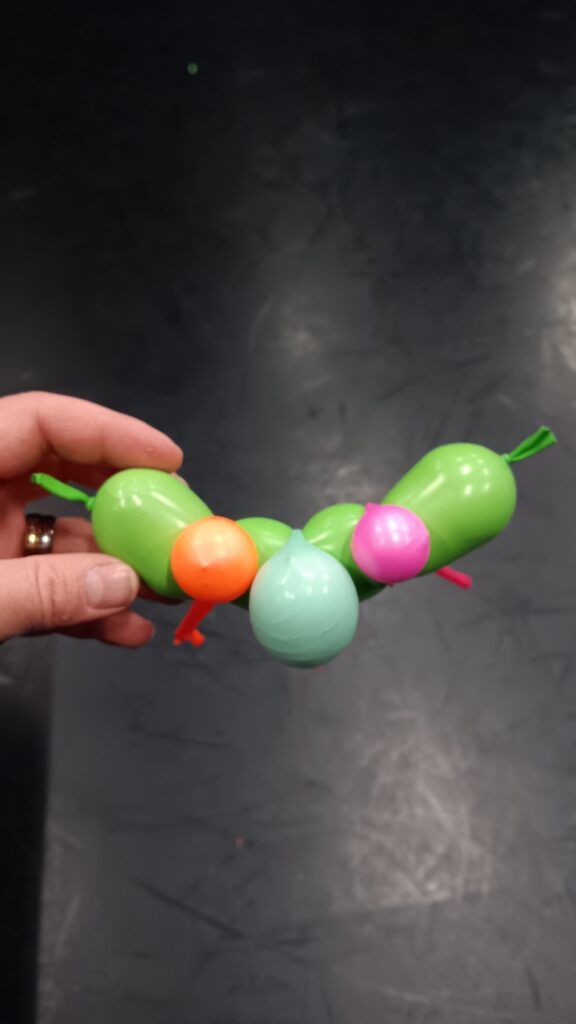
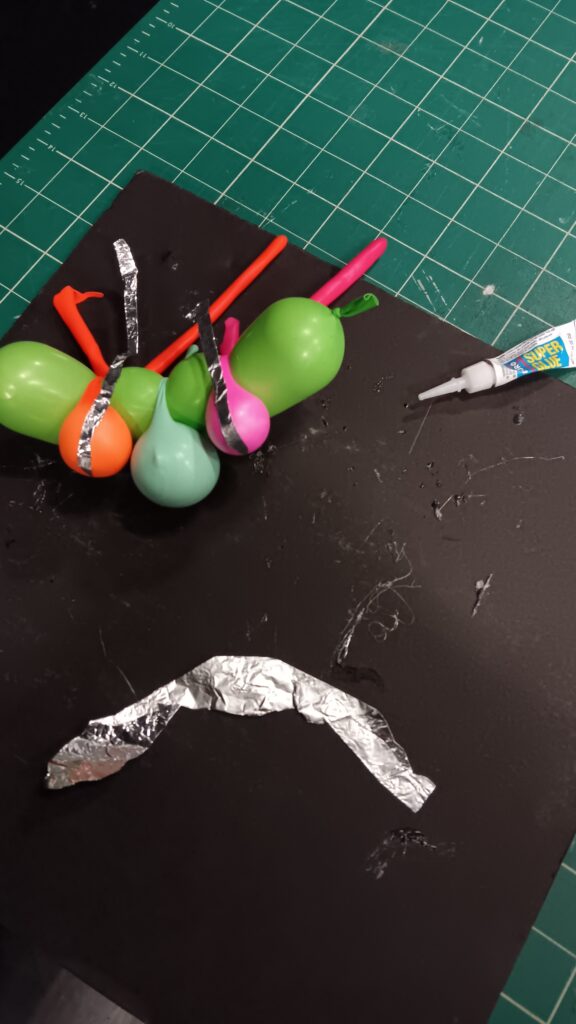
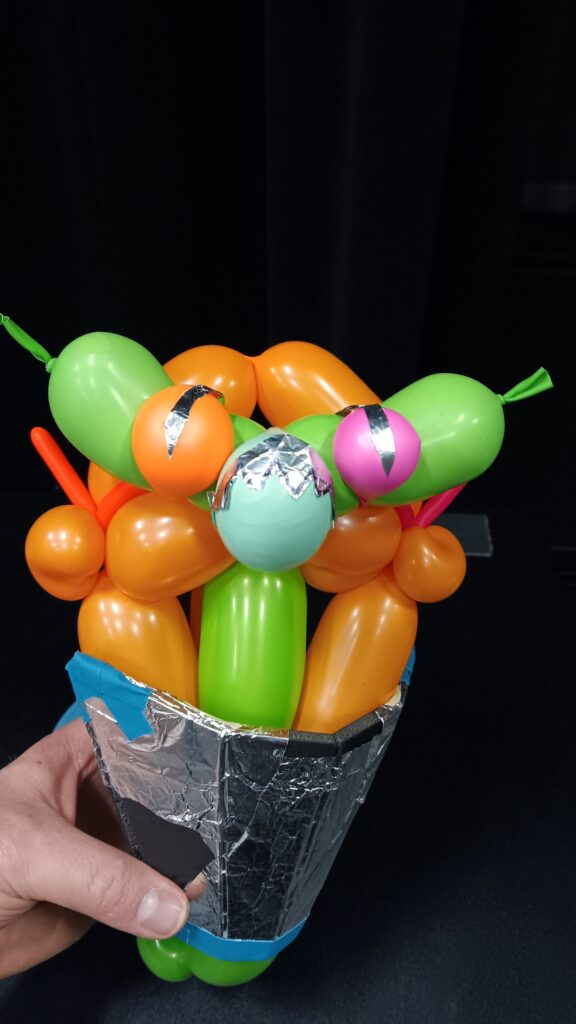
The puppets were wired to the Makey Makey with zones of aluminum either glued or taped on the figure, specifically foam core pieces (handcrafted to fit over the body and support the wires). For the bulk of the body I used my balloon twisting skills. I really felt it was important to incorporate an inflatable element (especially since the kaiju suit/puppet will be made of inflatable materials for the thesis). Furthermore, the balloons were easier to repair/replace.
Much testing of different designs went into the process of bulding each puppet, the balloon designs needed to be styled for easier maintenance, so I refrained from excessive details or complexity. For the heads of the hero and kaiju I knew they would be taking a good amount of punishment during each round, so I employed a balloon art technique called “deforming” – inserting a balloon inside of another balloon – which insulated key balloon components with two to four layers of latex. Wiring the aluminum zones into the kaiju claws, hero sword, and hit zones took some considerable time but once in place proved reliable for dynamic contact.
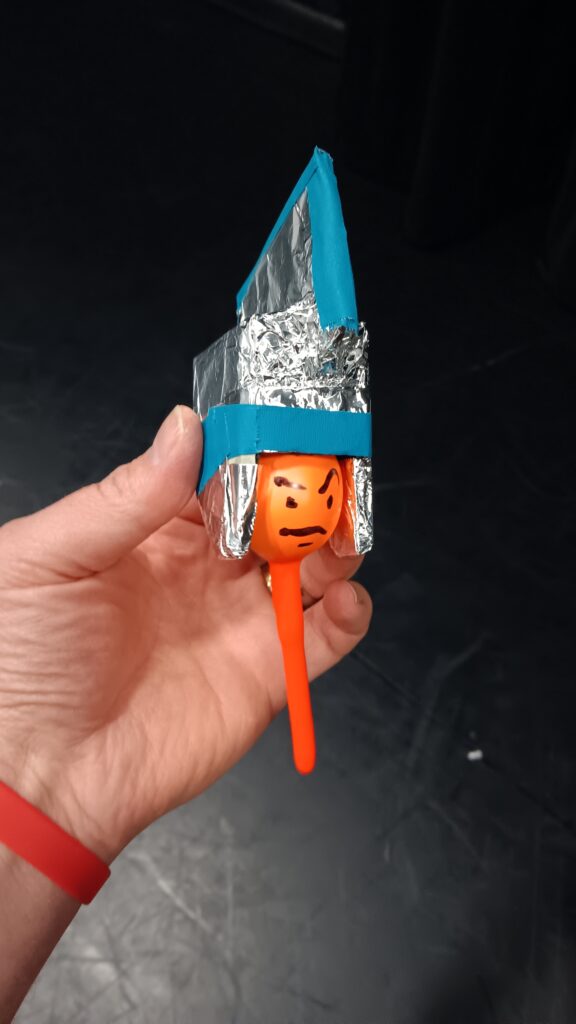
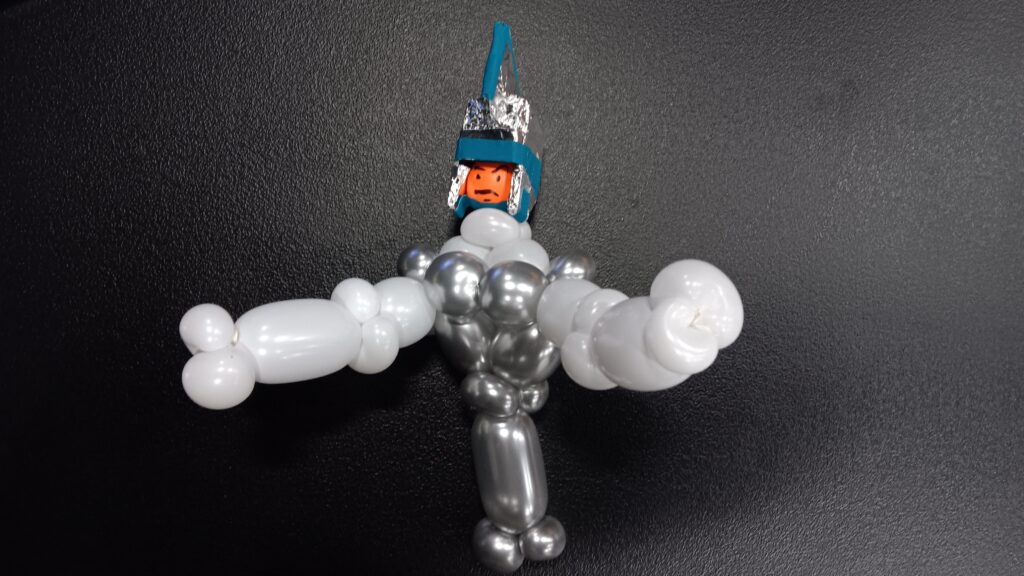
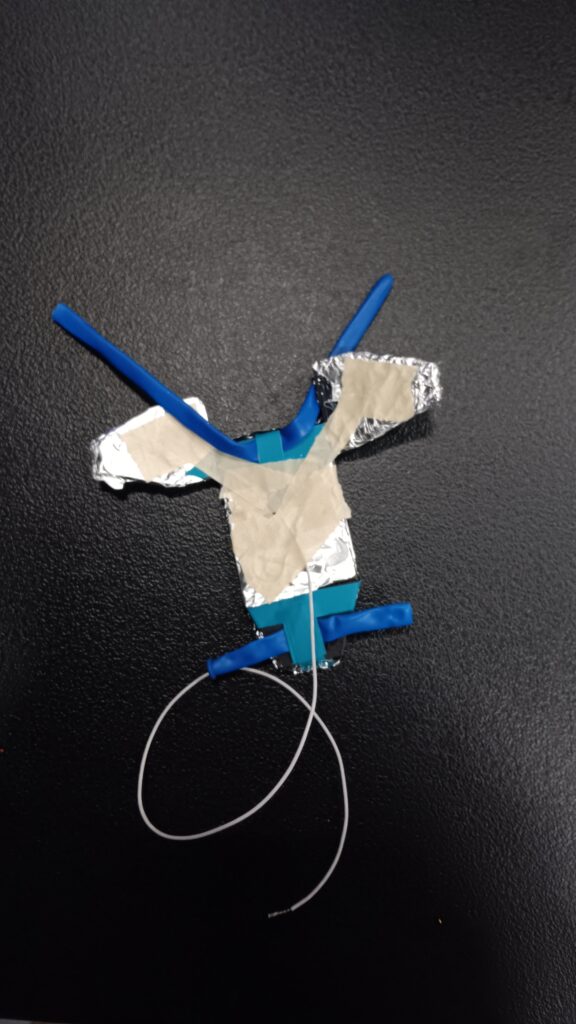
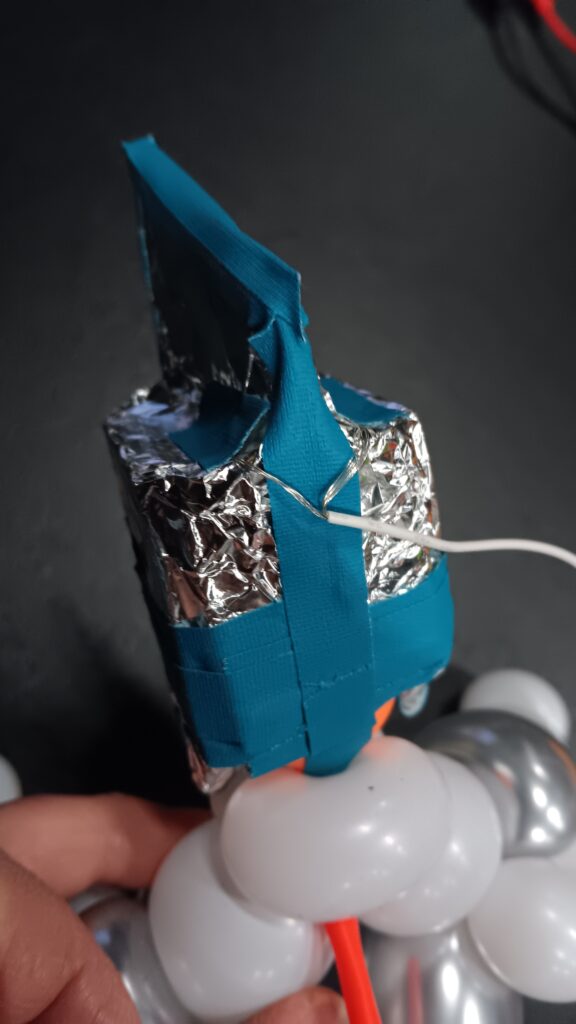
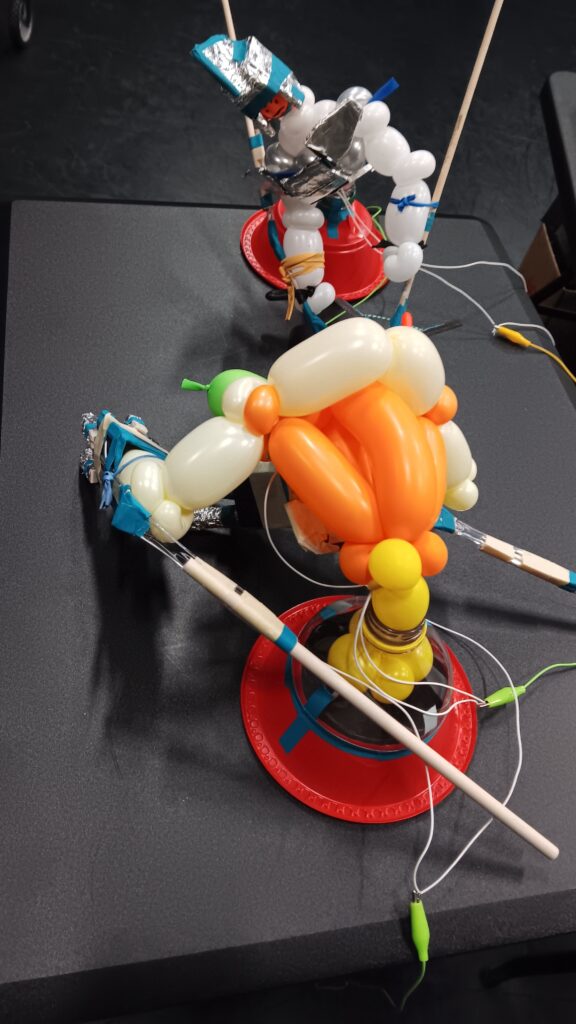
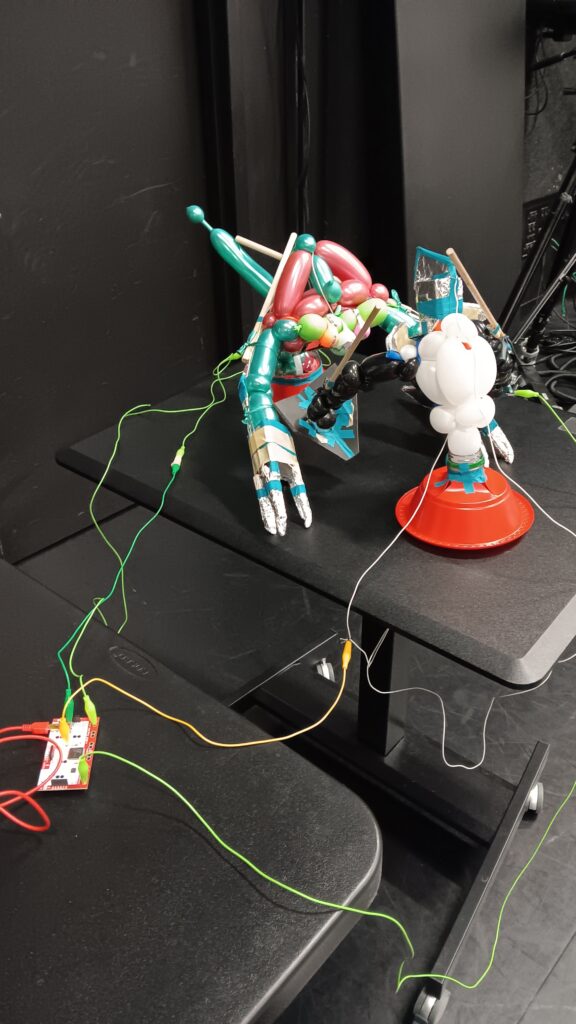
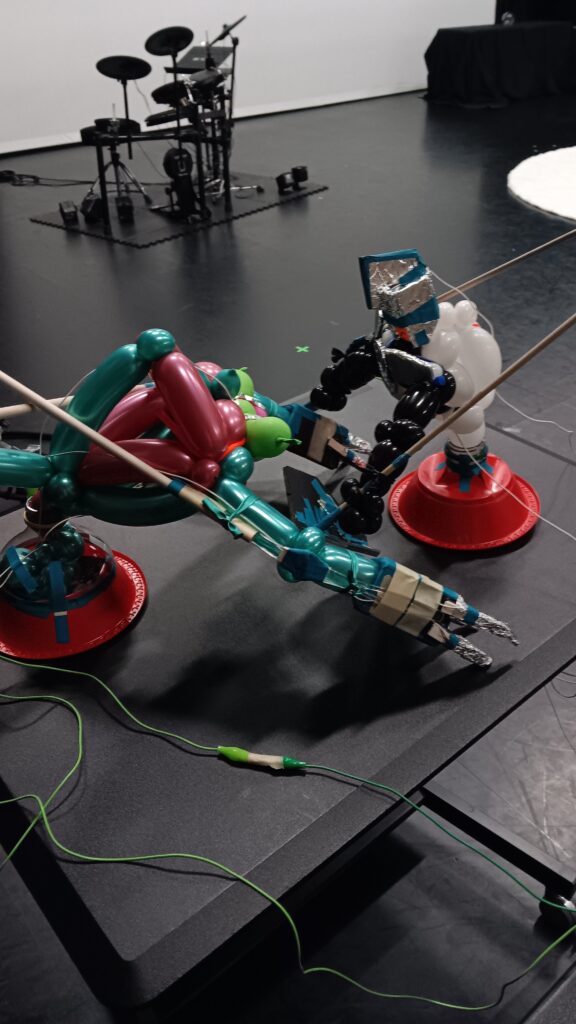
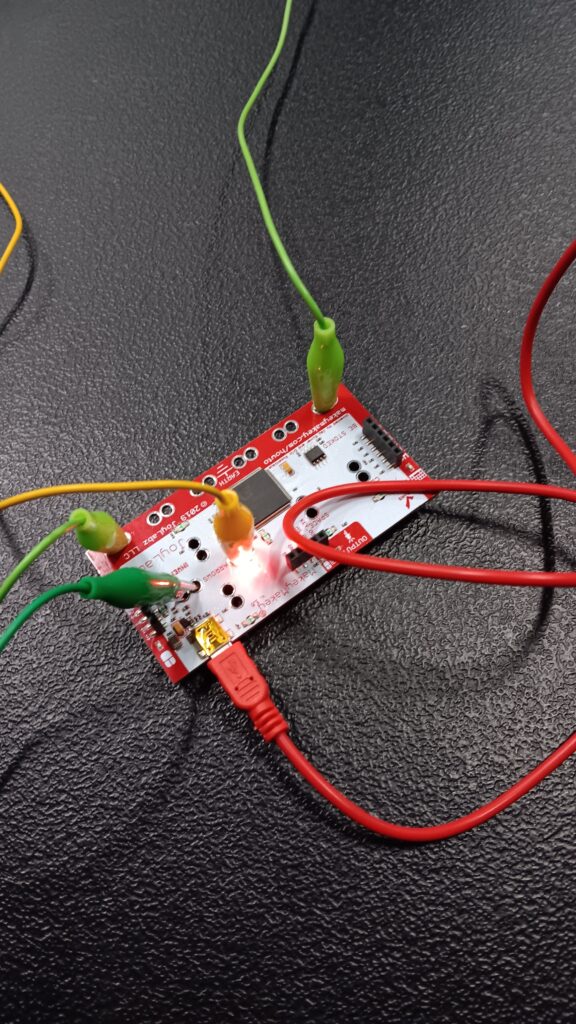
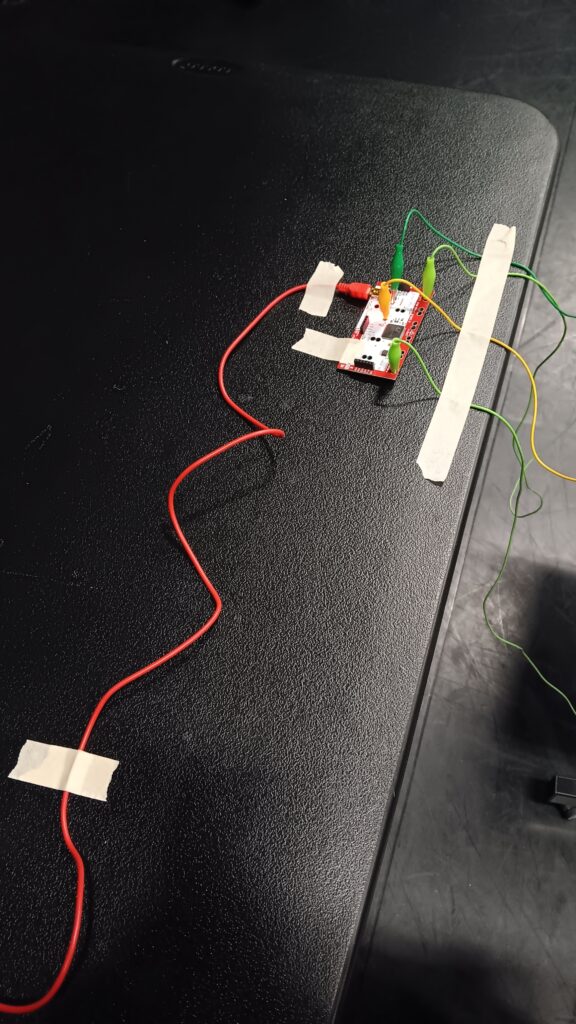
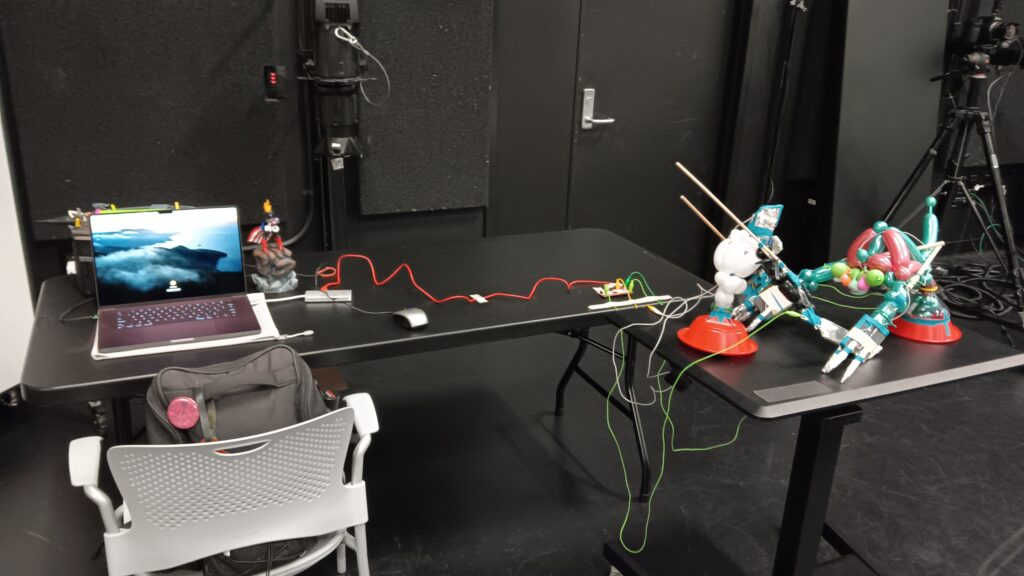
Available resources were not only physical materials/equipment but also expertise from within the cohort of students. One such classmate, Chad (an avid Touchdesigner fan), assisted in my patch for the background music to speed up after one of the bars reached halfway down (ten of the twenty hit points). More logic components were involved. I also was able to add a boom noise when the kaiju got K.O.ed (I couldn’t figure out how to apply it to both in time, so I kept things as is for this cycle). Considerable noodling ensued as Chad prepared specific component/settings for me to integrate into the patch. Such is the way of Touchdesigner, a series of tweaks and threads in the process, oftentimes retracing steps to work out better solutions/outcomes.
Other items from the wish list couldn’t fit into the experience, such as additional onomatopoeia appearing on the projection in connection to specific sound effects. Though it would have been cool to include, the most essential elements of the game play required my full attention. Additional connecting wires were added to the puppets to facilitate mobility across the tabletop. Much of the look of this setup screamed “prototype in progress” – making things pretty and polished would have come later, first we needed to ensure this jerry-rigged operation would consistently work each round. I made fresh balloon bodies for both characters the morning of the presentation of Cycle 3 to afford all the balloons’ stamina possible for the battles ahead.
It didn’t take long before one of the kaiju’s biceps popped mid-fight, but that did little to deter the players from gouging, swatting and striking each other through their puppet proxy. All those hours of fabrication and prep work paid off within five minutes of intense game play, delight and laughter. The feedback afterwards poured in during circle time, along with more ideas for subsequent cycles. The puppetry combined with the colorful balloons added to the playful nature of the gaming experience for players who felt sufficient safe distance from the action. The group also observed how each character had their own respective advantages to exploit; the offset of hit zones and size forced the players to employ more strategy during the battle round. Alex observed that this cycle wasn’t far off from becoming a polished product to offer audiences, I agree this could be a great spin-off, mini version of the immersive experience. The projected media was largely ignored by the players engrossed in the ring but served more enjoyment for the surrounding audience. What did cue the players during game play was the sped-up music as one or both fighters racked up 50%+ damage. Suggestions included providing some way for the players to see their health bar diminish during play, perhaps adding pixel strips on the back of each puppet that corresponded with Touchdesigner’s data. All in all, this cycle provided valuable insight towards the next iterations of Kaiju Hero K.O.! which could very well diverge into other applications for different audiences/age groups. One big takeaway was to explore more potential with puppetry and perhaps other materials. One element I was not able to fit into this cycle was the use of piezo sensors/transmitters, introduced to me by Alex in between Cycles 2 and 3; hopefully I will implement those for Cycle 4. Wires did prove reliable for transmitting signals, though I wonder as we scale the size how that may change.
And here are some additional clips taken with my super fancy phone, just for fun…