Living Frequencies: VJ Performance
Posted: November 6, 2026 Filed under: Fall 2026, Isabella Lo, Uncategorized | Tags: Pressure Project 3 Leave a commentProject Overview
Living Frequencies is a real-time video synthesizer built in TouchDesigner for ACCAD 5301’s Pressure Project 3: VJ Battle. The project explores how organic movement and natural imagery can be transformed into digital visuals through live manipulation, procedural effects, and audio reactivity.
I performed the visuals to “Everything I’ve Ever Wanted” by Tiffany Day. I wanted to create a visual experience that complemented the music while exploring the relationship between living things, movement, and digital textures.
The project uses video sources featuring different forms of organic movement and biological processes, including swimming fish, butterflies, running animals, a blinking eye, a beating heart, and a blooming lily.
Patch and Hardware
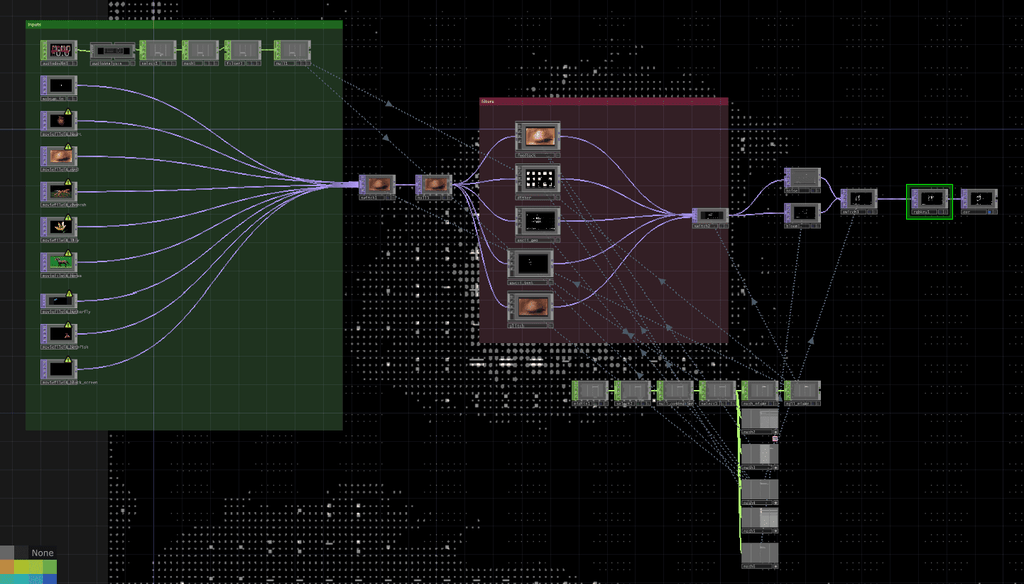
I designed the patch as a modular visual instrument with multiple video inputs and visual processing paths. Each source can be transformed using custom GLSL shaders and TouchDesigner operators.
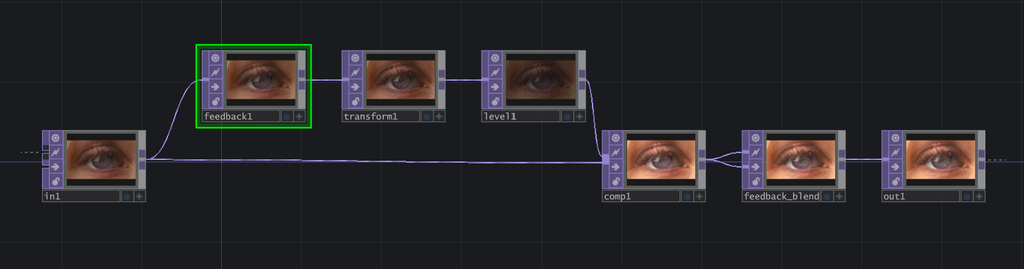
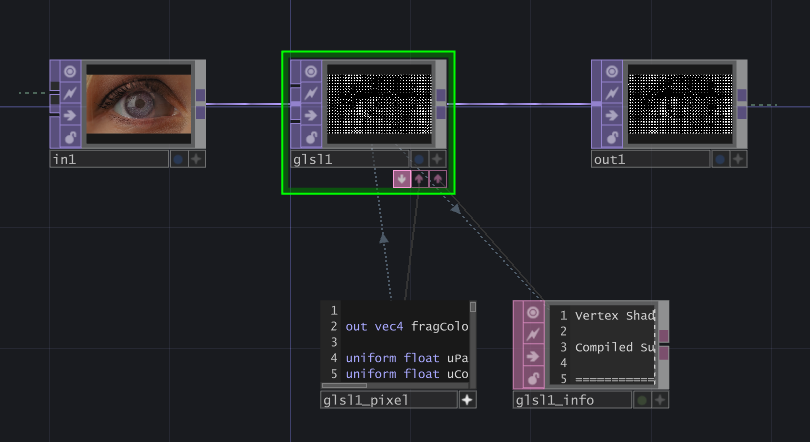
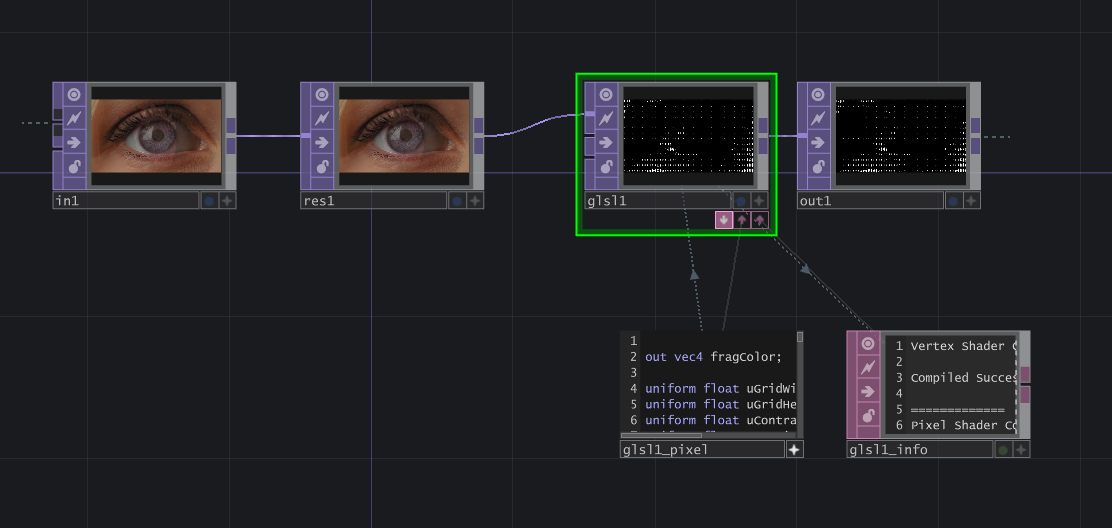
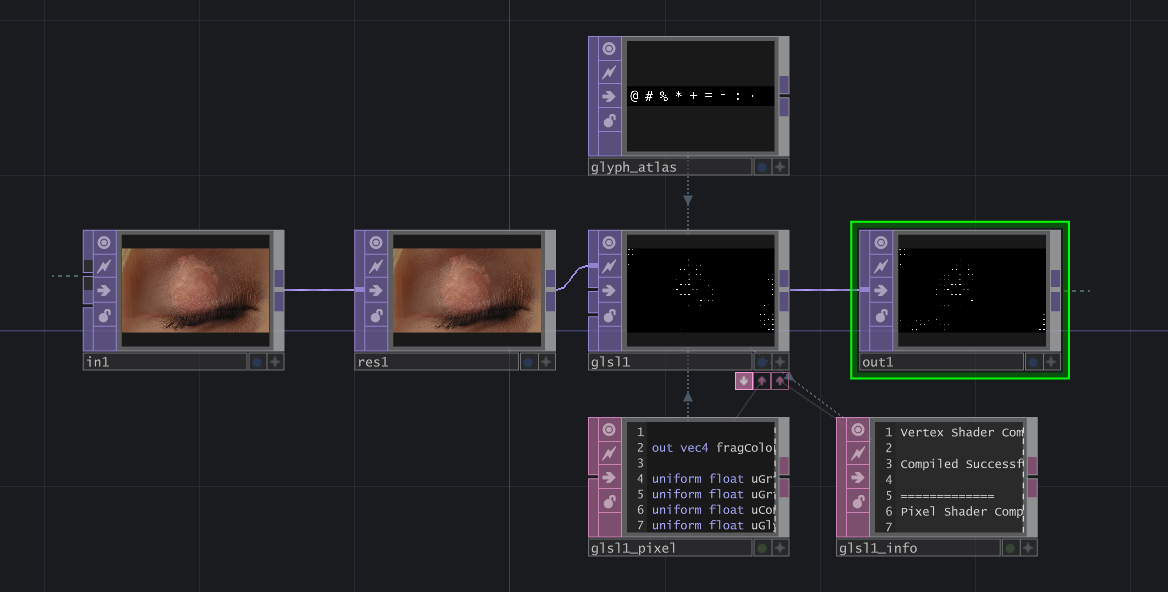
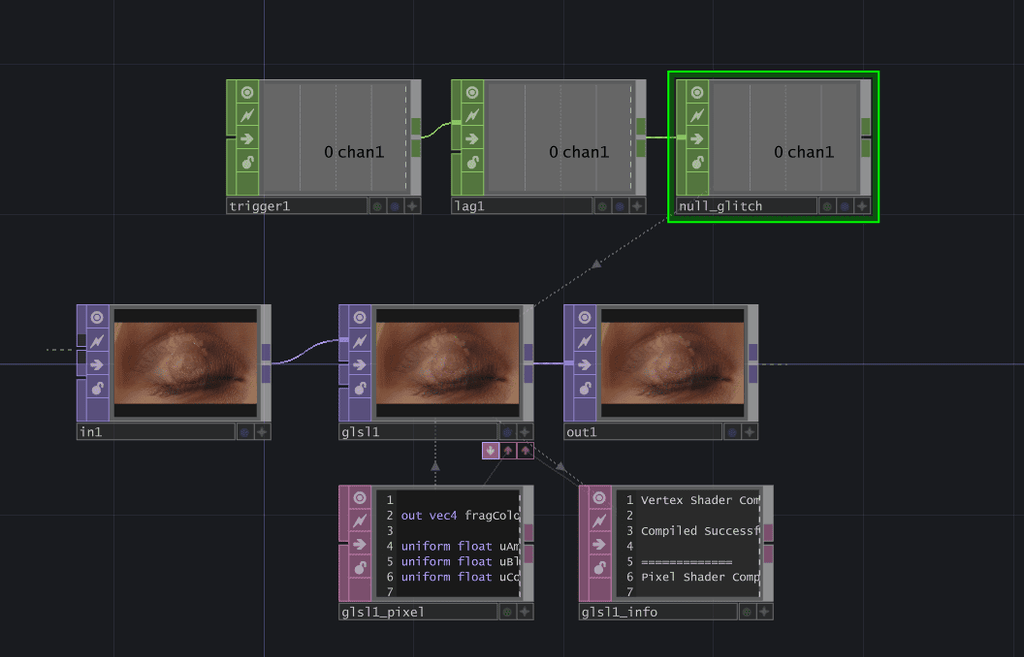
The visual effects include dithering, geometric ASCII, text-based ASCII using a glyph atlas, glitch, feedback, bloom, and procedural noise. These effects allow the original footage to shift between recognizable imagery and more abstract digital patterns.
For live control, I integrated a Korg nanoKONTROL2 MIDI controller. It allows me to switch between visual modes and adjust parameters such as dithering intensity, ASCII density, feedback persistence, glitch amount, and feedback zoom. I also incorporated TouchDesigner’s Audio Analysis CHOP to connect audio input to selected visual parameters, allowing the visuals to respond dynamically to sound.
Design Process and Decisions
My starting point was figuring out what kinds of visuals I actually enjoy. I’ve always been drawn to nature, living things, and music, so I wanted to bring those interests together through imagery of organisms and natural processes.
Technically, I wanted to challenge myself by focusing on inputs and outputs and building the visual system primarily with TOPs. In previous TouchDesigner projects, I had relied heavily on SOPs and POPs, so I intentionally stepped away from those familiar workflows. This pushed me to approach image processing differently and spend more time experimenting with and customizing GLSL shaders.
I also considered incorporating speech-to-text functionality to create something closer to a lyric video, with lyrics appearing in real time. I had previously experimented with OpenAI Whisper in Pressure Project 2 and wanted to adapt that work here. However, I ultimately prioritized developing the visual effects and shaders within the available time.
Performance Reflection
One thing that surprised me during the performance was how focused I became on operating the visual system. I was concentrating so much on switching between modes and manipulating the controls that it was difficult to step back and observe how the audience was reacting to the visuals.
At the same time, knowing the song well made a noticeable difference. Being familiar with its structure allowed me to anticipate certain moments and decide when to use specific features or transition between visual treatments. It made the performance feel more intentional because I could respond to the music rather than simply react to it.
If I were to continue developing Living Frequencies, I would build on the existing visual system by revisiting the Whisper integration and experimenting with displaying lyrics in real time. I would also like to become more aware of the audience’s experience while performing and explore how the visuals could respond more closely to different moments in the music.
Overall, this project pushed me to think about TouchDesigner not just as a tool for creating individual effects, but as a way to build an instrument that can be performed.
Documentation
Recent Comments