Myo to OSC
Posted: October 12, 2015 Filed under: Uncategorized Leave a comment »Hey there everyone.
Here is a video those missing steps of getting the Myo up and working:
And here are the links that you would need:
https://github.com/samyk/myo-osc for the Xcode project
https://www.myo.com/start/ for the Myo software
Remember, that this is a very similar process to getting the Kinect, or any number of other devices connected to your computer and Isadora.
Please let me know if you have any questions, or if you would like to borrow the Myo and try to do this yourself.
Best!
-Alex
Jonathan PP3 Patch and Video
Posted: October 12, 2015 Filed under: Pressure Project 3, Uncategorized | Tags: j, Jonathan Welch Leave a comment »
https://youtu.be/HjSSyEbz68Y
CLASS_PP3 CV Patch_151007_1.izz
PP3 Isadora Patch
Posted: October 7, 2015 Filed under: Isadora, Pressure Project 3, Sarah Lawler 1 Comment »Hi Guys!
Here’s our class patch so far for PP3!
CLASS_PP3 CV Patch_151007_1.izz
-Sarah
Coherence???
Posted: October 6, 2015 Filed under: Uncategorized Leave a comment »I was thinking we might want our scenes to be connected… I have a patch that turns on an outside night scene with crickets chirping and animal moving around in the woods… There is also a little parallax as the “performer” moves around in the space (the 33% X 50% piece of the stage before the performer triggers another patch/scene/whatever), but I could adapt it if we have a common vision…
The performer’s position is represented by the moving H (Vorizontal) and V (Vertical) readout. The numbers would not be visible in the projection.
The trigger position is in the lower left corner.
The “Sextant” and a patch that I was using to activate my Scene/Actor when the performer was in area 1
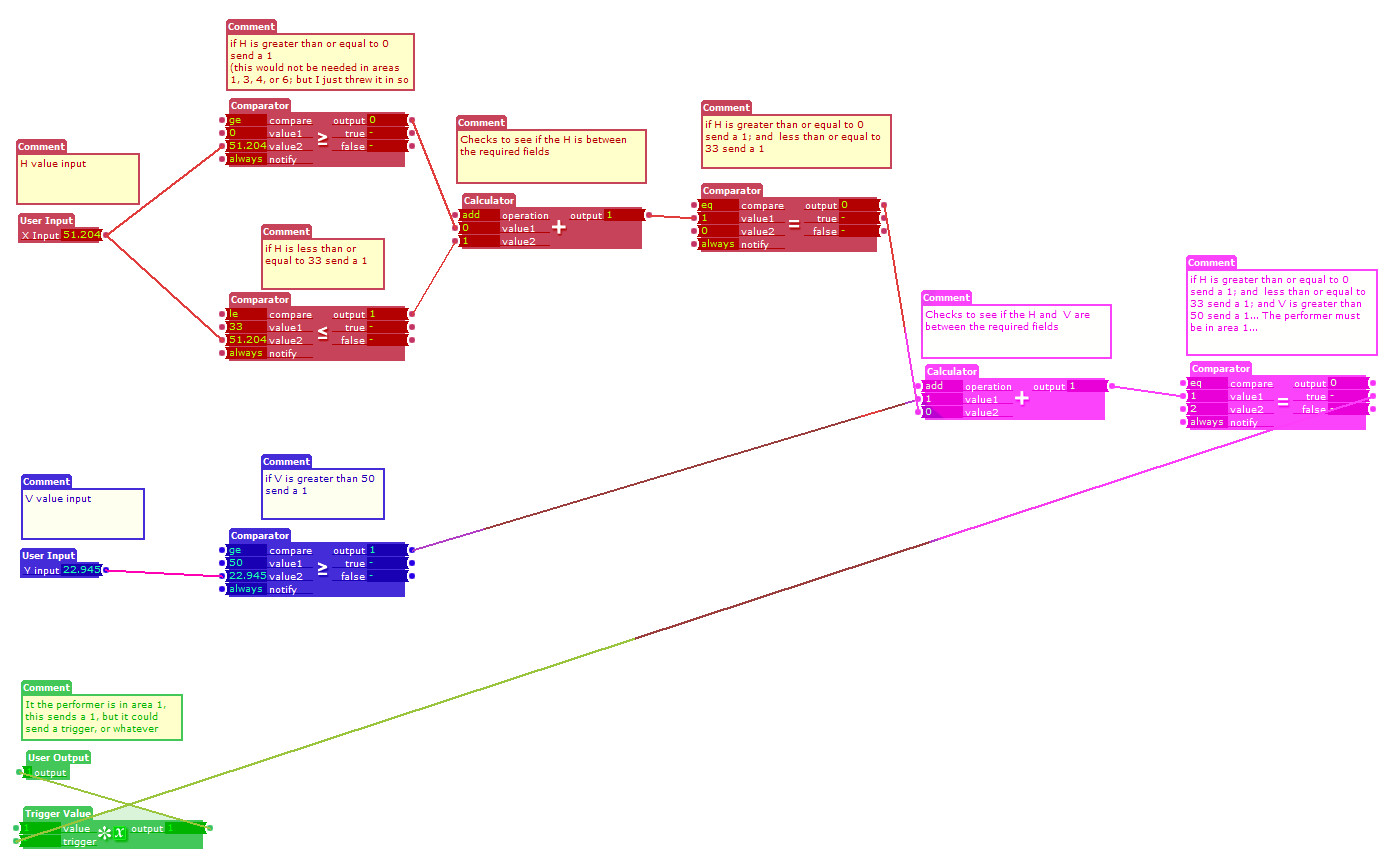
Posted: October 6, 2015 Filed under: Uncategorized 4 Comments »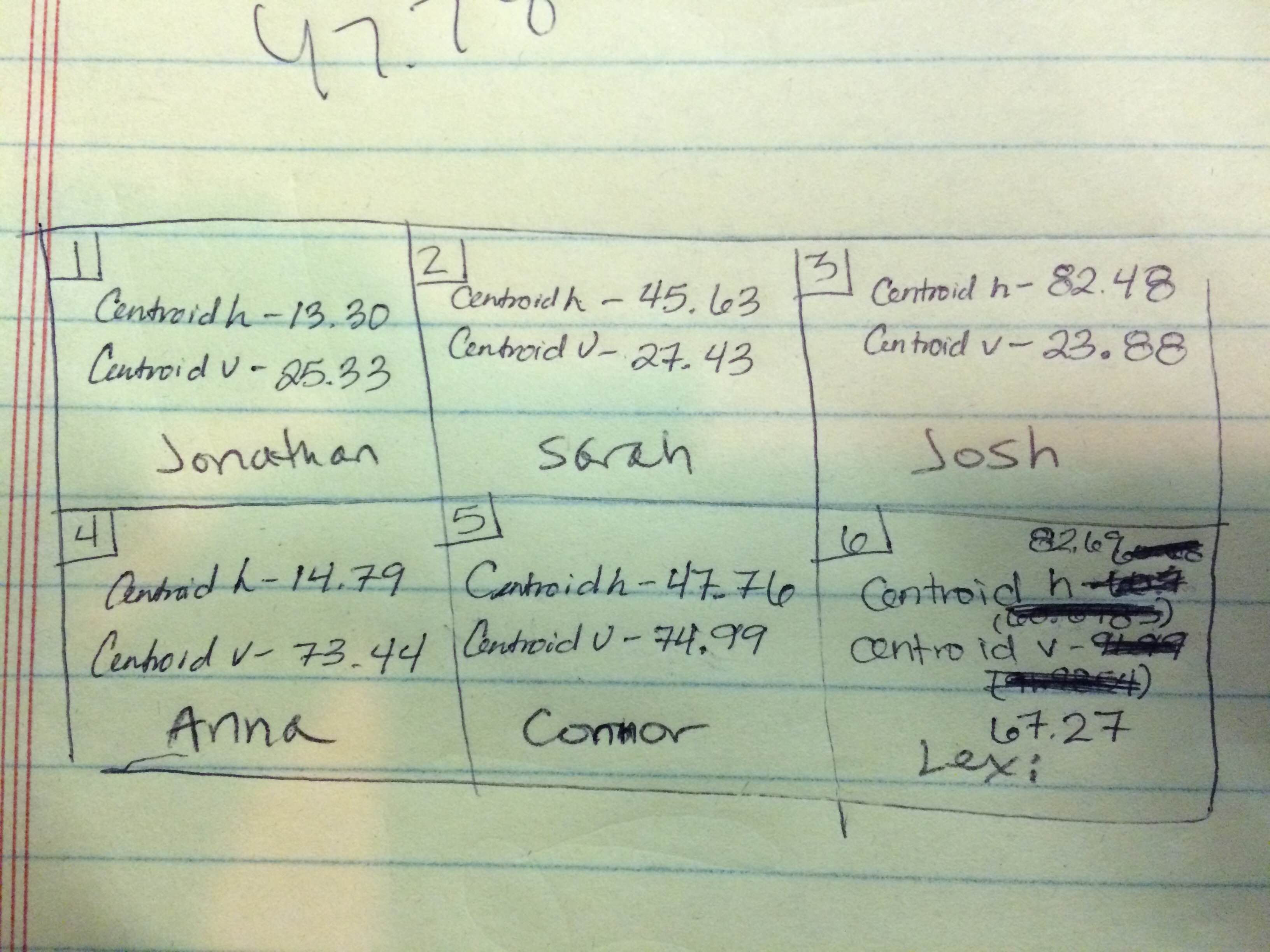
I am guessing the area’s range is 100 X 100 in both directions, so I divided it into 33/33/34 W and 50/50 H, and wrote a user actor to define area 1. This could be used to activate a scene or turn on/off projectors.
The red quantifies the H axis, blue the V, purple is the combined, and green is the output with a value.
Computer Vision Patch Post
Posted: October 5, 2015 Filed under: Alex Oliszewski, Connor Wescoat, Isadora, Josh Poston, Sarah Lawler 2 Comments »
Screen Shots included within zip!!!!
Selecting Scenes
Posted: October 4, 2015 Filed under: Jonathan Welch Leave a comment »https://vimeo.com/141210159
I put together an animatic for my first idea for the scene selection.
The icons are purely arbitrary; we would probably want something more representational of the concept behind the individual scenes.
I am totally flexible on the idea, and it is dependent on being able to get reliable X Y positional data on the performer from the overhead camera…
Class notes on 9/30 regarding PP3
Posted: September 30, 2015 Filed under: Alexandra Stilianos, Uncategorized Leave a comment »PP3 GOAL: Create an interactive ‘dance’ piece (as a group), each should create a moment of reaction from the ‘dancer’
Group goals/questions:
- Focus on art!
- What will we do?
- How will we do it?
- What is my job?
- Establish perimeters and workflow?
- Understand the big picture?
- How is the sensing being done?
- What is the system design?
Resources:
- 4 projectors
- 3 projectors on floor
- 2 HDMI Cameras
- Top down camera with infra red
- Kinect
- Light/sound system
- Isadora
- Max/MSP
- Myo (bracelets)
- MoLa
- Various sensors (?)
Group 1: Sarah, Josh, Connor, “Computer Vision Patch”
- Turn on MoLa, video input, write simple computer vision (CV) patch that gives XY coordinates
- Program lighting system, provide outputs and know what channels they’re on
Channels (1- 10)
- x
- y
- Velocity
- Height
- Width
All x2 for the 2 cameras (top down and front), 2nd camera would be same identifiers but on channels 6-10.
Group 2: John, Lexi, Anna, “Projector System”
- Listen to channels 1-10 of 2 cameras, take data, create patch and a place for them (6 quadrants were discussed, each in charge of one)
Options:
- Create scenes and implement triggers
- Each create our own user actor in the same scene
(This is by no means an exhaustive or exclusive list, just my general notes from today!)
Pictures from the Class MoCap Patch from Monday 09/28
Posted: September 30, 2015 Filed under: Uncategorized Leave a comment »
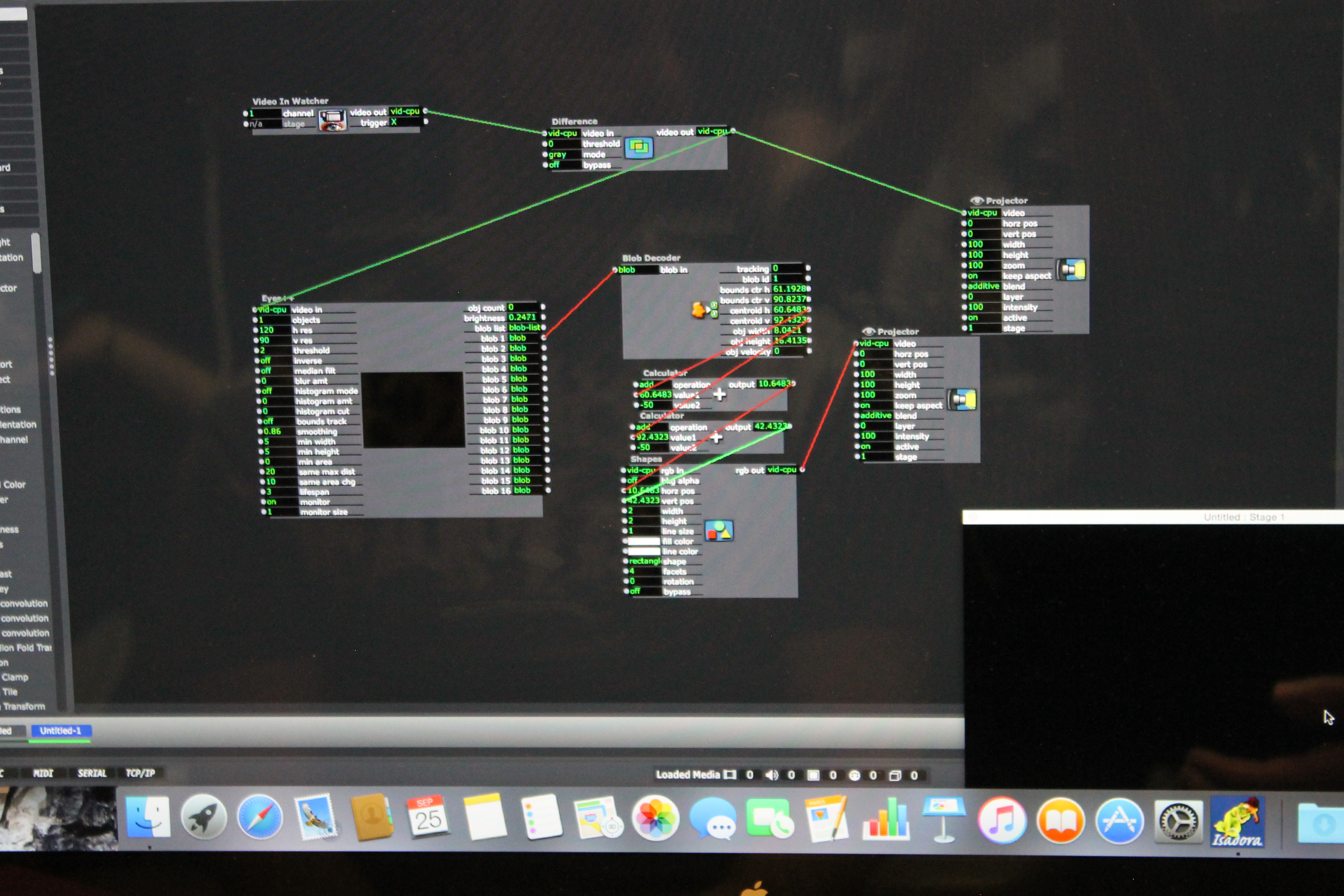
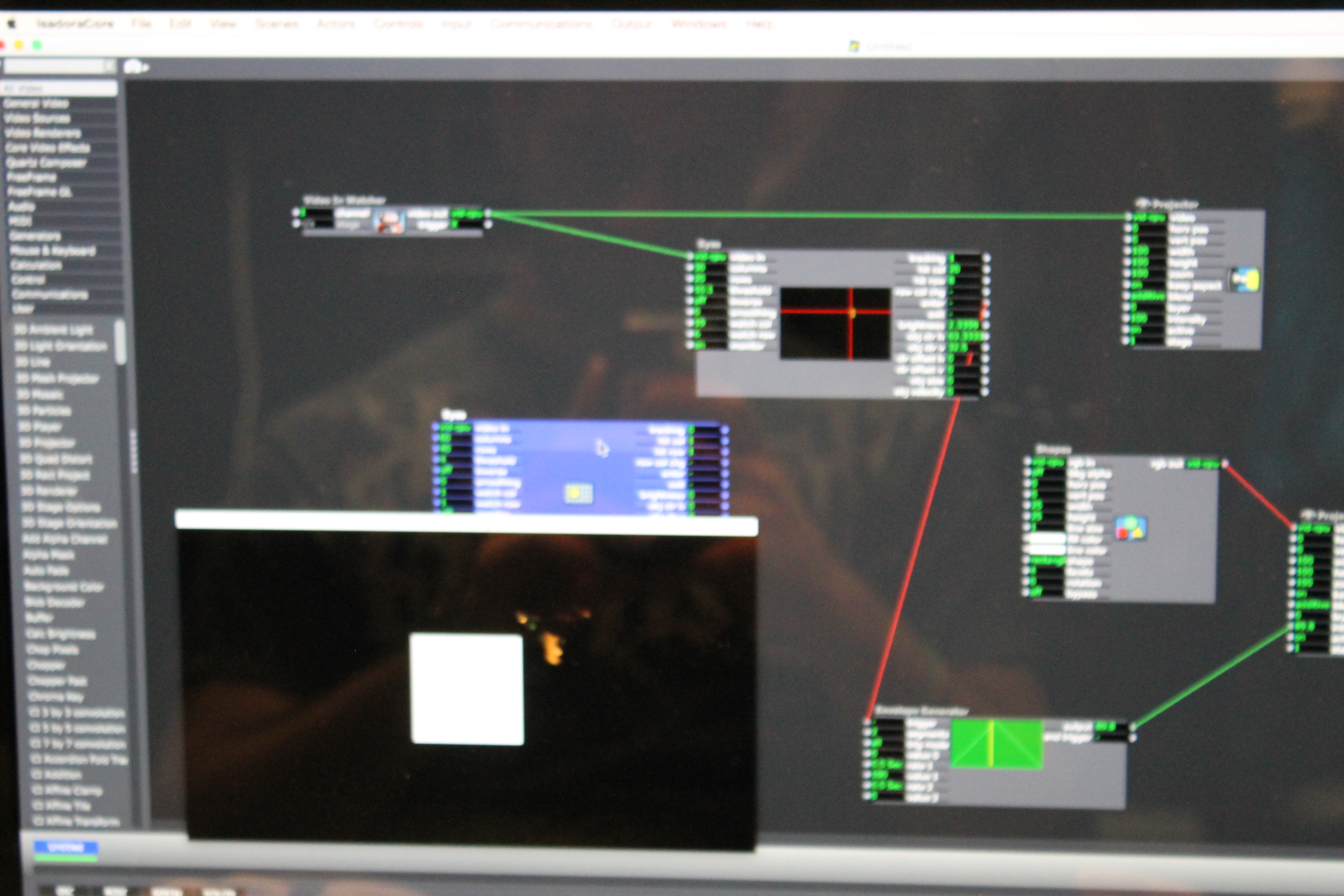
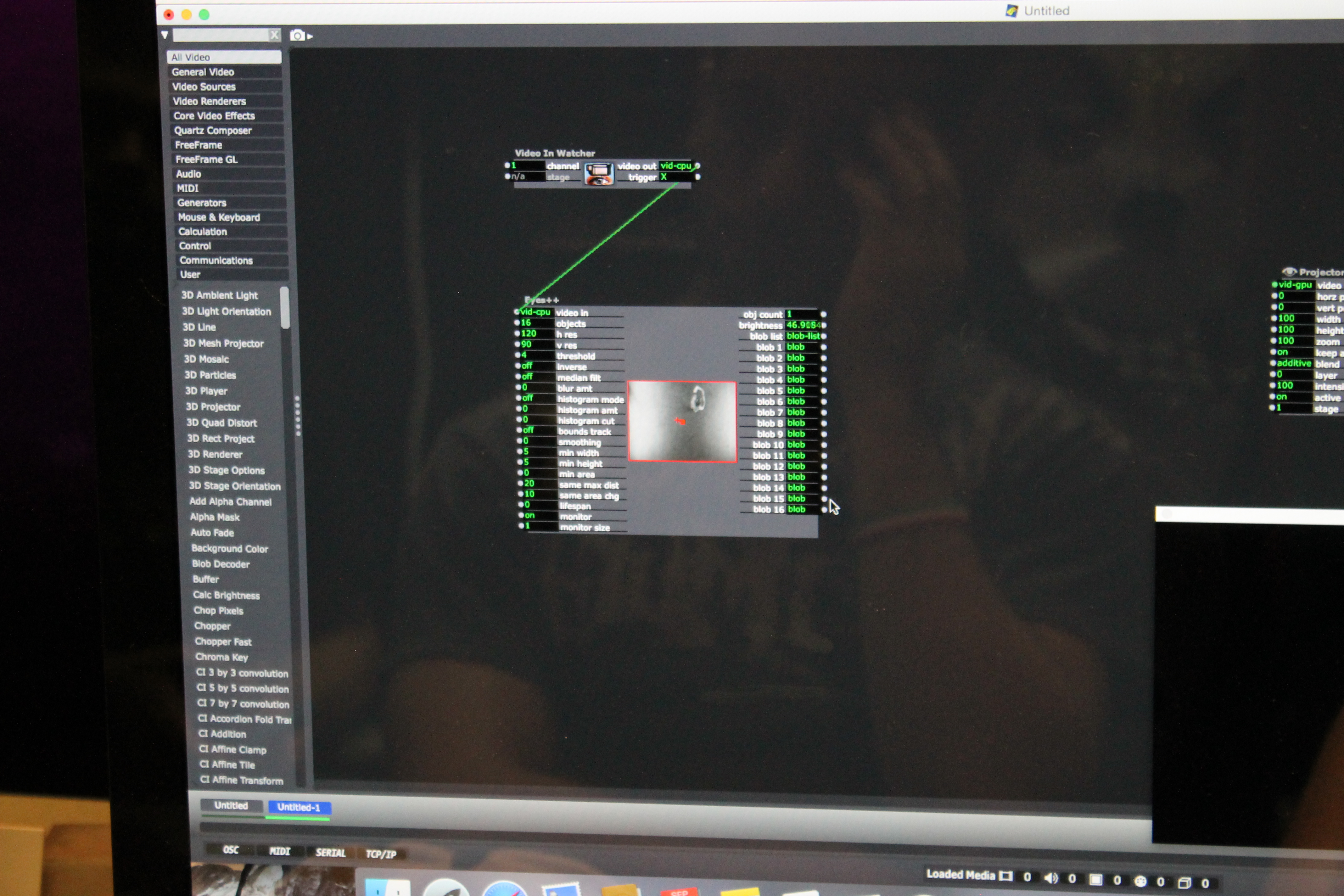
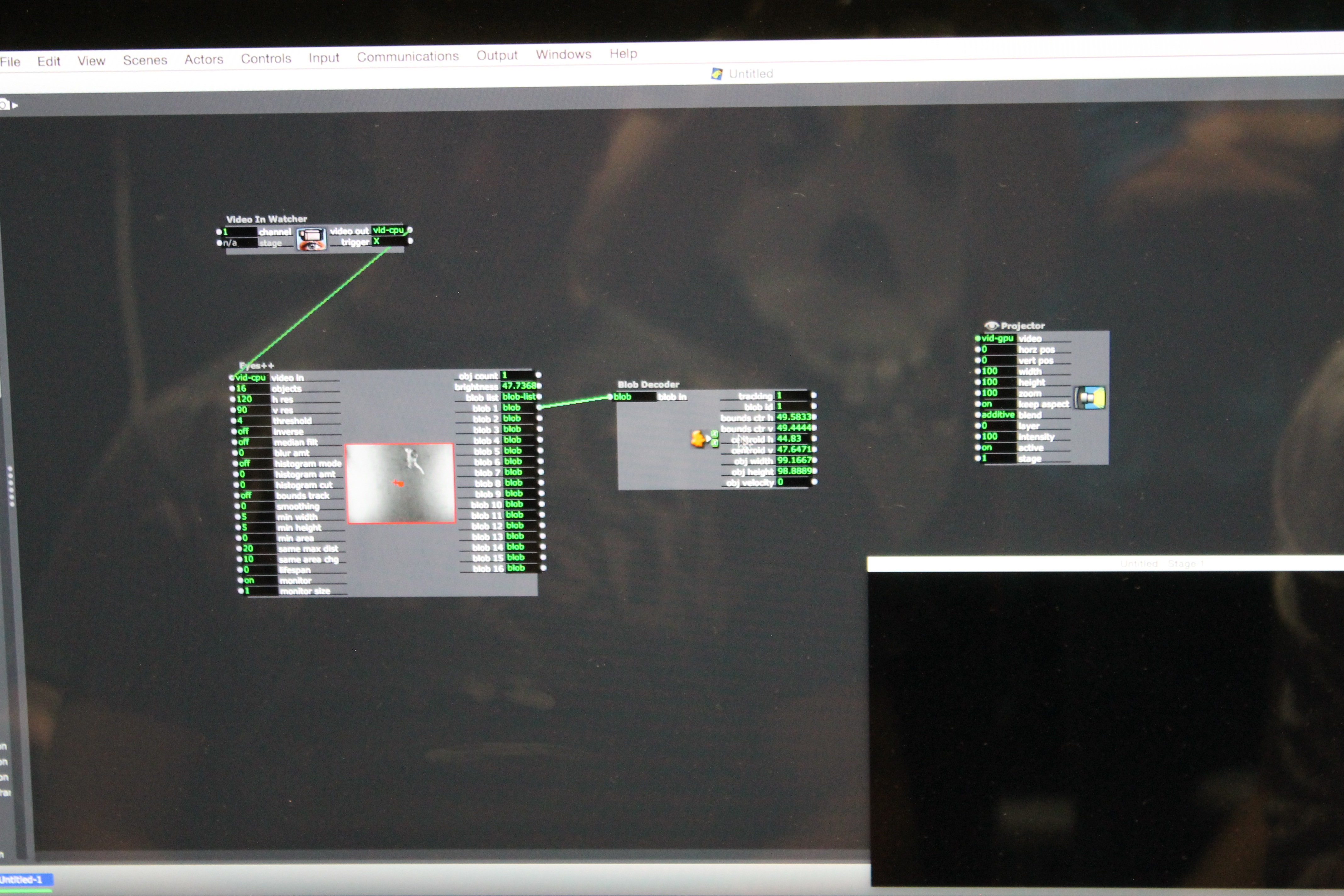
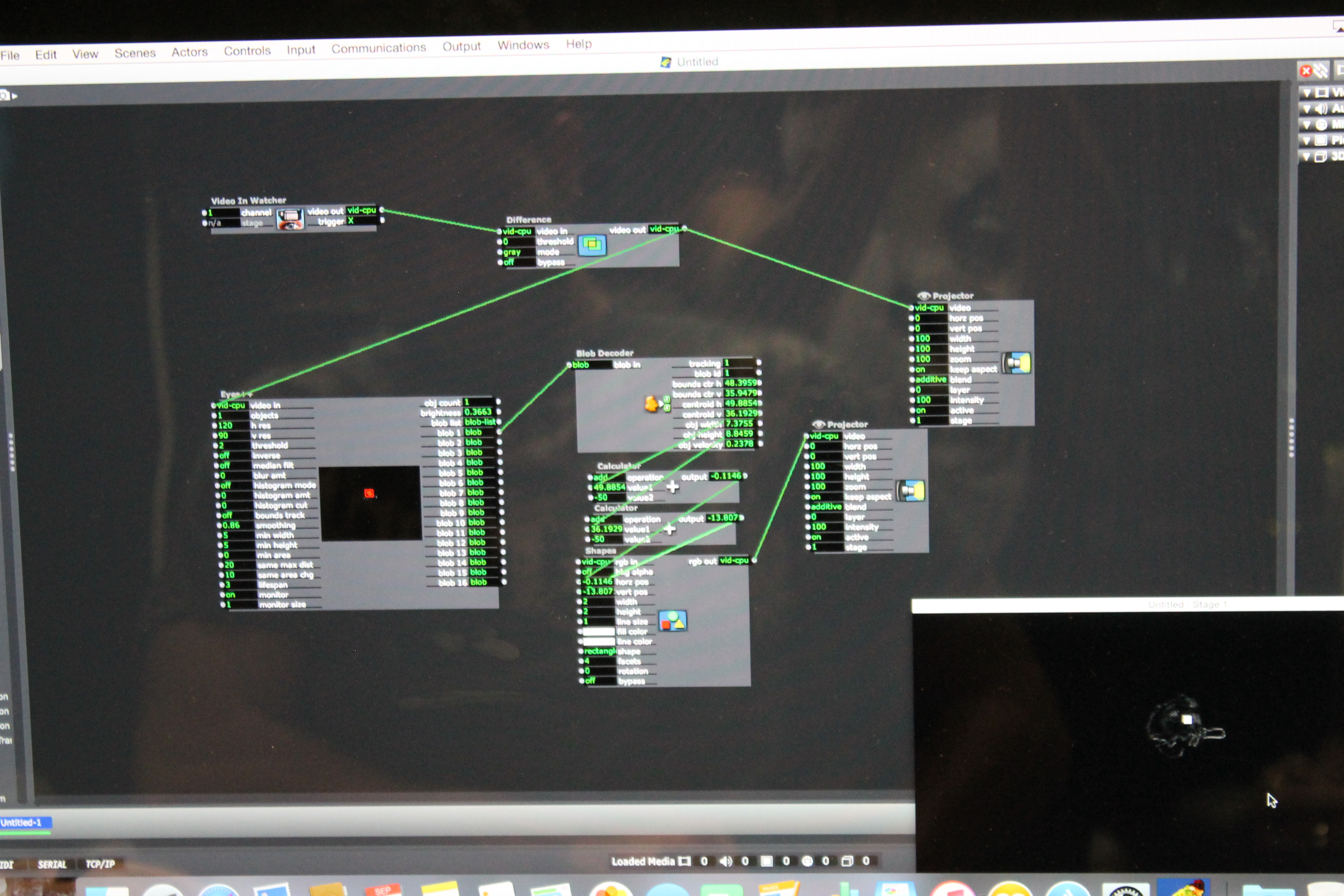
On this screen
- Video In Watcher – Camera input
- Difference – areas that change (eg. moving around on the screen) are brighter
- Eyes ++ – finds “blobs” (eg. an area where the actor/user is on the screen)
***
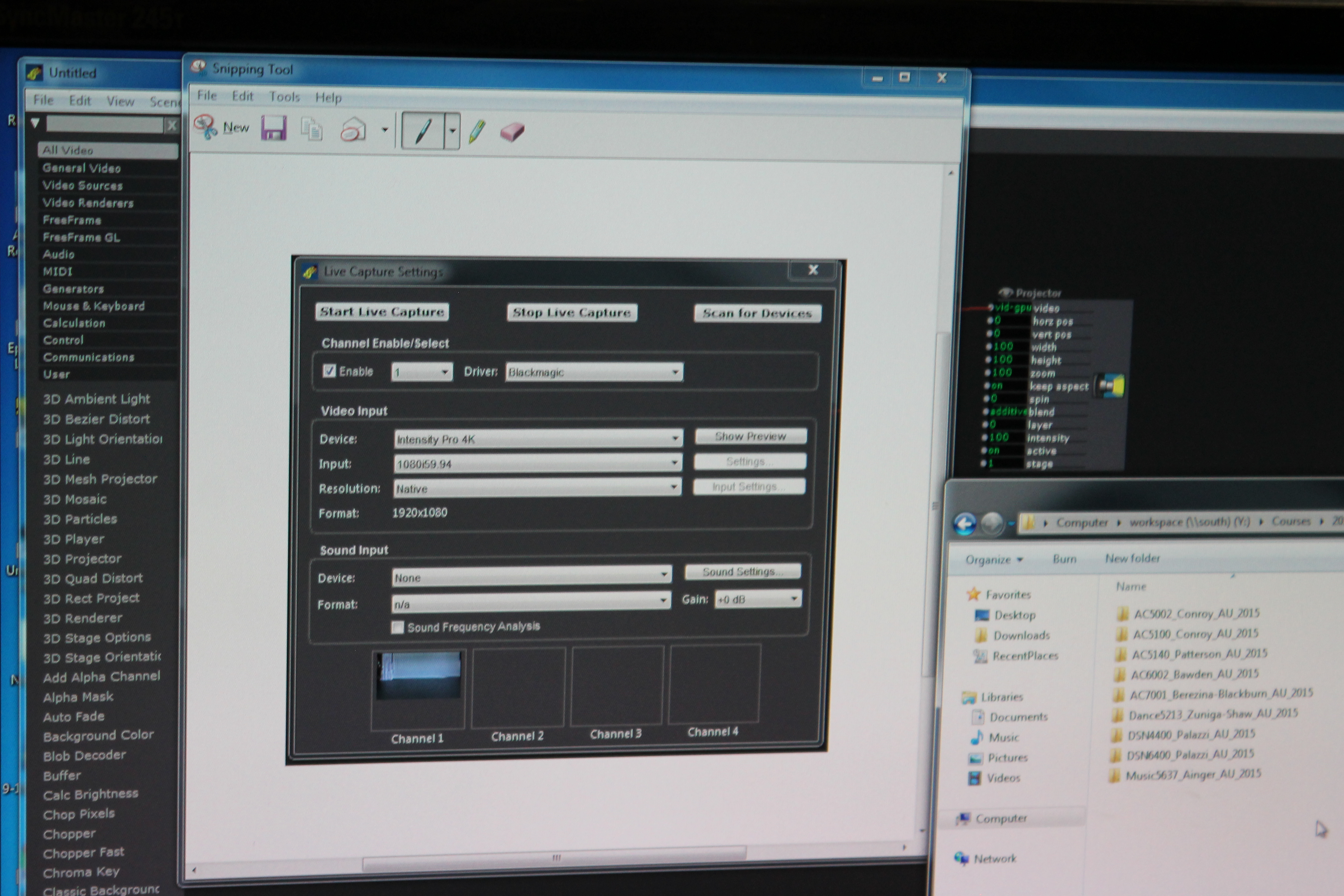
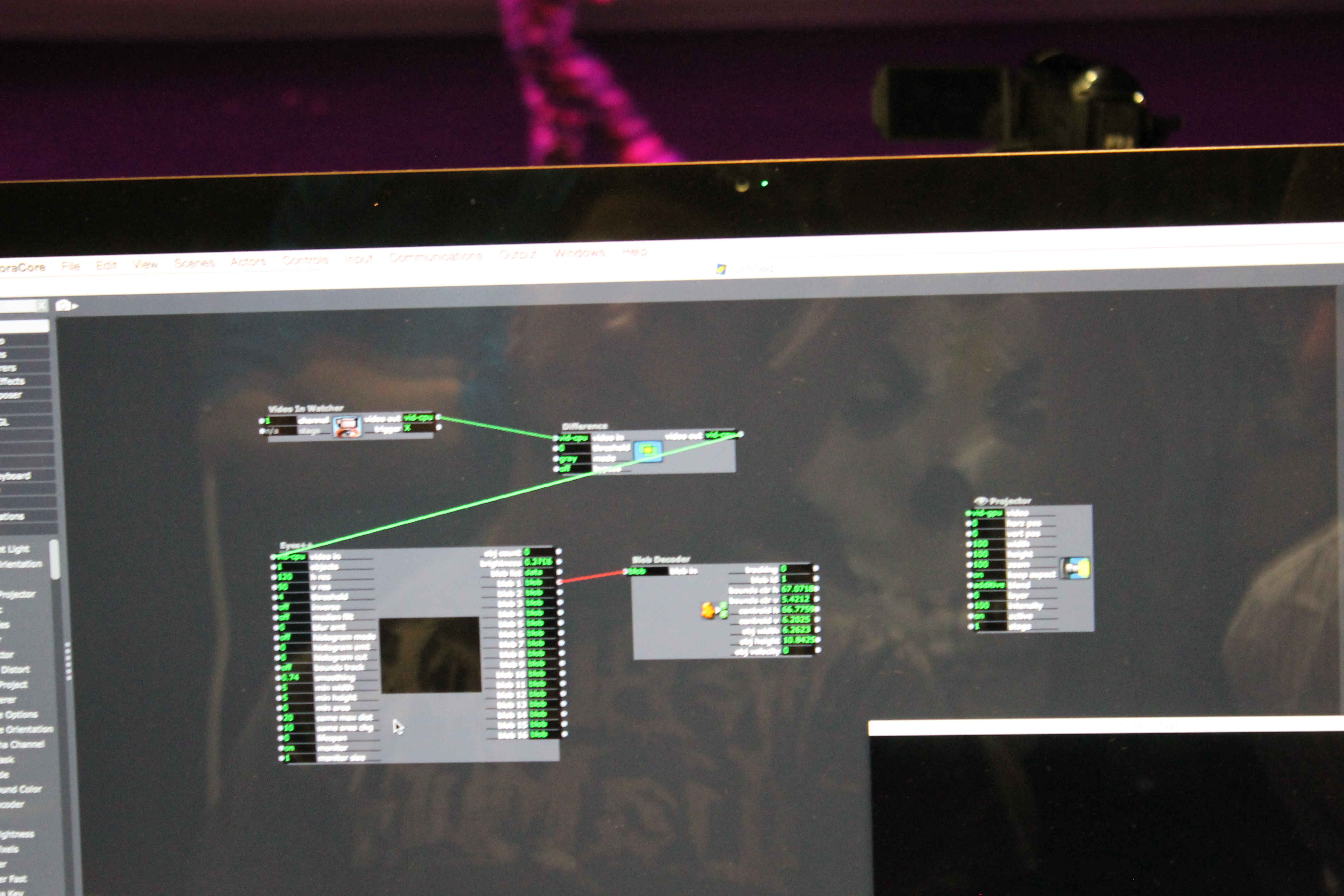
On this screen
- Start Live Capture Settings (don’t forget to click the show preview, or you will not see anything)
***
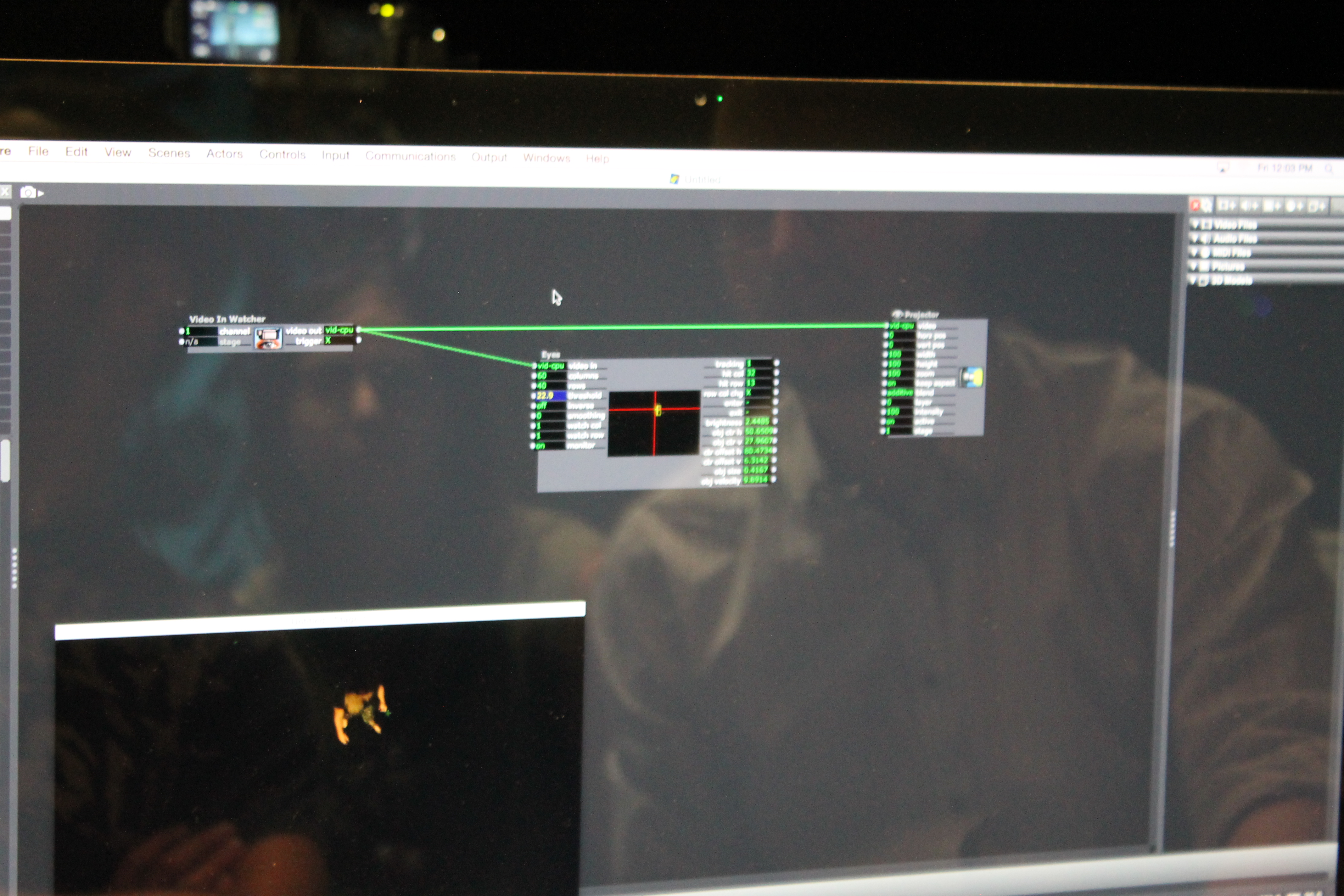
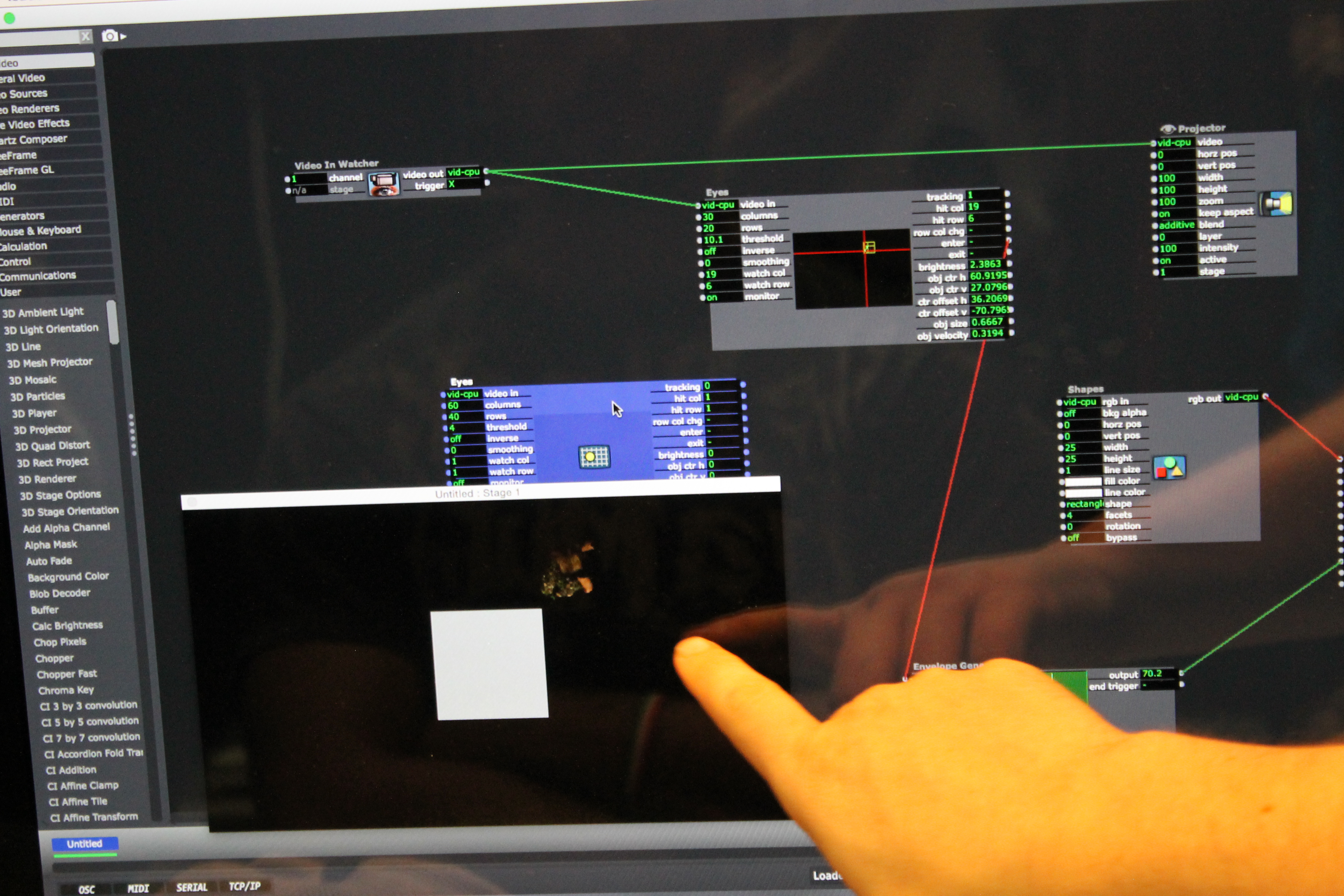
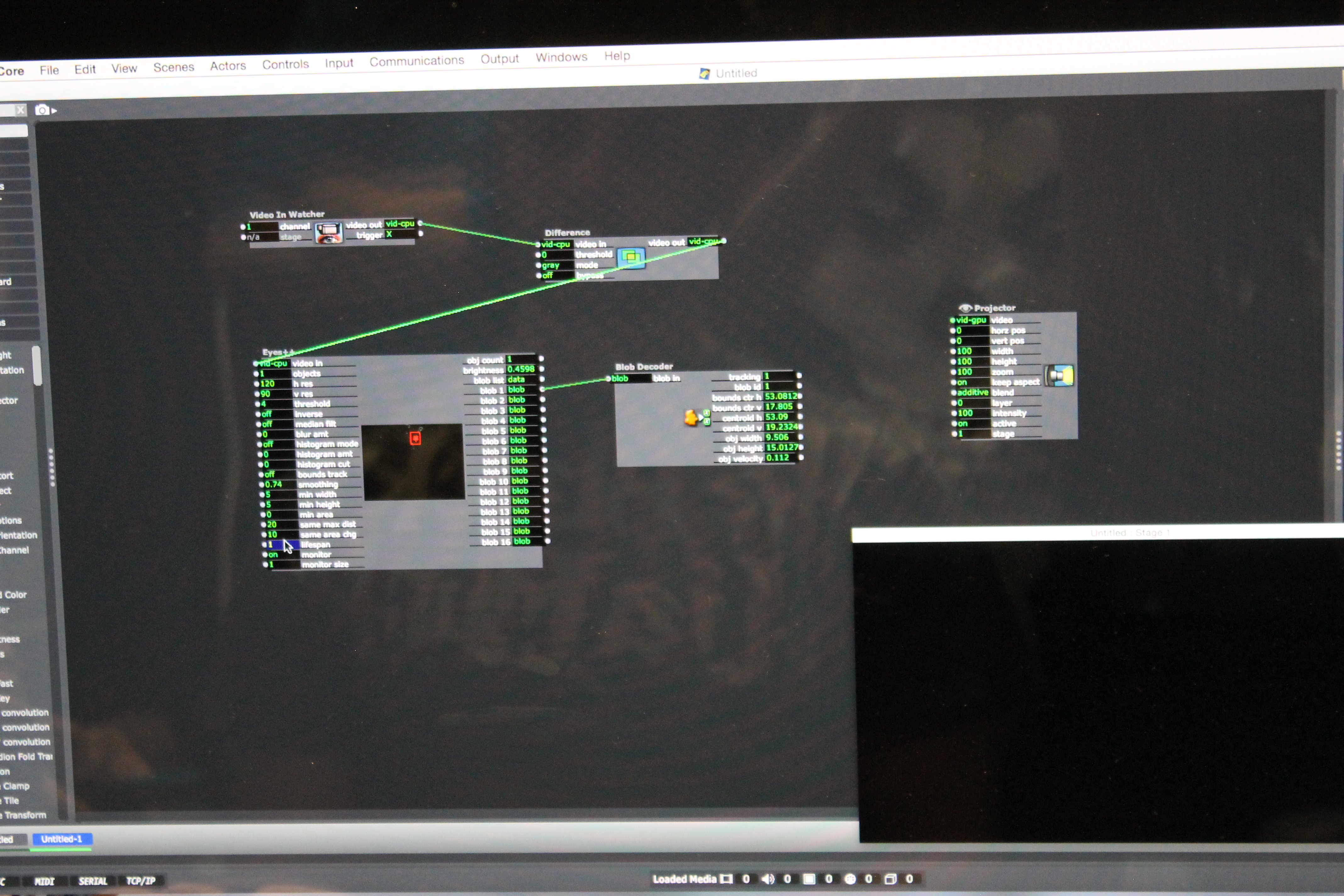
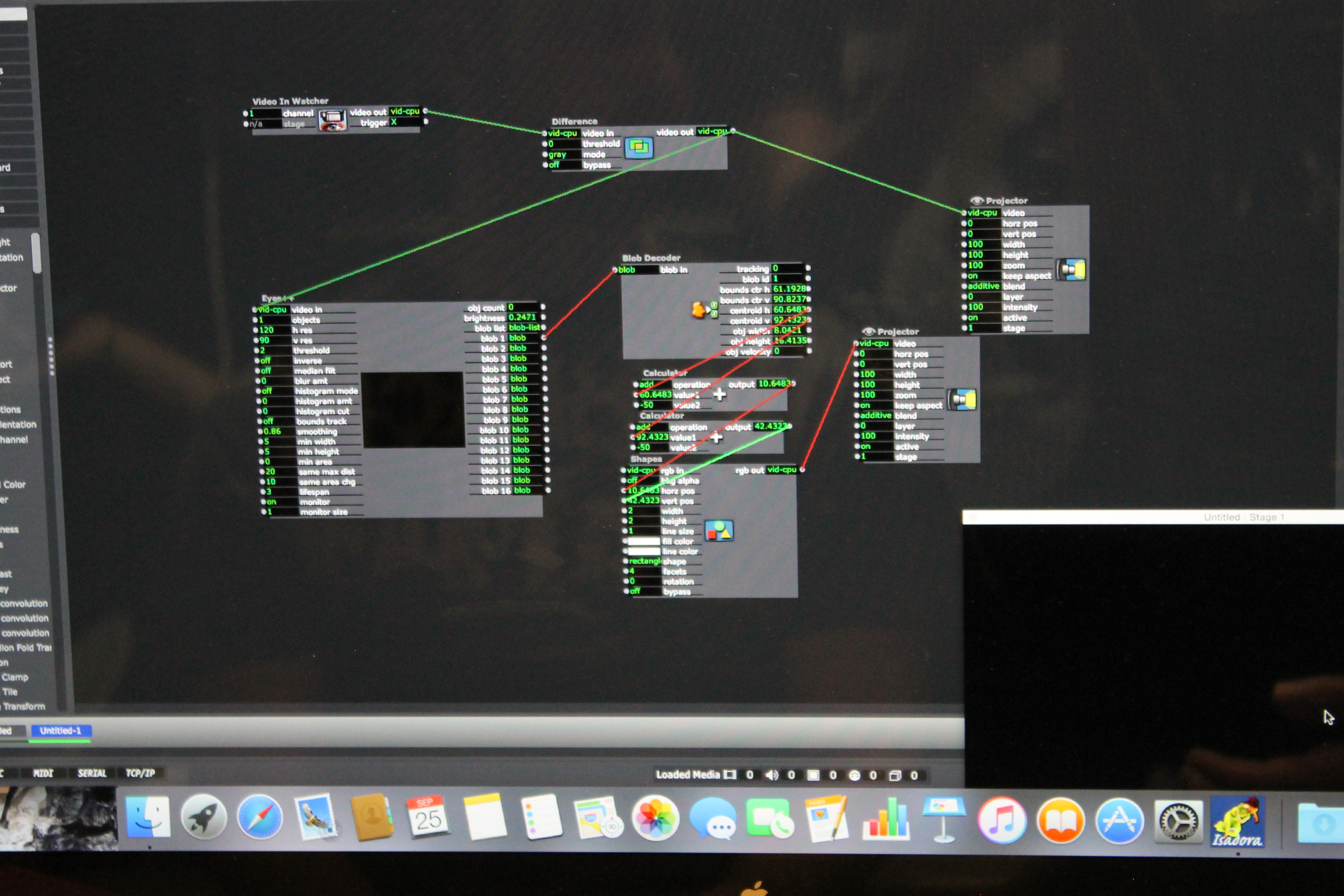
On this screen
- Eyes vs. Eyes ++
- no “Blob” detector, but it will give you tracking data (eg. Center, Height, Width, Velocity)
***
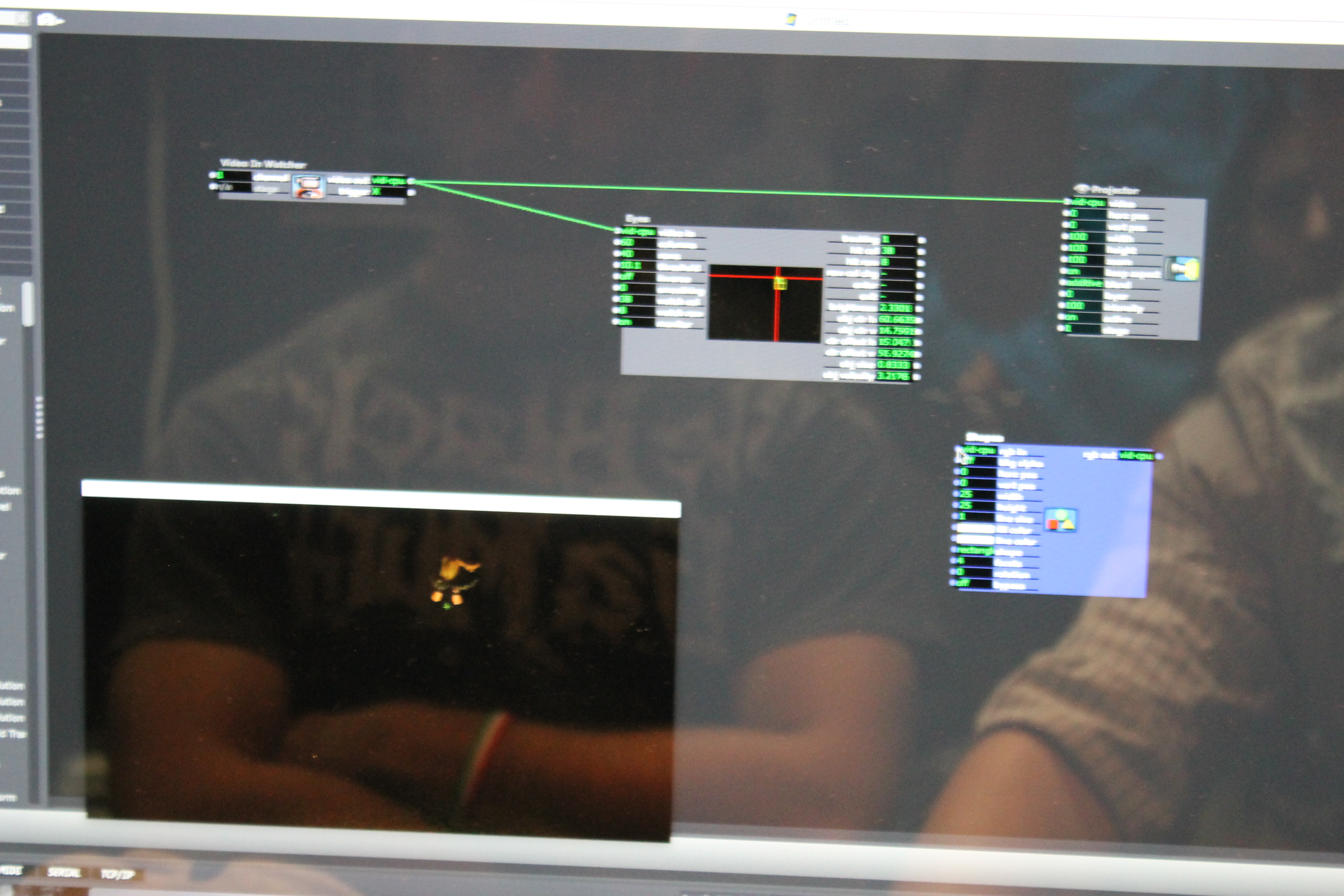
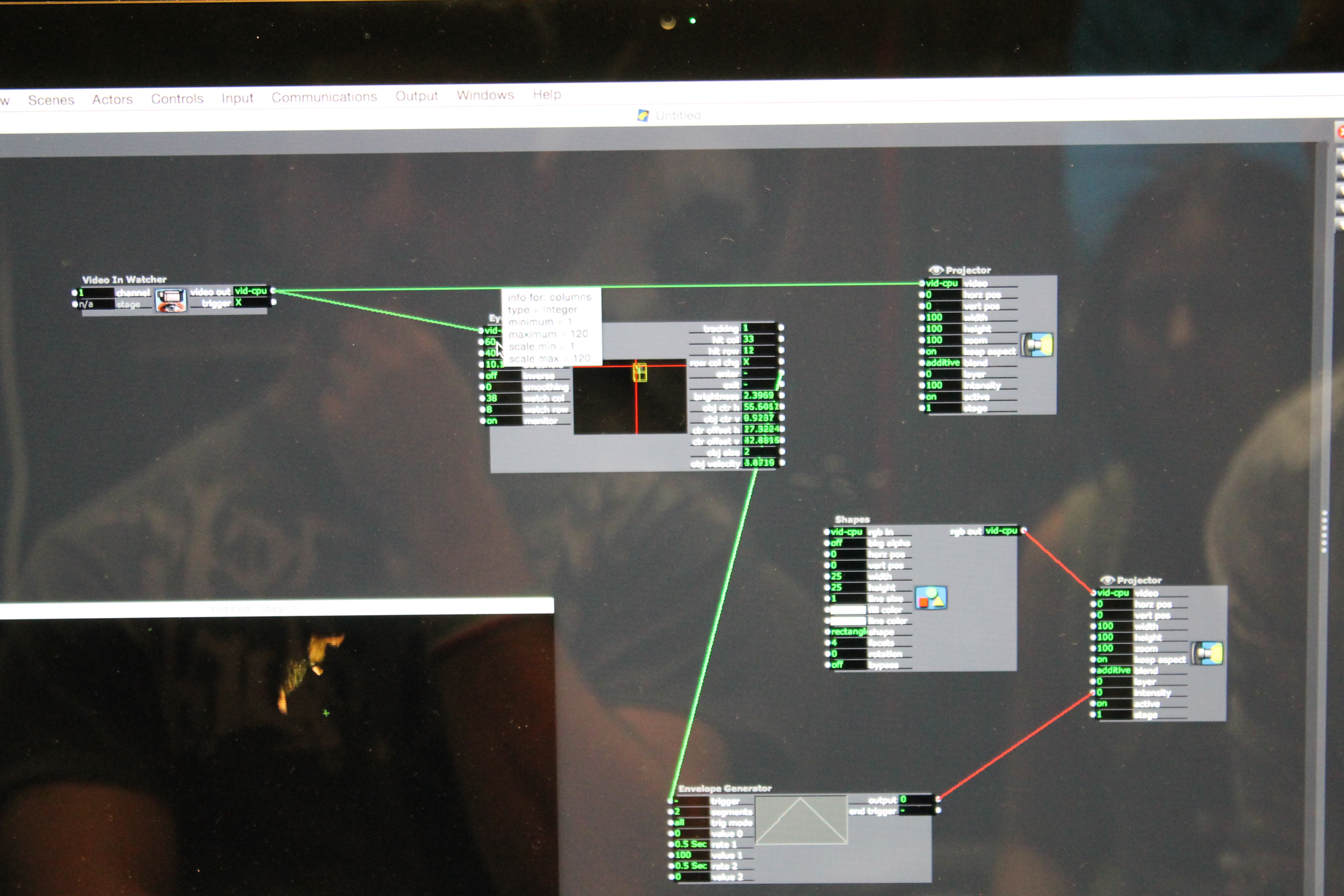
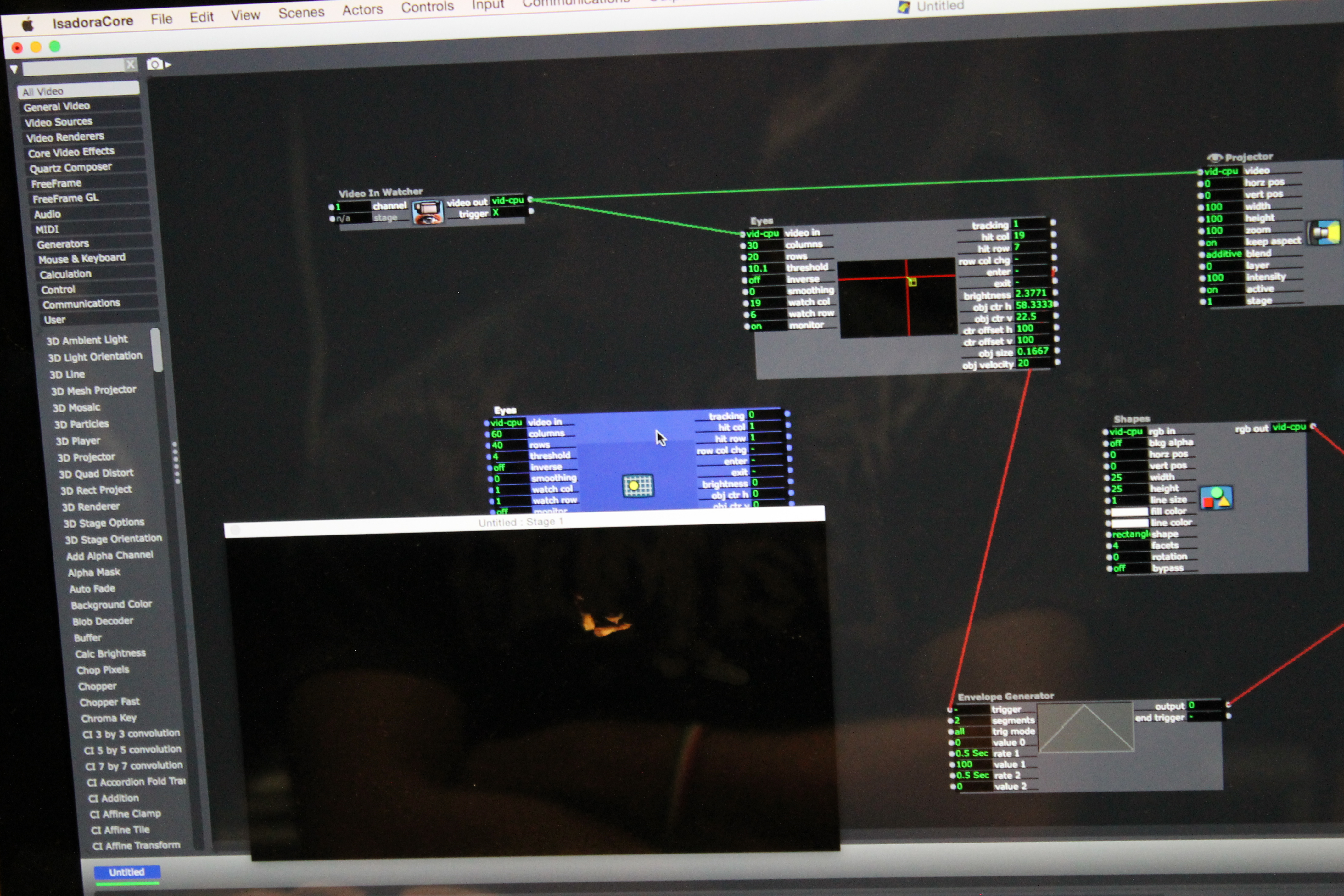
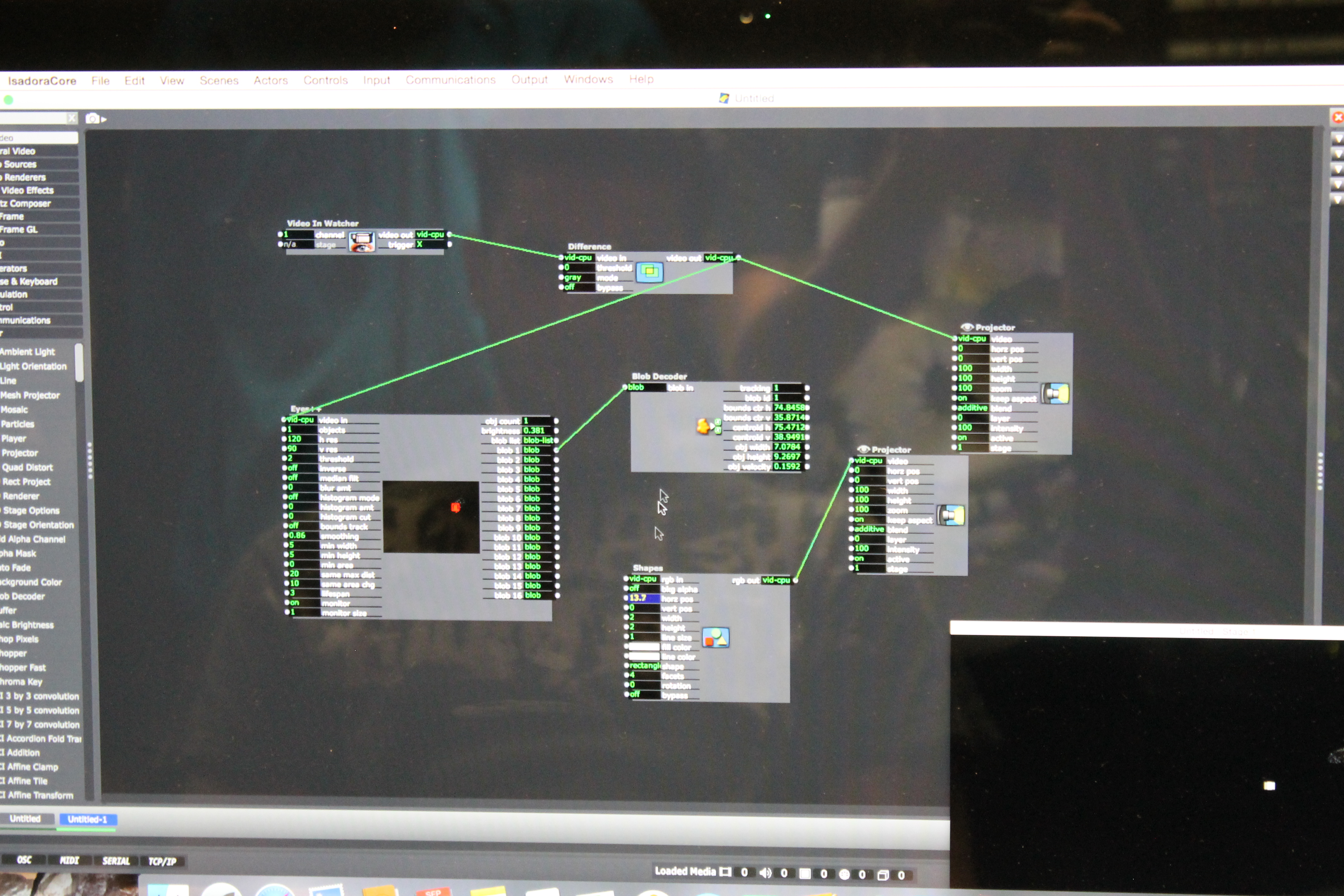
On this screen
- Eyes vs. Eyes ++
- no “Blob” detector, but it will give you tracking data (eg. Center, Height, Width, Velocity)
***
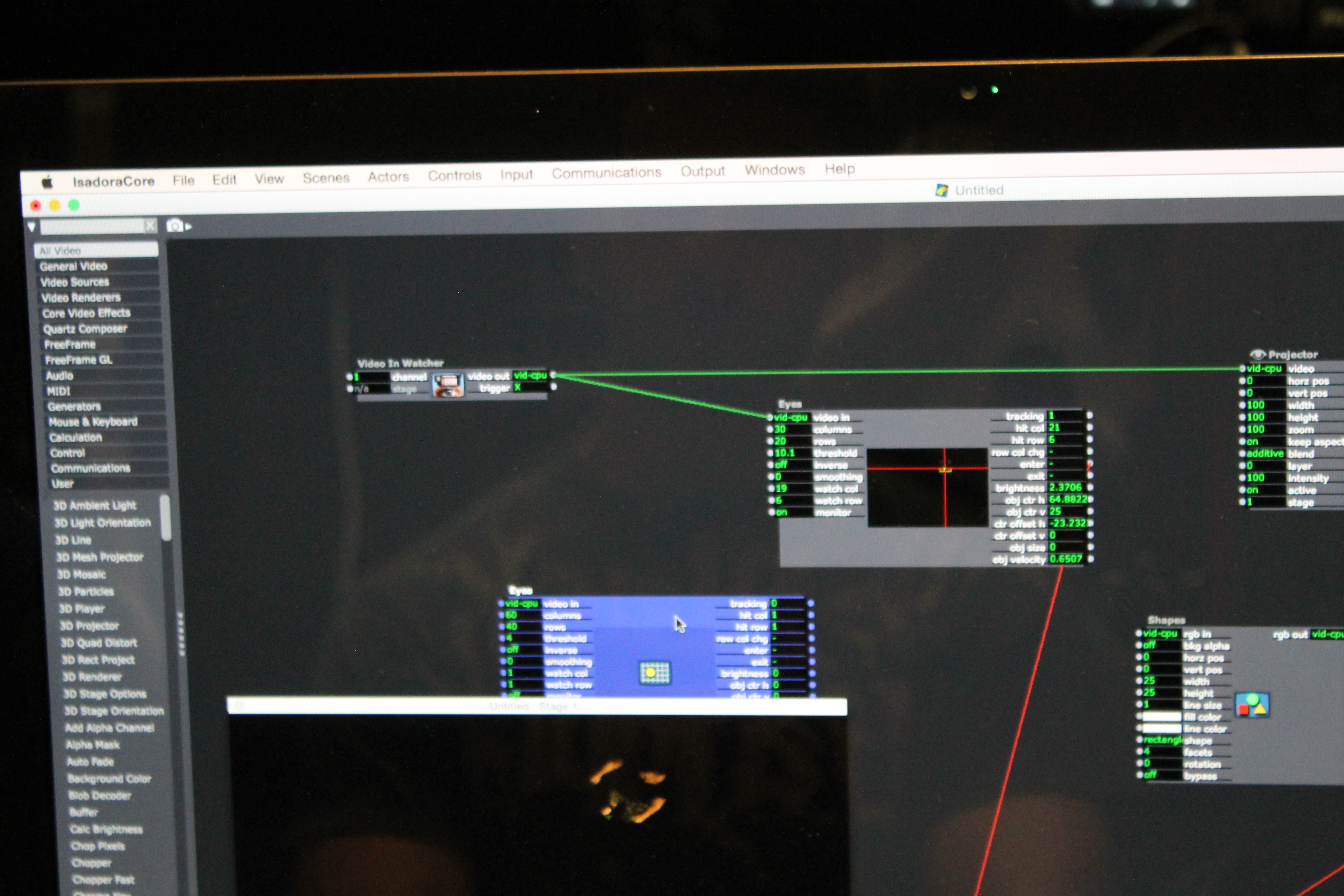

Repetition & Repetition
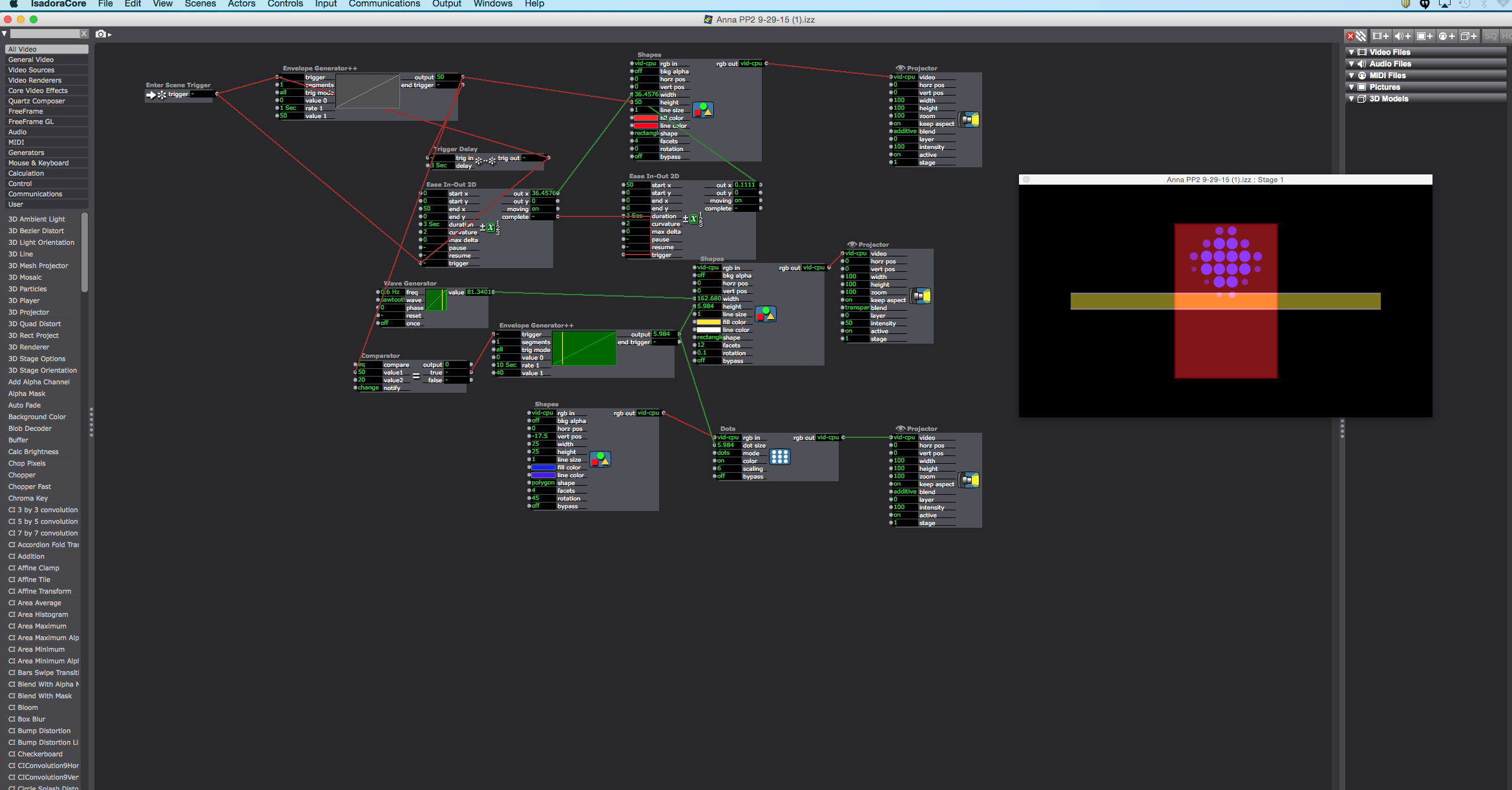
Posted: September 30, 2015 Filed under: Anna Brown Massey, Pressure Project 2 Leave a comment »I made several pressure projects because I realized that in order to learn to build a system independently, I needed to start over multiple times. Each beginning was formed with support. Once I had created an initial course of shapes altered through actors to land in a projected stage, and I could progress through adding shapes and additional actors, I found I could look backwards to my initial connections in order to firmly establish which trigger in/outs were correct. I need to know I could manifest them again. So I started over. Replication was teaching me, but repetition was going to teach me better. And so, I’ve arrived at a rather mediocre little looping film of shapes with timed motion and transparencies as its the fourth miniature project of building similar projections. No doubt this restarting choice, with multiple short films was certainly influenced by a few other it’s-real-life factors: a flu, a power outage during my last project, and a subsequent broken computer in the last hours of plans to submit. (A note of gratitude to the OSU media lab in which I am now writing this post.)
The familiar challenge of building a looping project that sustains attention is not lost on this dance and filmmaker. Repetition tends to breed the encouragement to “look” elsewhere, e.g. that dancer has been doing the same forward and back run for a minute, he’s likely to continue, now I am free to examine other elements of the experience. When there are no other elements, attention may fade–or build with the sensation of subtle change or detail. I found with the initial shapes moving through the space, I engaged with an aesthetic draw; even if it repeats and is “boring,” if it’s “attractive,” it’s engaging. Or is it: if it’s engaging it’s attractive? In this last patch, there are three main shapes. How to make three shapes be just the most fascinating thing; this frankly, is not something I have yet arrived at, but with this project I am beginning to find the possibilities that I can actually do. Right now the bluntness of my abilities is blunting not my imagination but my ability to manifest ideas into an actual projection. (I’ve got some grand ideas for a new piano sonata, but I’ve got to learn to play the piano first, etc., etc.) Discovering the Dots actor and extending its own timing while changing its rotation felt like I was able to bring in an element that changed enough to sustain a slight furthering of a viewer’s attention. I had originally played with the Kaleidoscope Actor (misspelled in Isadora), imagining a wealth of change, but discovered it was not applying as generative change as I had expected. I applied Dots instead, recalling a colleague’s mentioning of their current favored actor for the project. I altered the color in addition to the rotation, played with its timing, and set it going in hopes of having a minute experience of moving shapes to keep you watching.